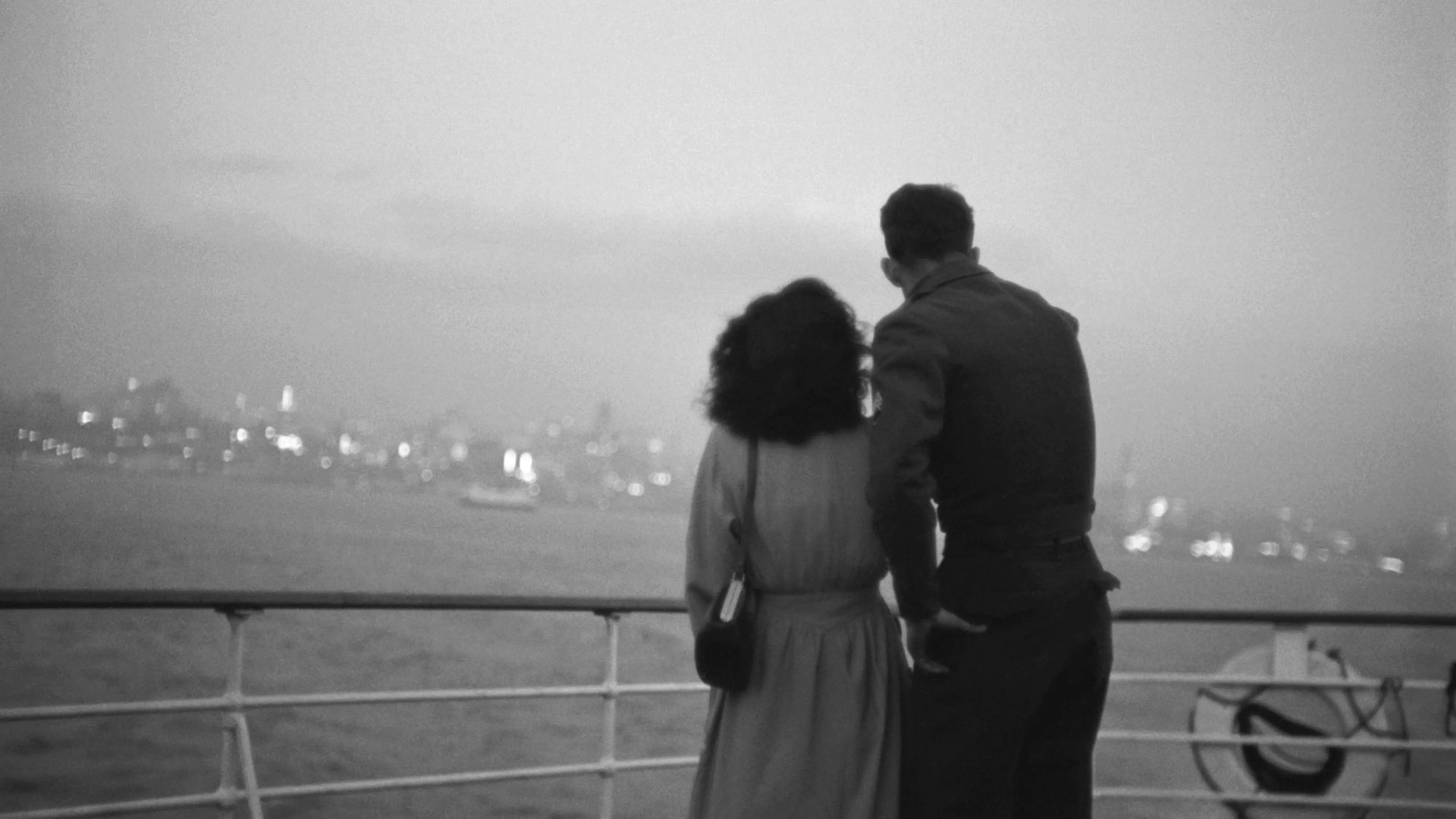
The laws, newspaper clippings, photographs, and footage gathered alongside the
interviews, arranged in the order the story happened. Select any image to see it
full size.
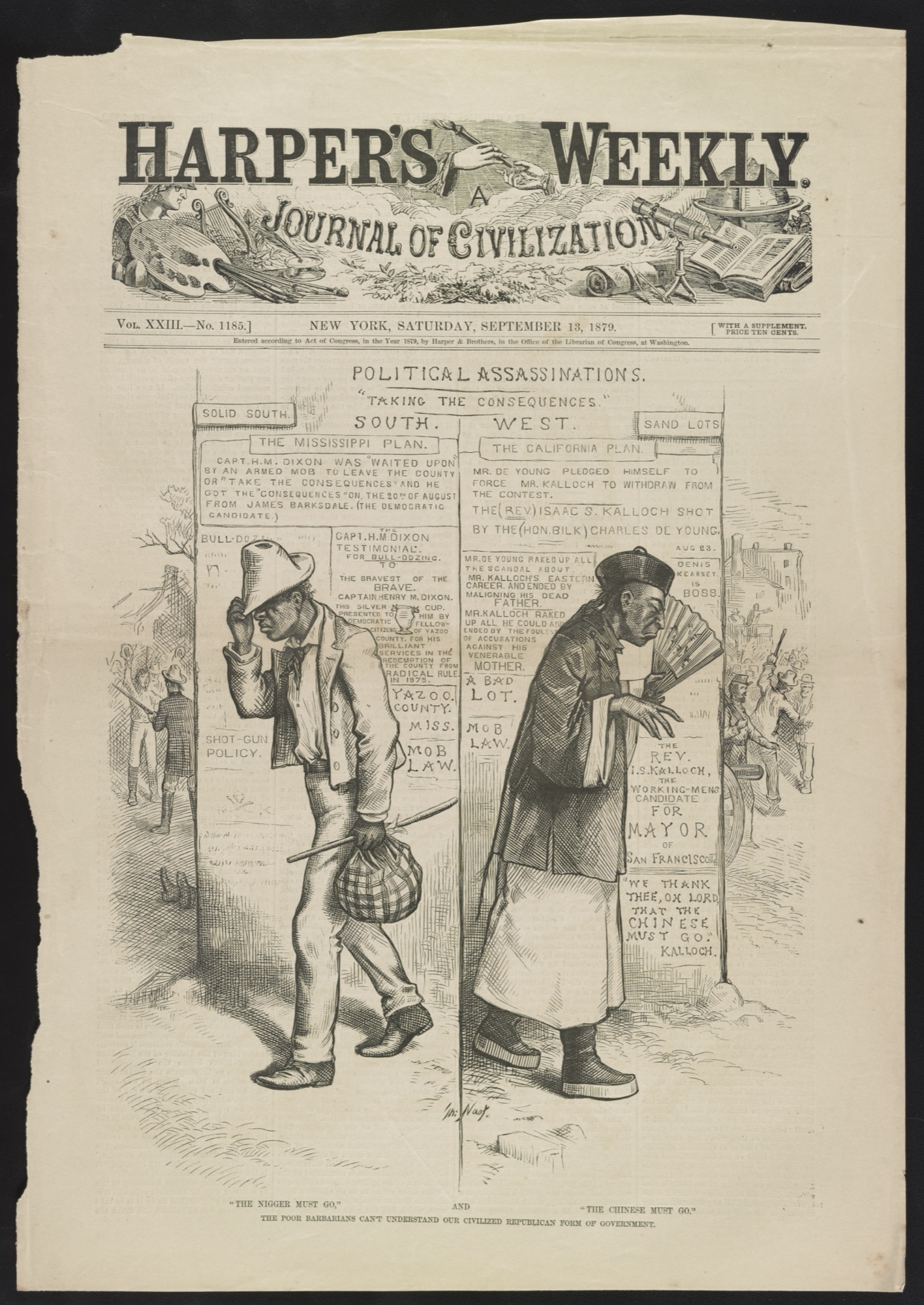
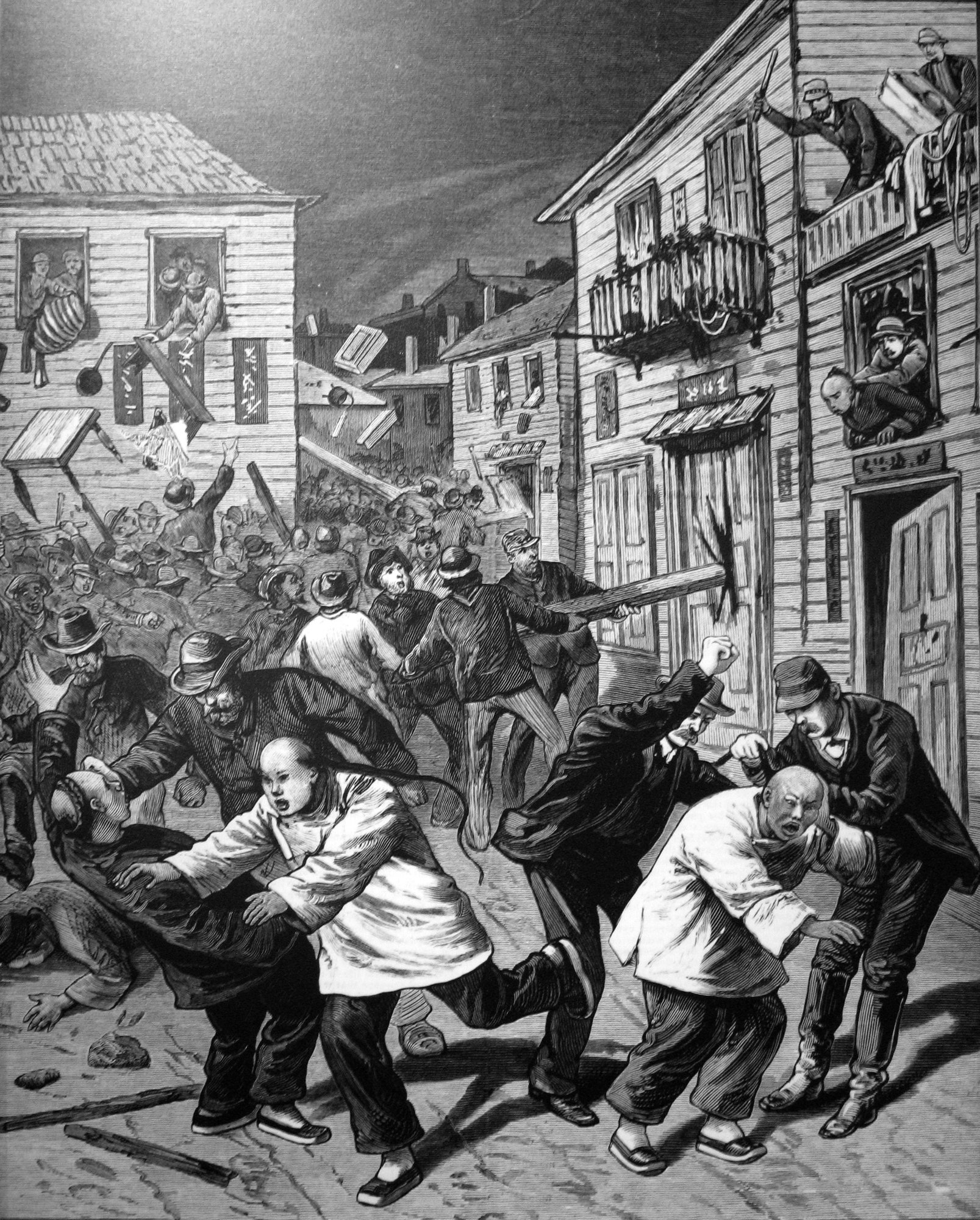
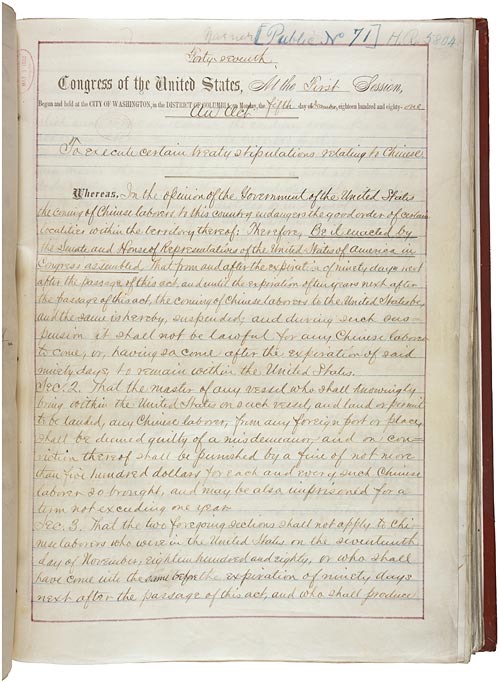
Exclusion, 1879-1924
For decades before the Korean War, American law kept Asian immigrants out. By 1924
almost no one from Asia could immigrate, and that included the Korean wives of
American servicemen.
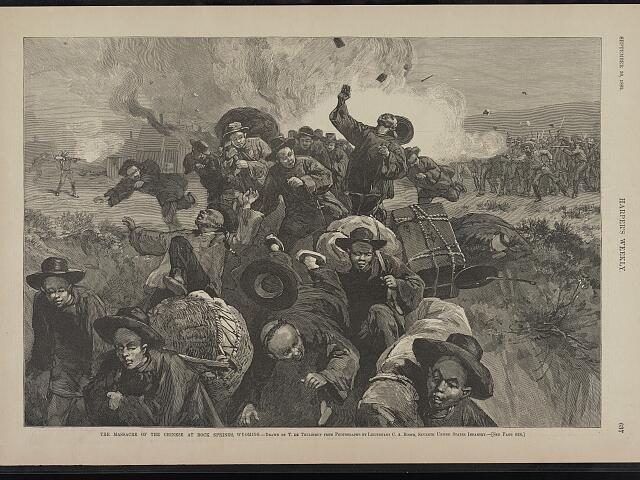
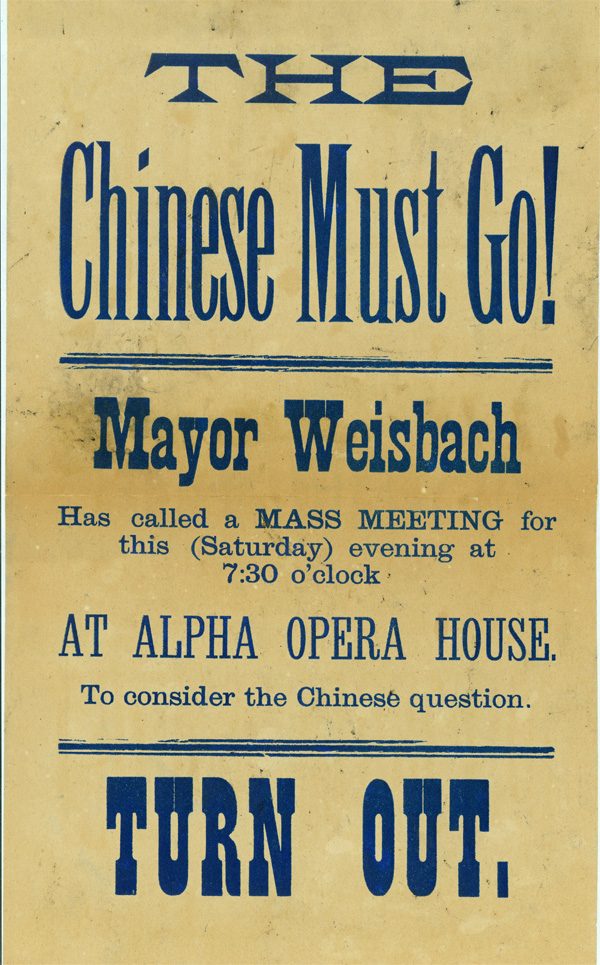
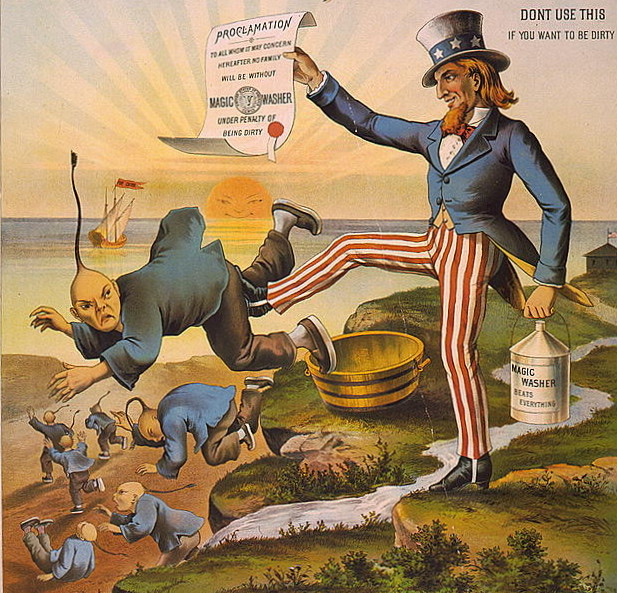
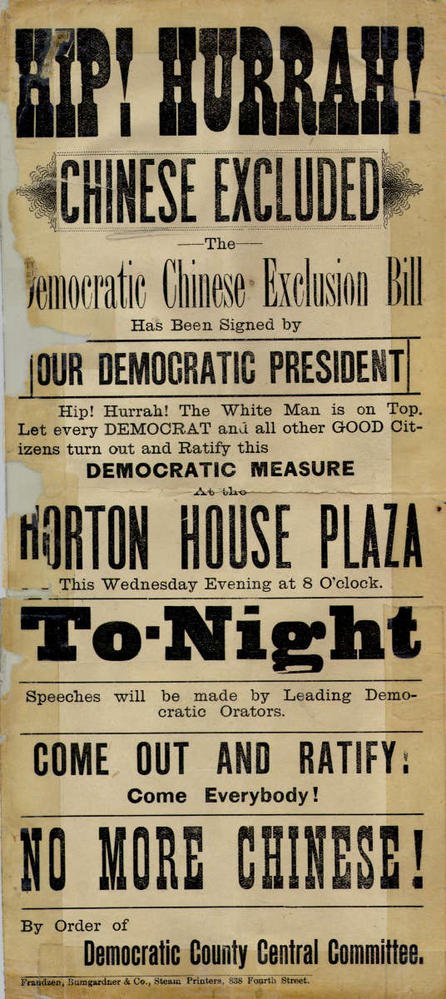
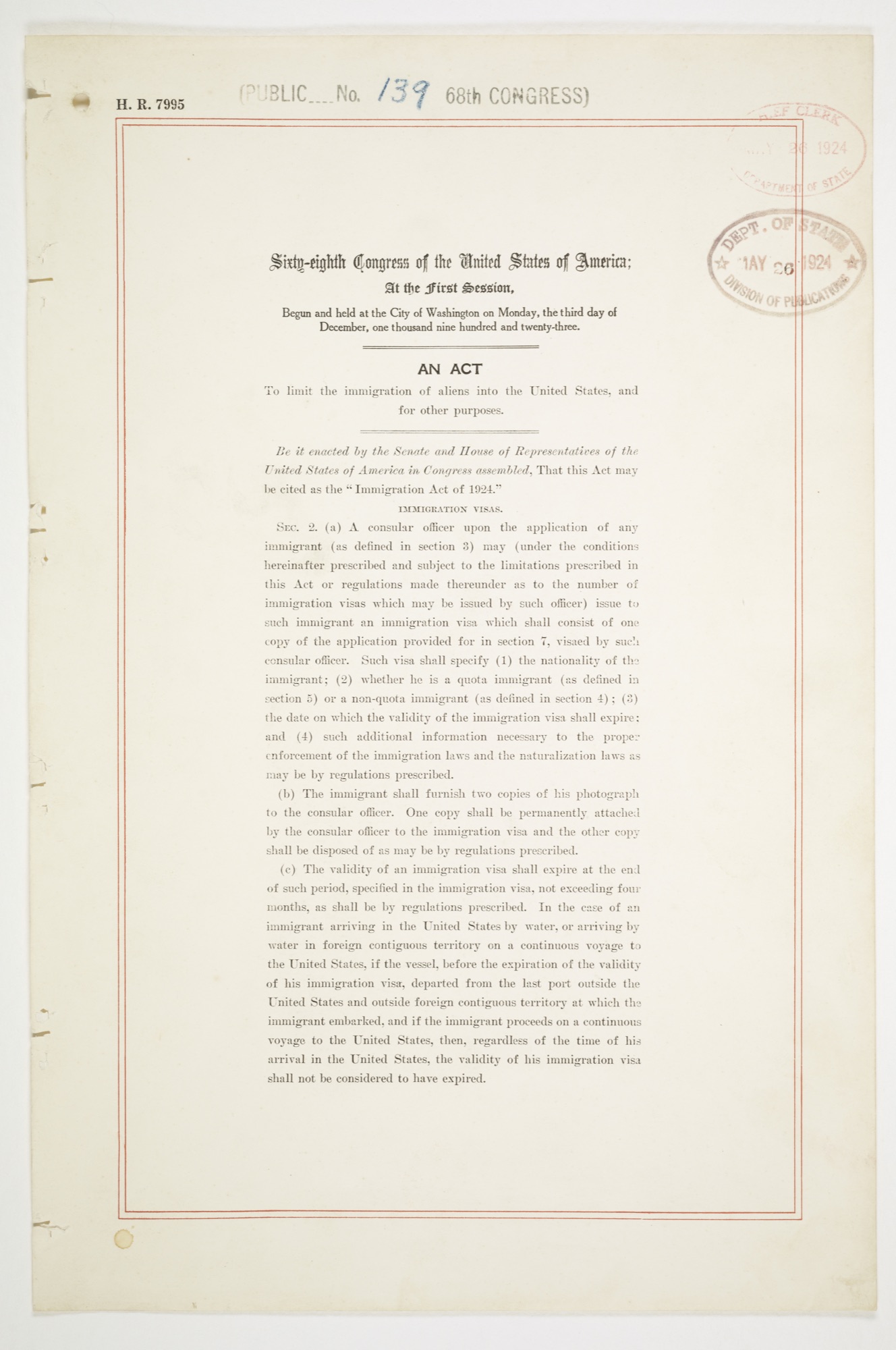
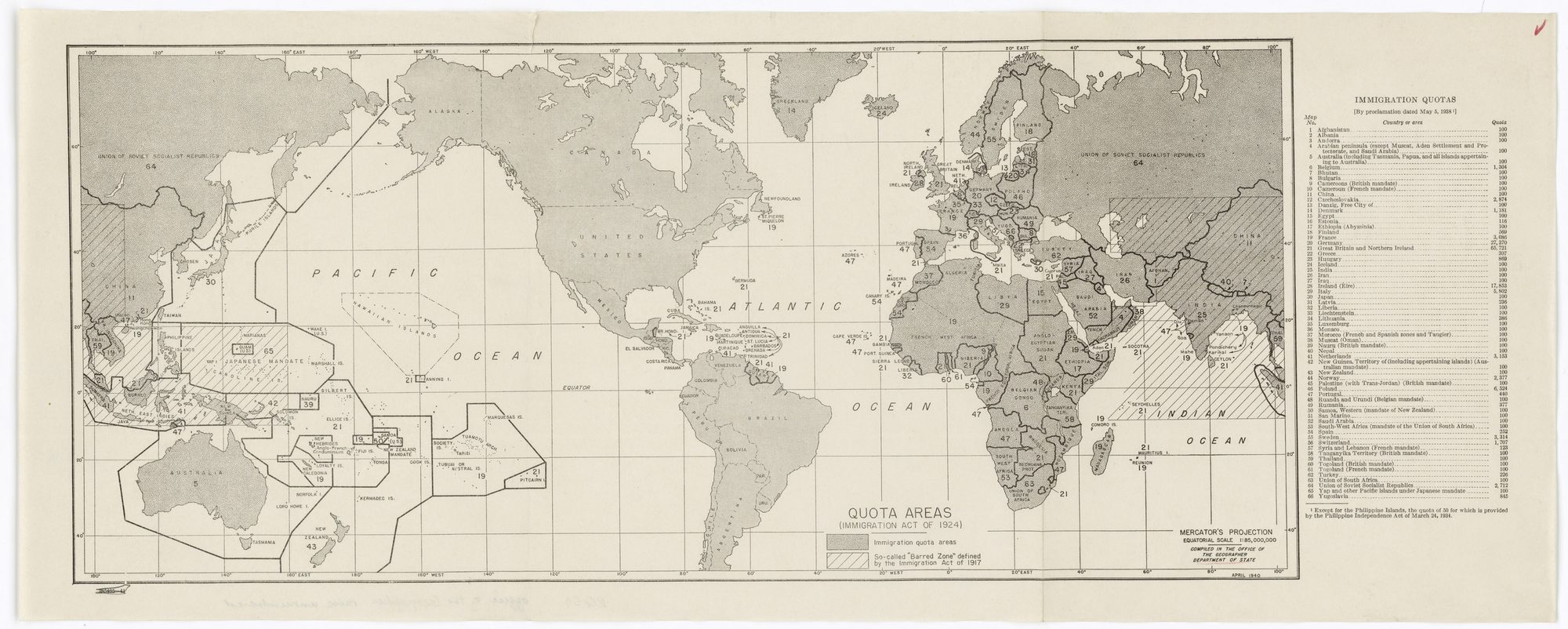
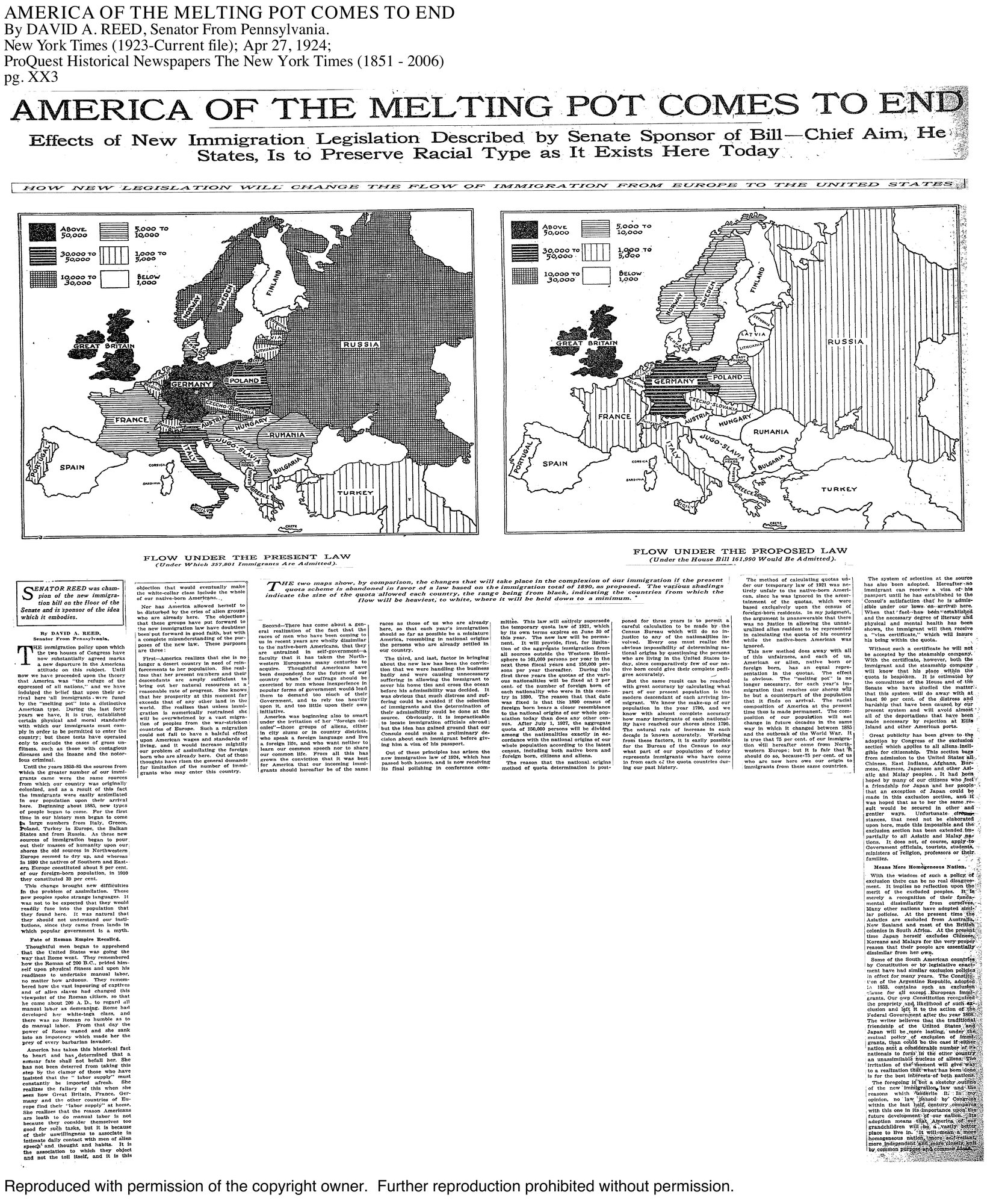
“Political Assassinations,” Harper’s Weekly, September 13, 1879.Thomas Nast. Library of Congress, Prints and Photographs Division“The anti-Chinese riot in Denver, on October 31st,” Frank Leslie’s Illustrated Newspaper, November 20, 1880.From a sketch by N. B. Wilkins. Via Wikimedia CommonsChinese Exclusion Act, May 6, 1882.National Archives“The Massacre of the Chinese at Rock Springs, Wyoming,” Harper’s Weekly, September 26, 1885.Library of Congress, Prints and Photographs Division“The Chinese Must Go!” Tacoma, 1885.Washington State Historical Society. Via Wikimedia Commons“The Chinese Must Go,” trade card, 1886.Geo. Dee Magic Washer Co. Library of Congress, Prints and Photographs Division“Hip! Hurrah! Chinese Excluded,” rally poster, San Diego, 1888.Democratic County Central Committee. Royal BC Museum, BC Archives, PDP03732Immigration Act of 1924.National ArchivesQuota Areas, Immigration Act of 1924.U.S. Department of State, Office of the Geographer, April 1940. National Archives“America of the Melting Pot Comes to End,” The New York Times, April 27, 1924.Sen. David A. Reed. ProQuest Historical Newspapers
The war bride laws, 1945-1965
After World War II, Congress began letting servicemen bring their foreign wives home.
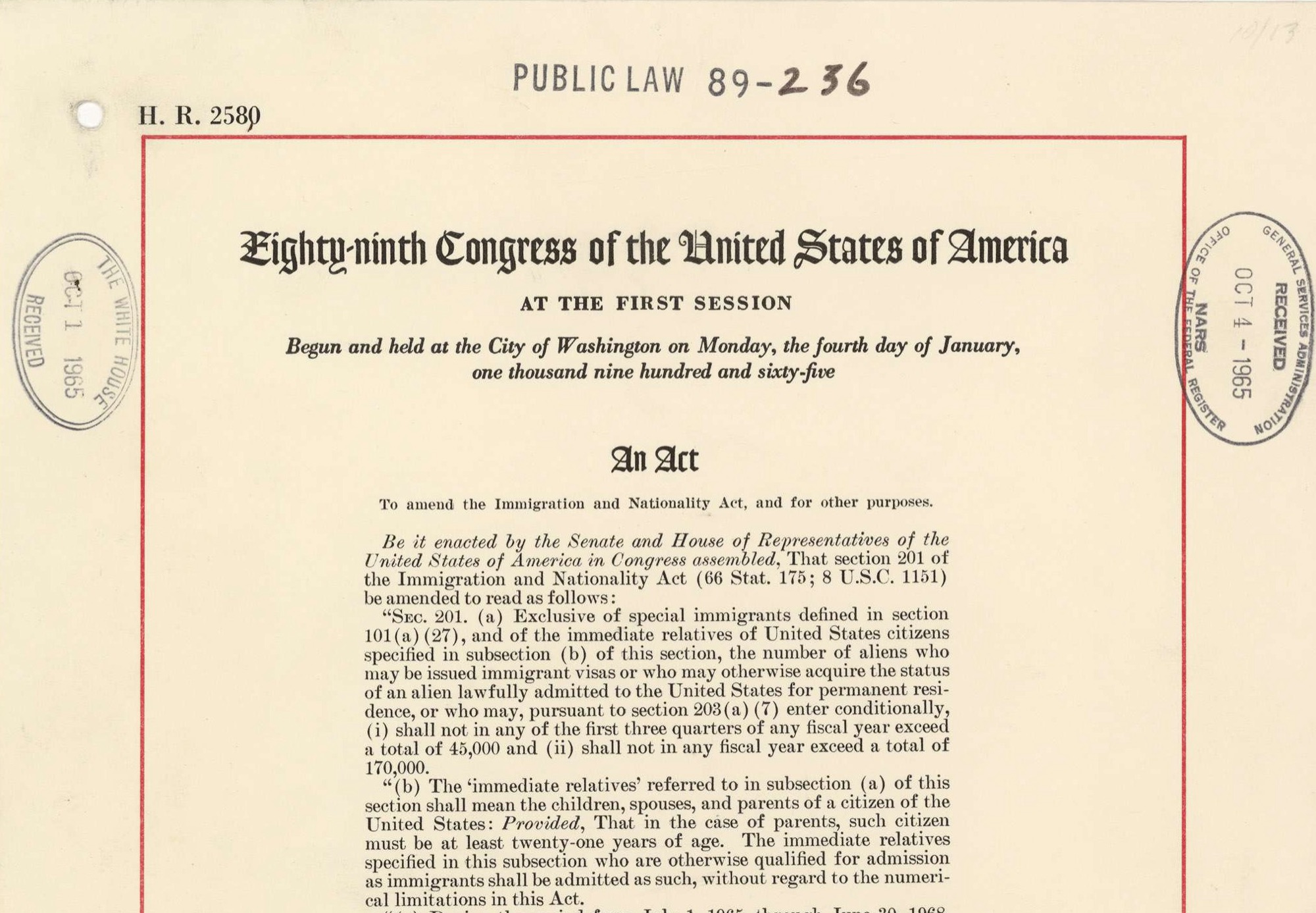
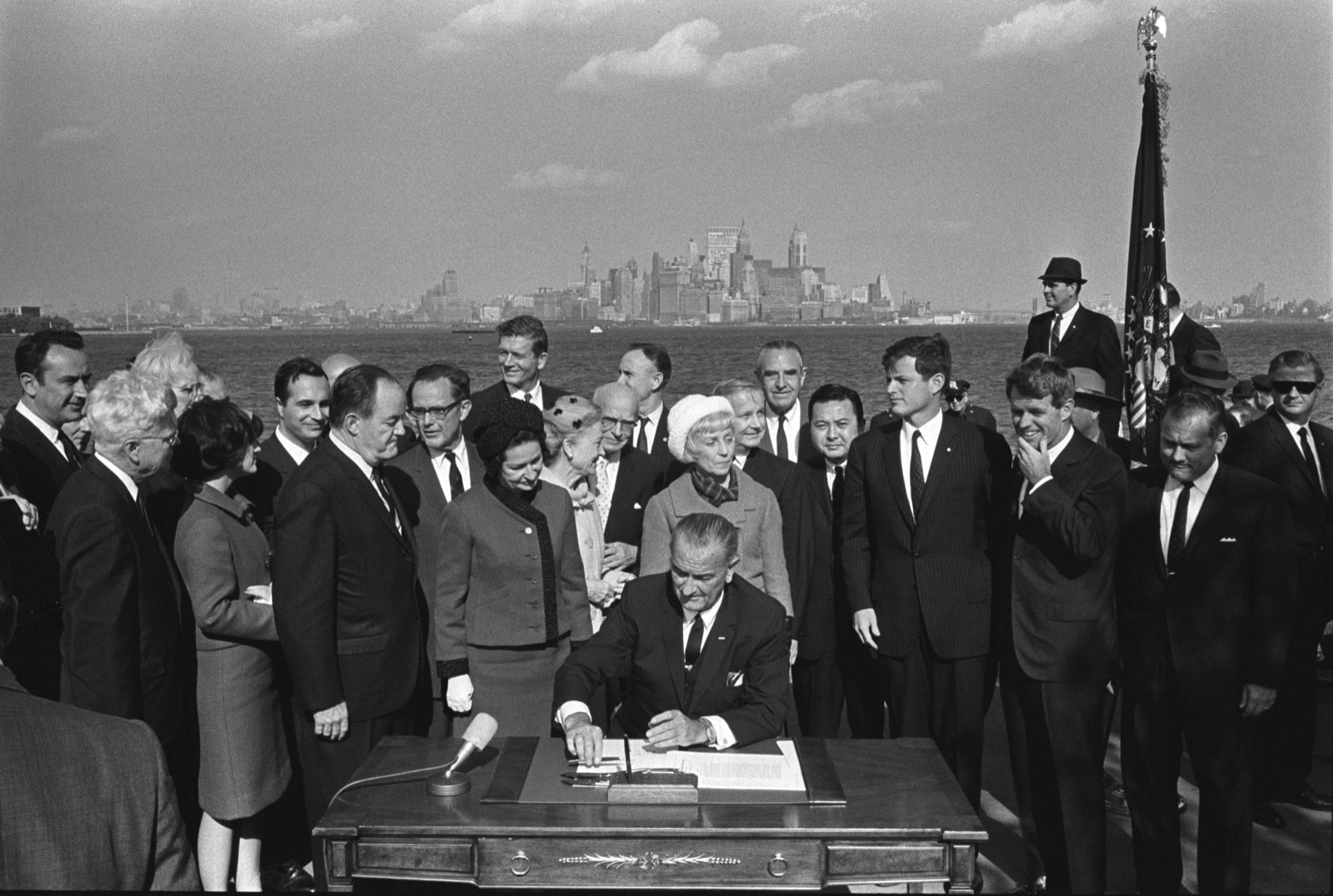
For Asian wives each opening came separately, until the 1965 act ended the quota
system and made family the center of immigration law.
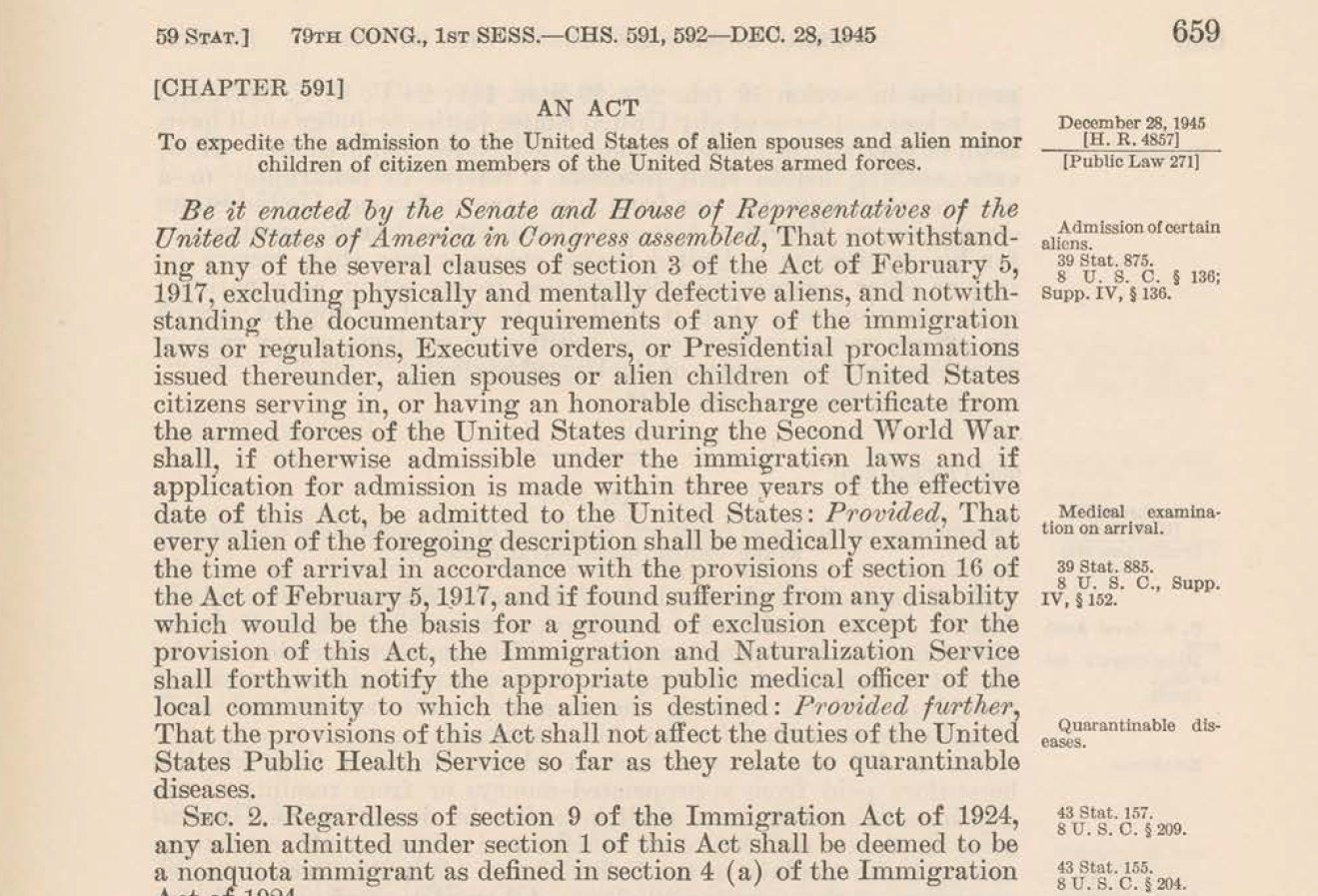
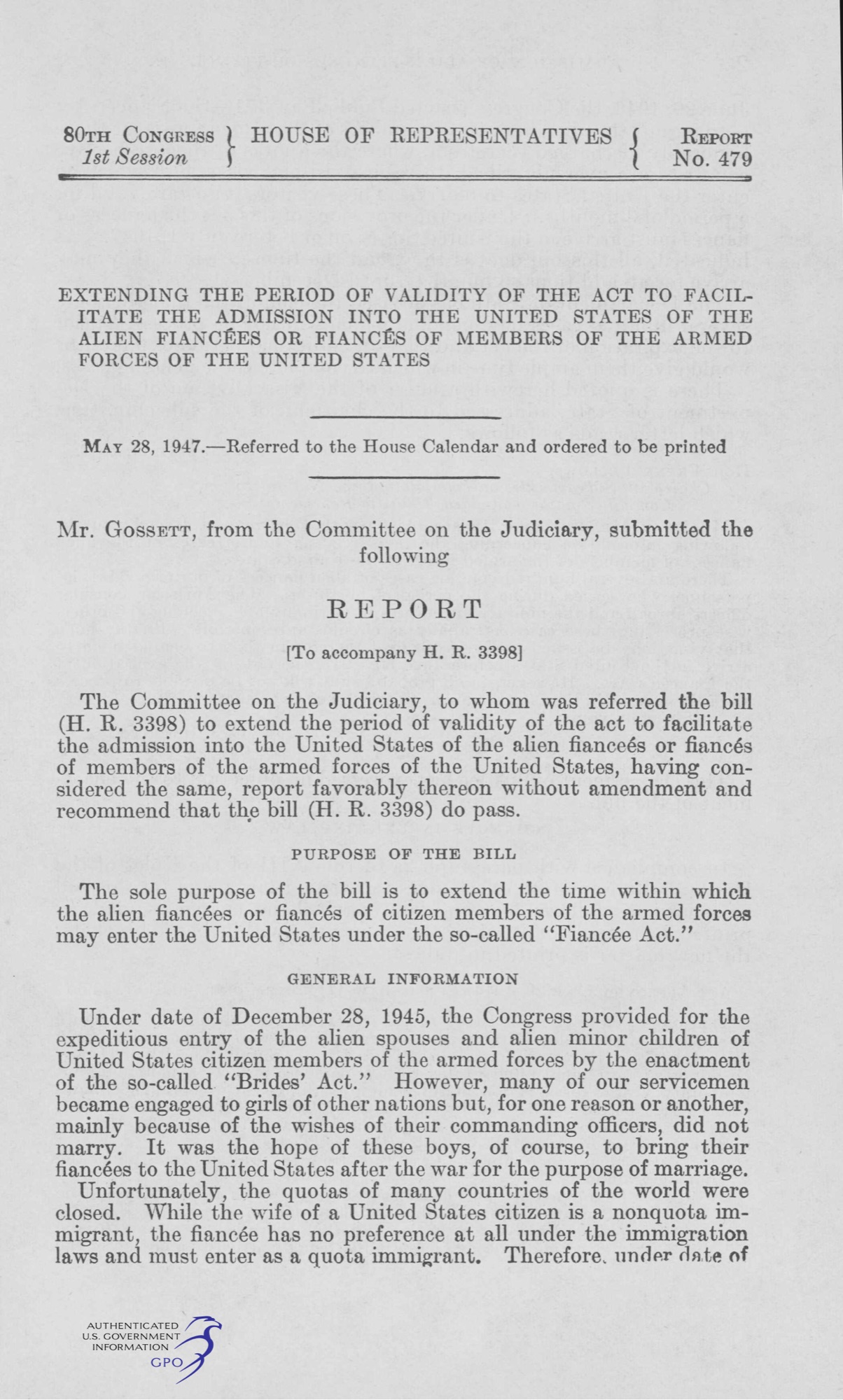
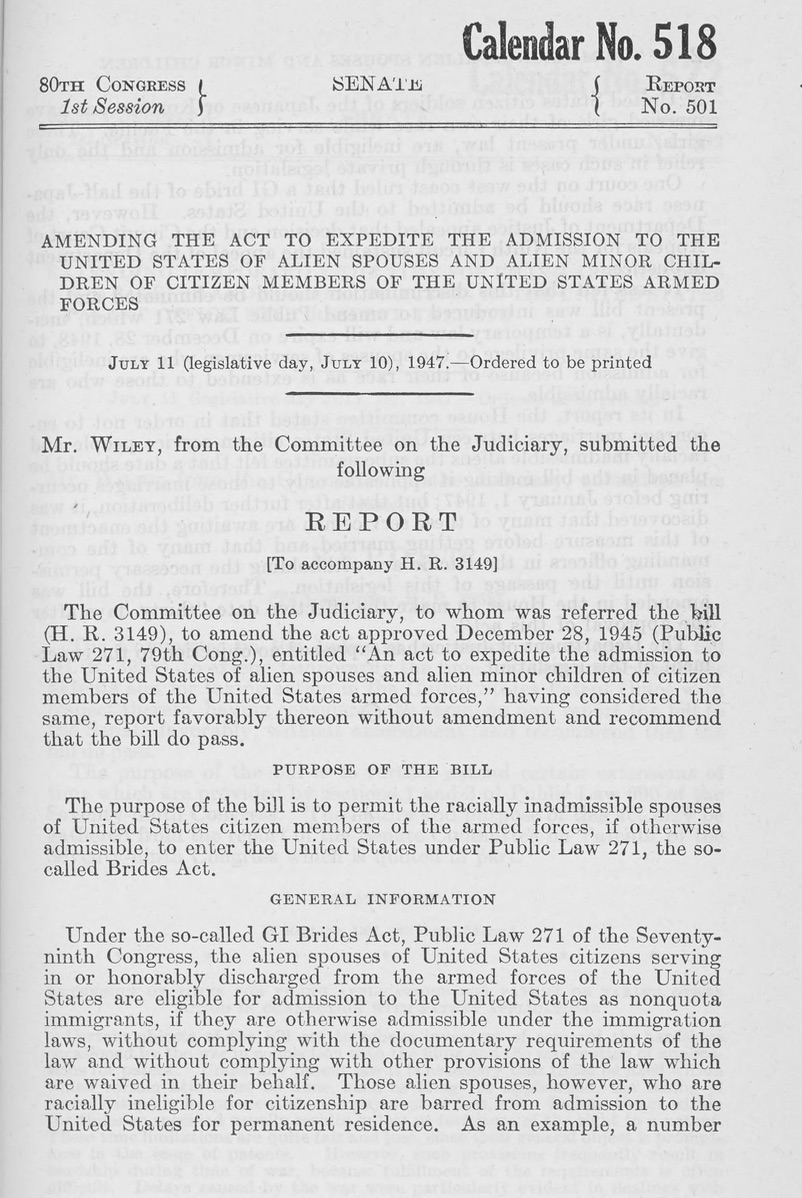
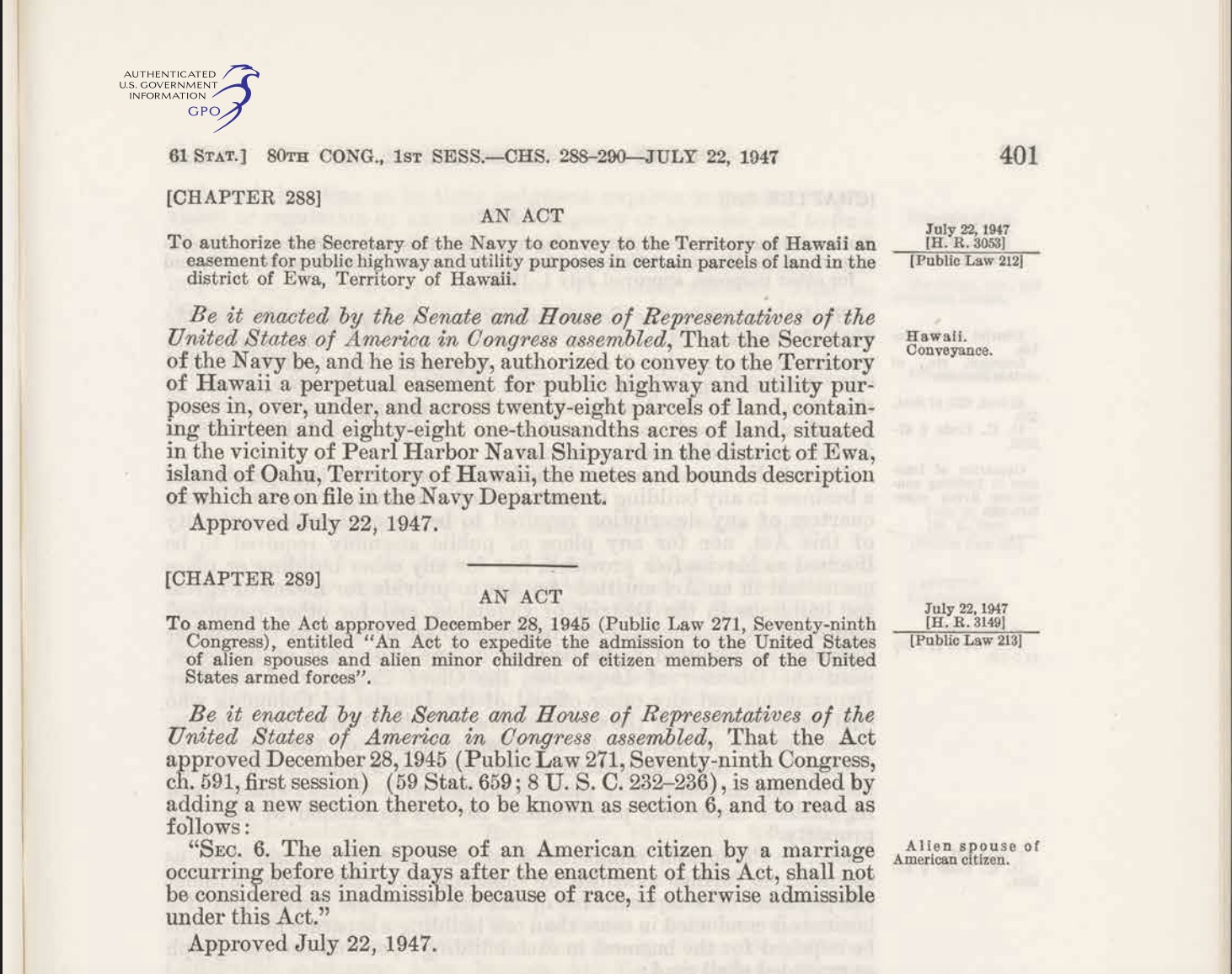
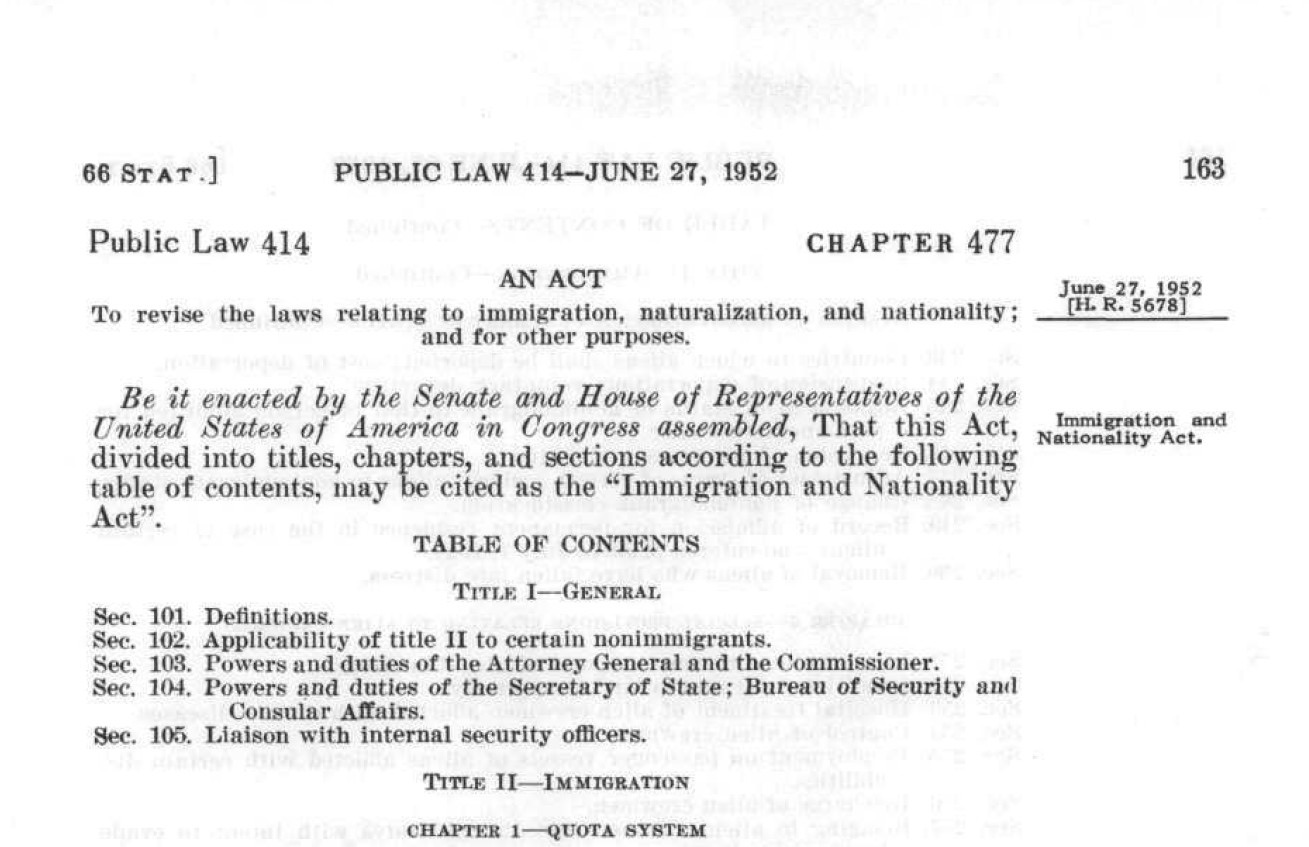
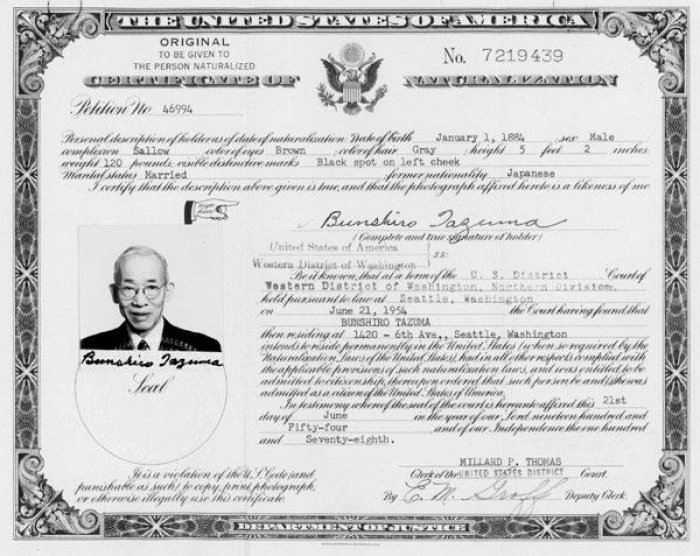
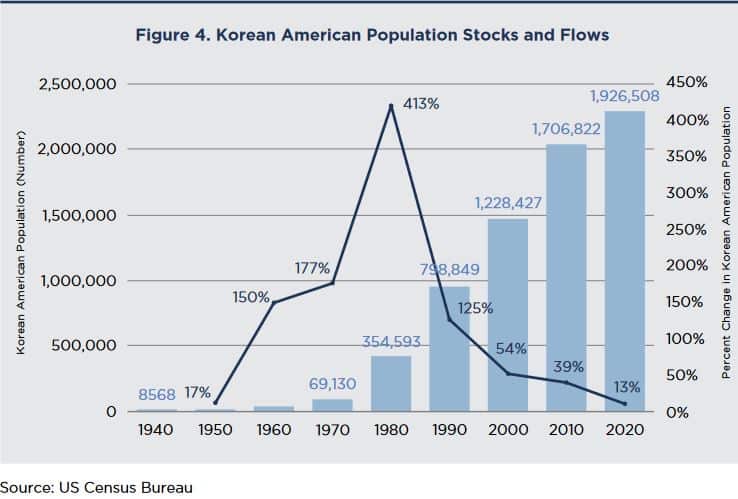
War Brides Act, December 28, 1945.U.S. Statutes at Large, 59 Stat. 659. govinfo.govHouse Report No. 479, May 28, 1947.U.S. Congressional Serial Set. govinfo.govSenate Report No. 501, July 11, 1947.U.S. Congressional Serial SetPublic Law 213, July 22, 1947.U.S. Statutes at Large, 61 Stat. 401Immigration and Nationality Act, June 27, 1952.U.S. Statutes at Large, 66 Stat. 163. govinfo.govBunshiro Tazuma’s certificate of naturalization, Seattle, June 21, 1954.Tazuma Collection. Densho Digital RepositoryImmigration and Nationality Act of 1965.Public Law 89-236. National ArchivesPresident Johnson signs the act at Liberty Island, October 3, 1965.Yoichi Okamoto. National Archives, DocsTeachKorean American population, 1940-2020.Taeku Lee, The Multiple Faces of the National Korean American Community (Council of Korean Americans, 2023), from U.S. Census data. ka.institute
Meeting in Korea
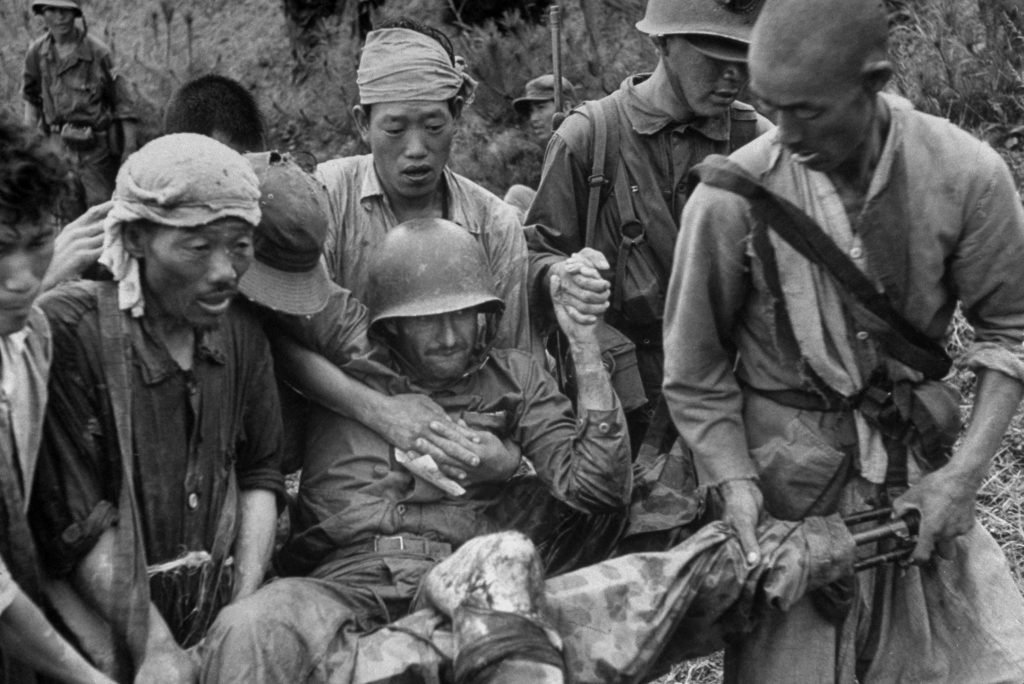
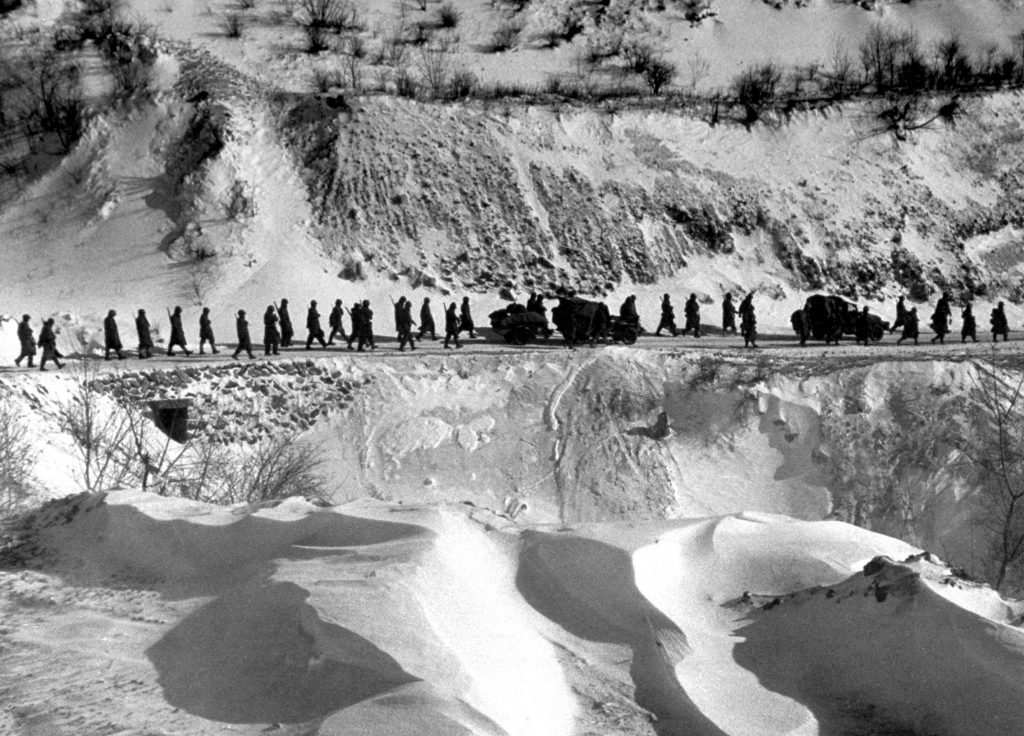
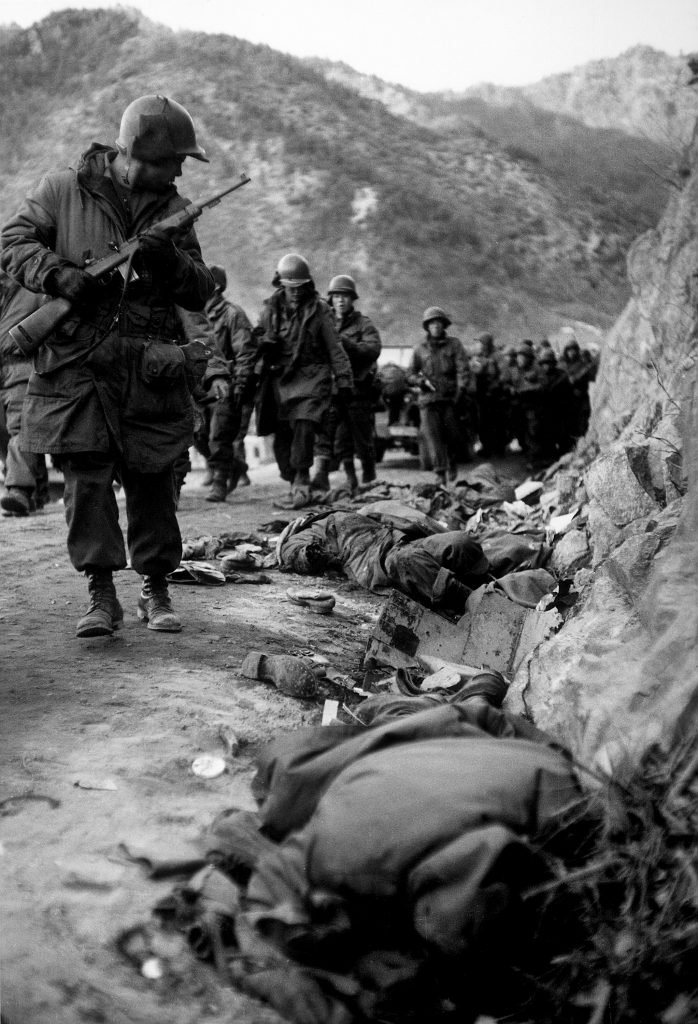
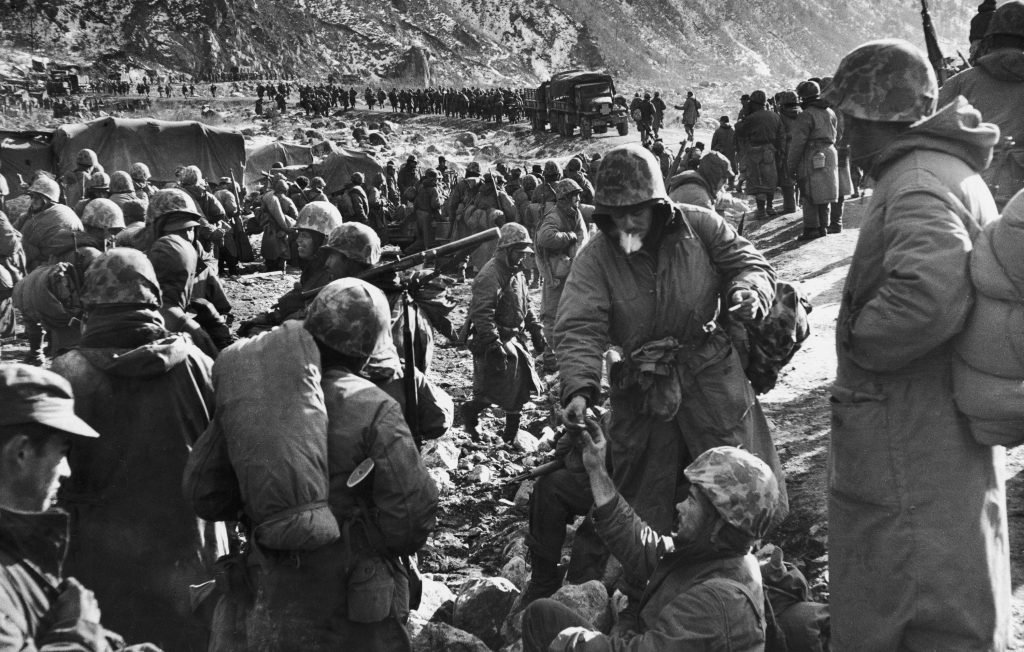
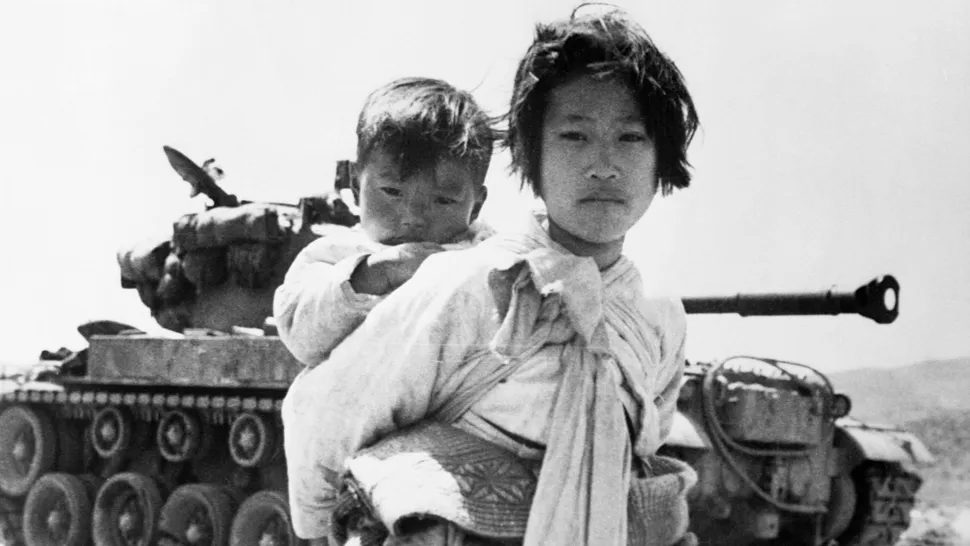
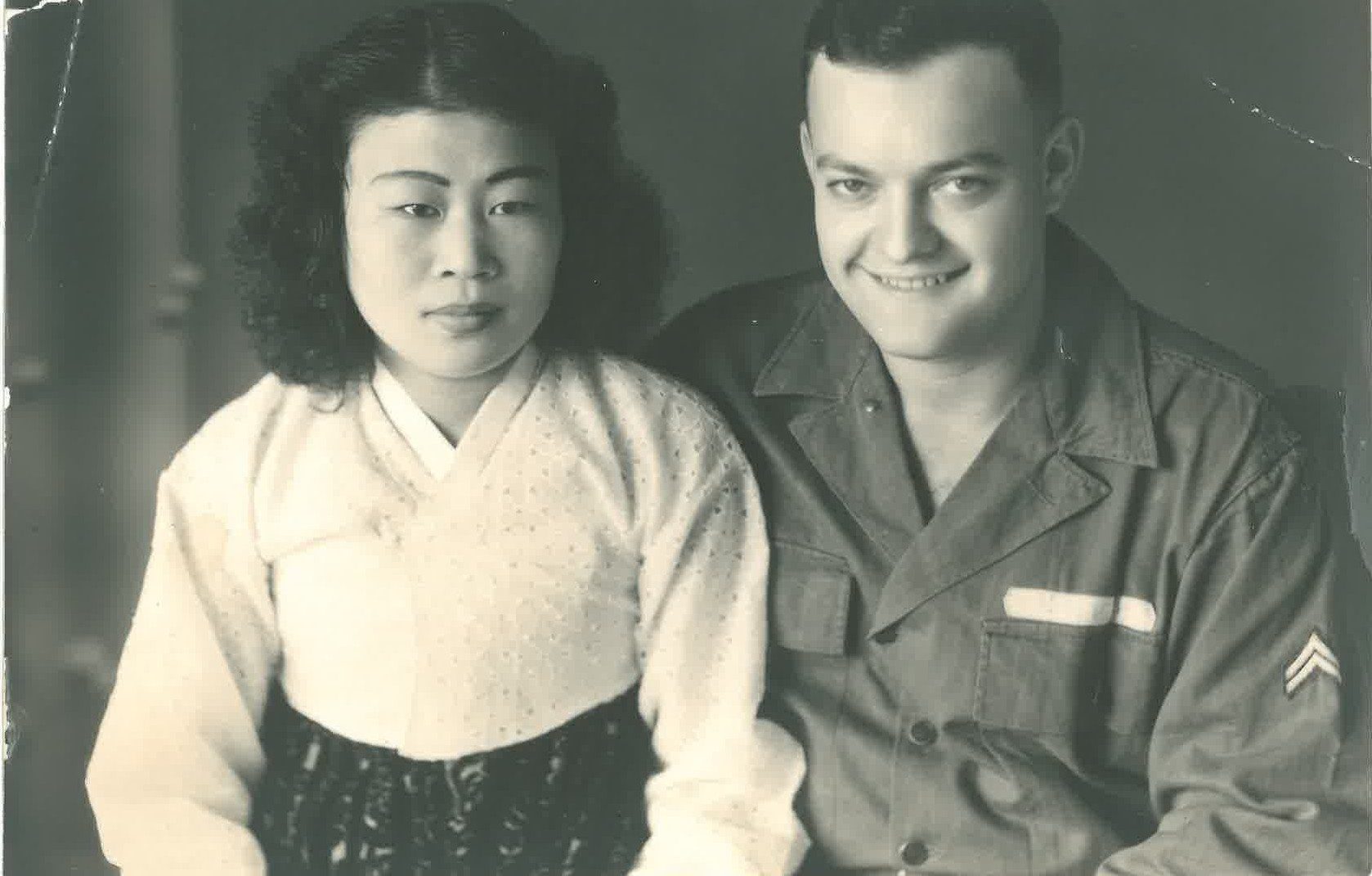
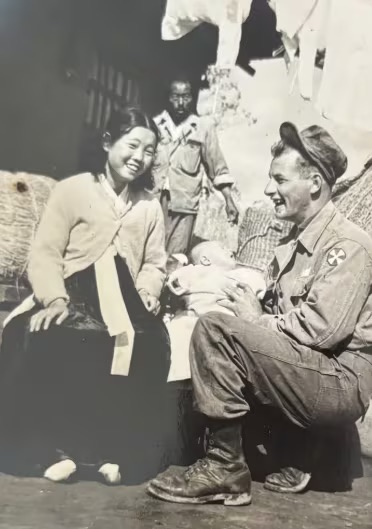
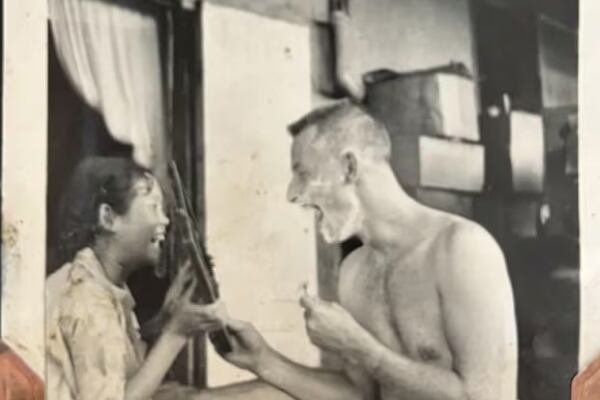
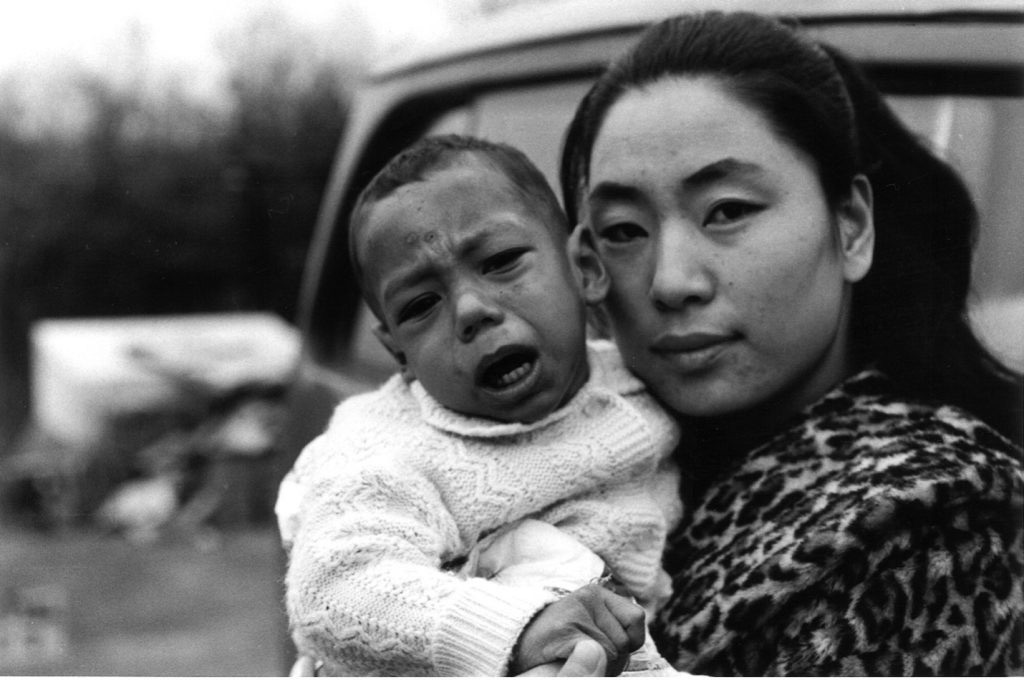
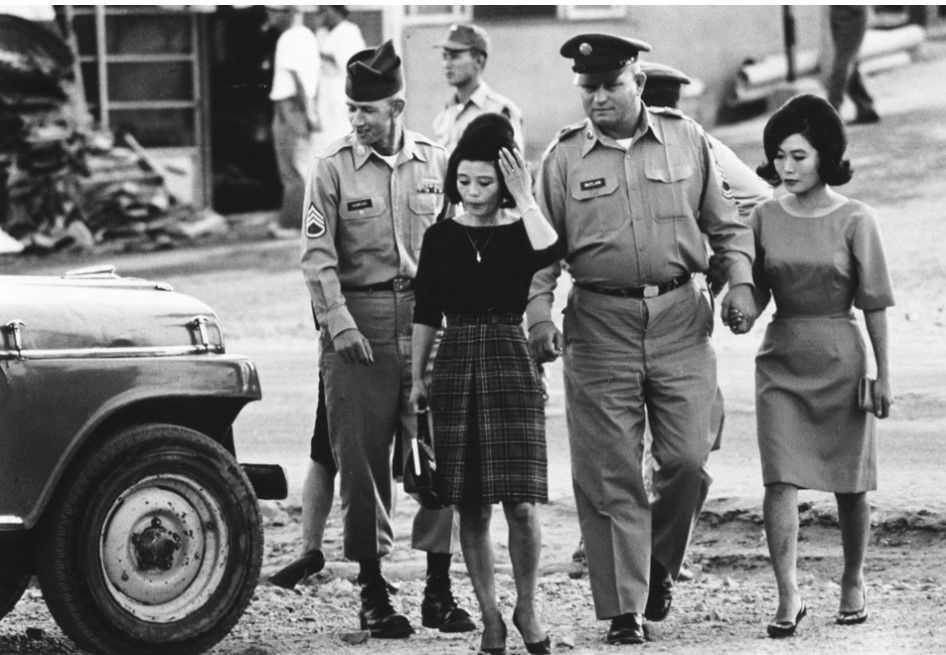
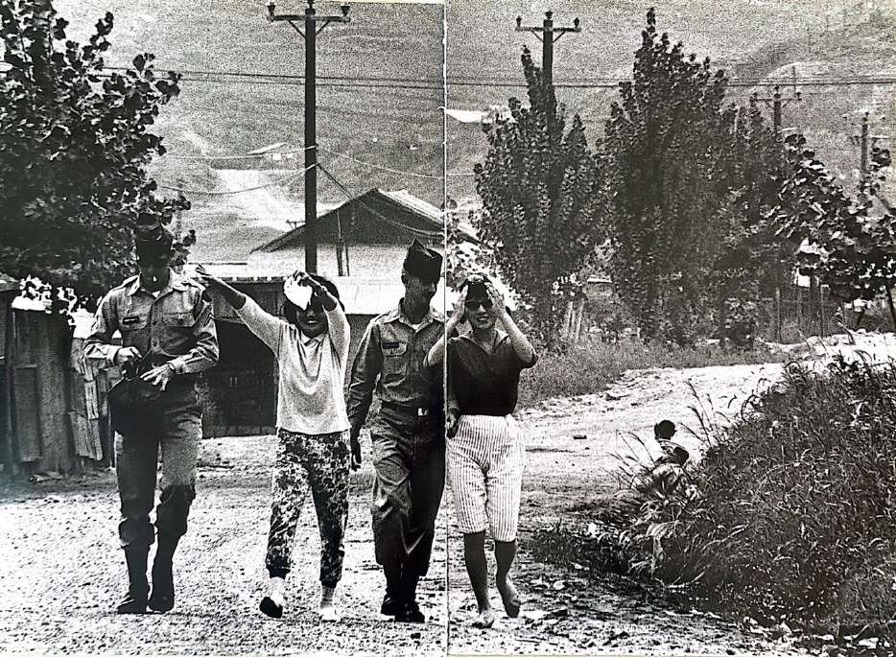
Most of the women met their husbands near U.S. bases in South Korea, during the war
or after it. Many lived in or near the camptowns (기지촌,
kijichon) that grew up around the bases, and the camptowns’ reputation
was pinned on all of them, whether or not they had lived there.
Seoul, 1950.David Douglas Duncan, LIFE. Via TIMEStreet fighting in Seoul, September 1950.David Douglas Duncan, LIFE. Via TIMECarrying a wounded Marine, Korea, 1950.David Douglas Duncan, LIFE. Via TIMEThe retreat from the Chosin Reservoir, December 1950.David Douglas Duncan, LIFE. Via TIMEMarines pass their dead on the retreat from the Chosin Reservoir, December 1950.David Douglas Duncan, LIFE. Via TIMEMarines rest during the retreat from the Chosin Reservoir, December 1950.David Douglas Duncan, LIFE. Via TIMEHaengju, June 9, 1951.Maj. R. V. Spencer, U.S. Navy. National ArchivesOck Soon Lee and Frank Crimbchin, Korea, early 1950s.Via KoreanAmericanStory.org, from Grace Jahng Lee, “Love Beyond Measure: Pega Crimbchin,” 2014Oral history: Ock Soon LeePark Yoo-sun, Ralph Smith, and their son, Charley, around 1952-53.Family photograph. Via The Chosun Ilbo, September 3, 2025Oral history: Charley SmithThe same couple in Korea, around 1952-53.Family photograph. Via The Chosun Ilbo, September 3, 2025From The Mixed Names, 1963-65.Joo Myung-duck. Courtesy of Museum Hanmi, via The Asia-Pacific Journal: Japan FocusNear a U.S. base, about 1965.Green Bee Publishing. Via Blue Roof PoliticsMunsan, 1965.Kuwabara Shisei, from Kankoku gen’ei. Via The Asia-Pacific Journal: Japan Focus
Arriving in America
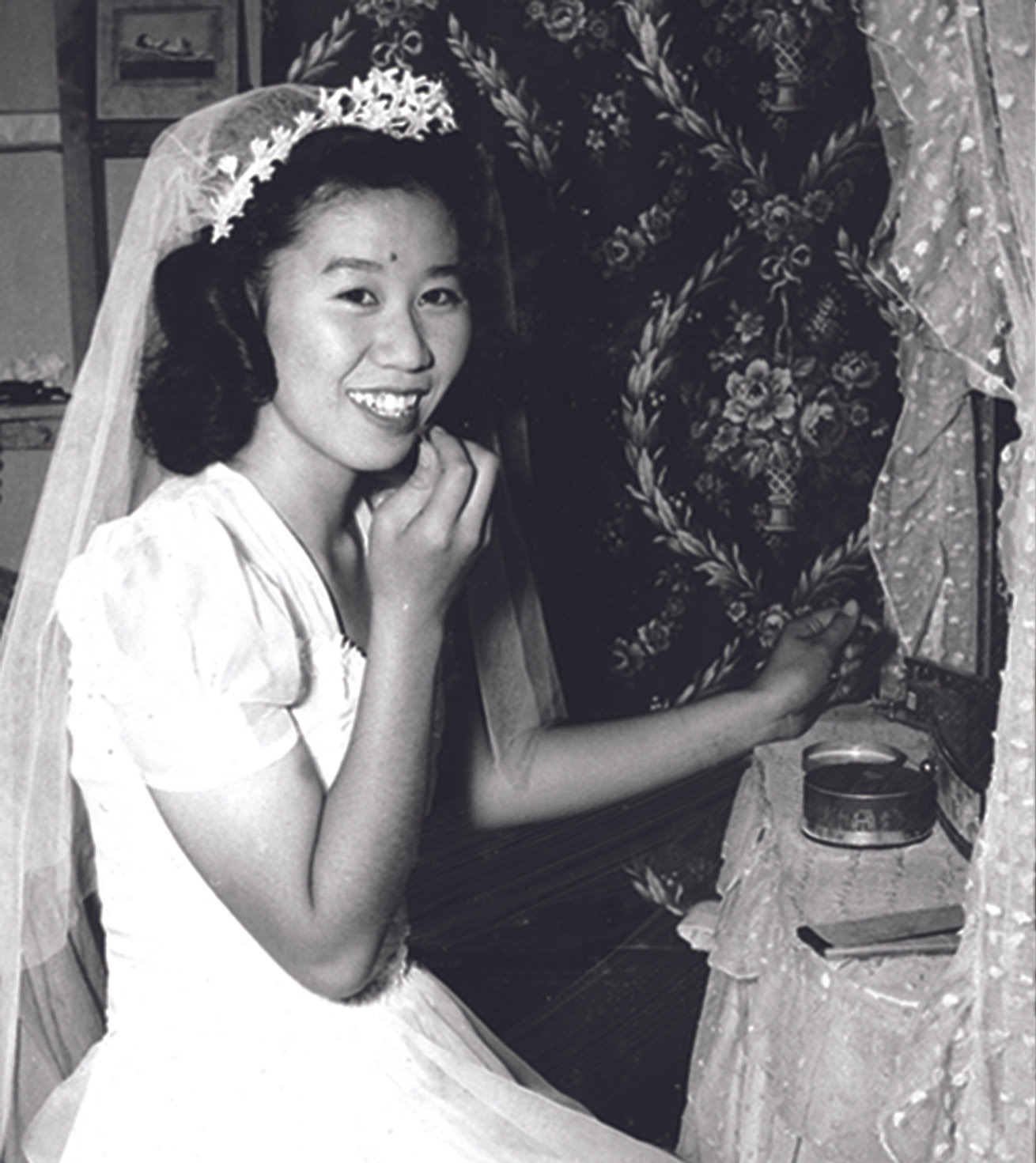
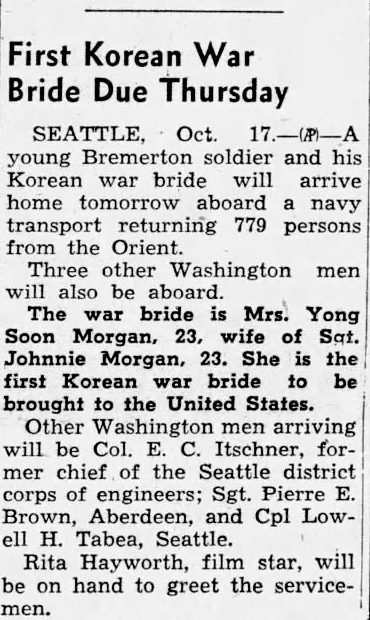
When Yong Soon “Blue” Morgan, billed as the first Korean war bride, landed in Seattle
on October 18, 1951, newspapers across the country ran the story. Most of the women
who came after her got no coverage at all.
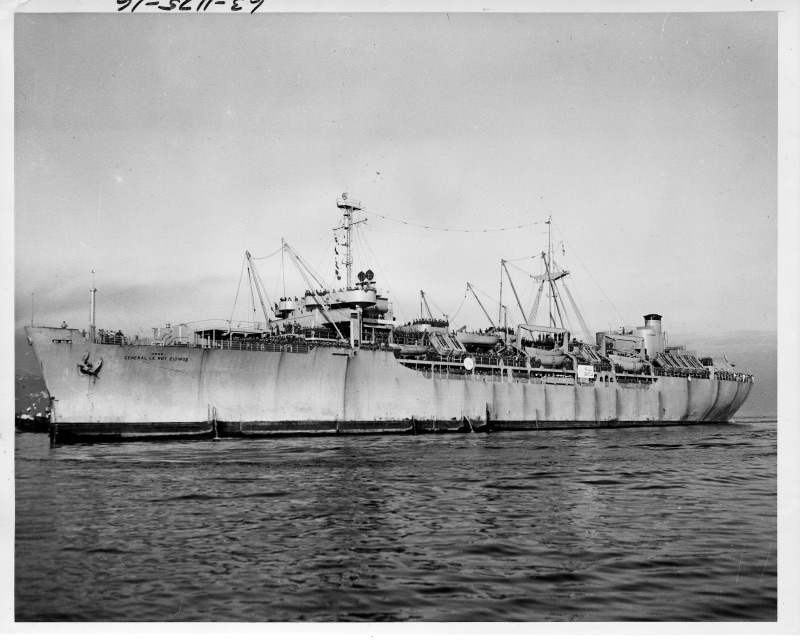
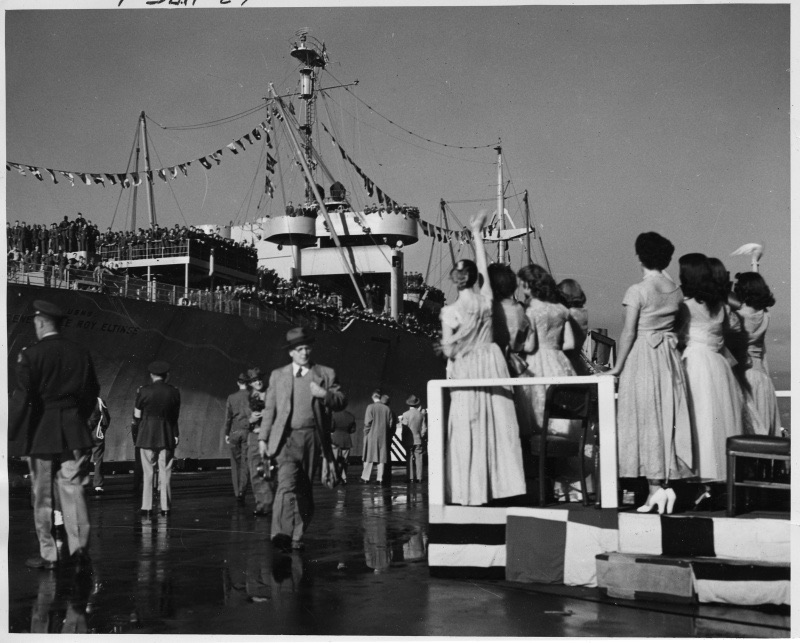
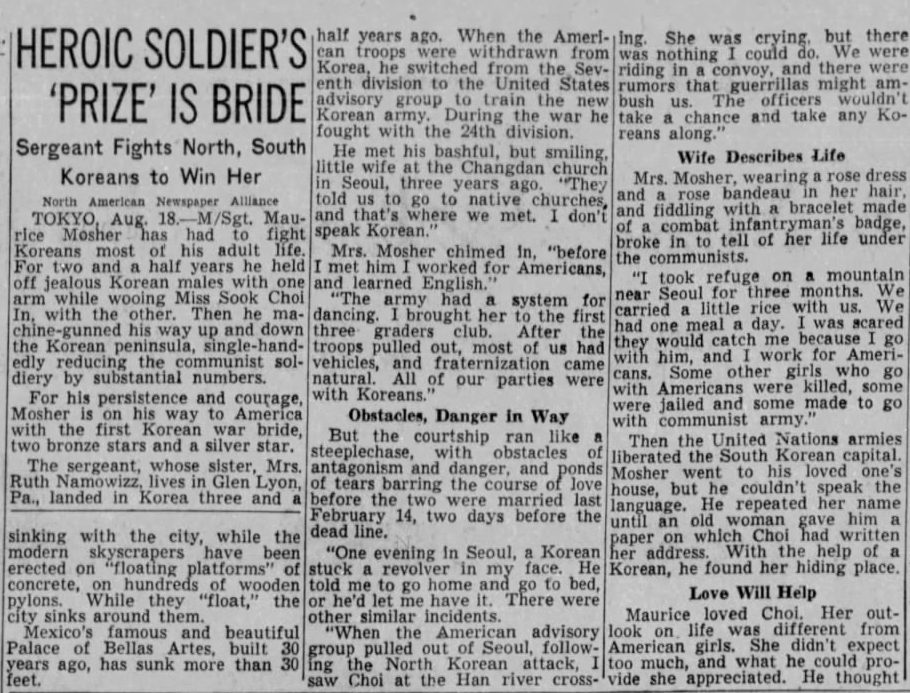
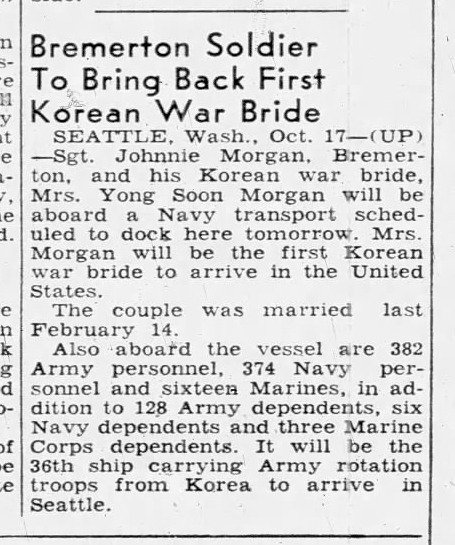
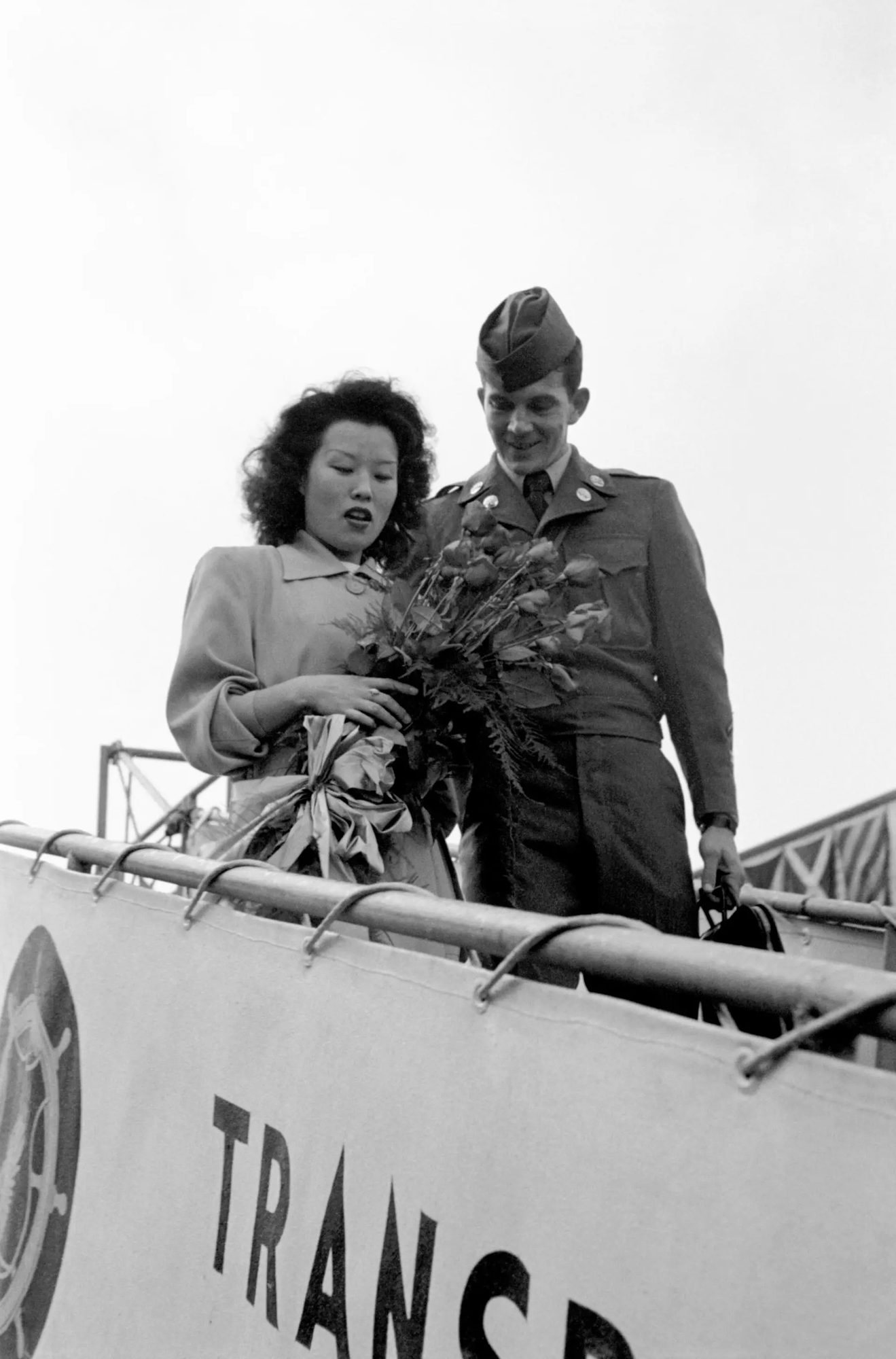
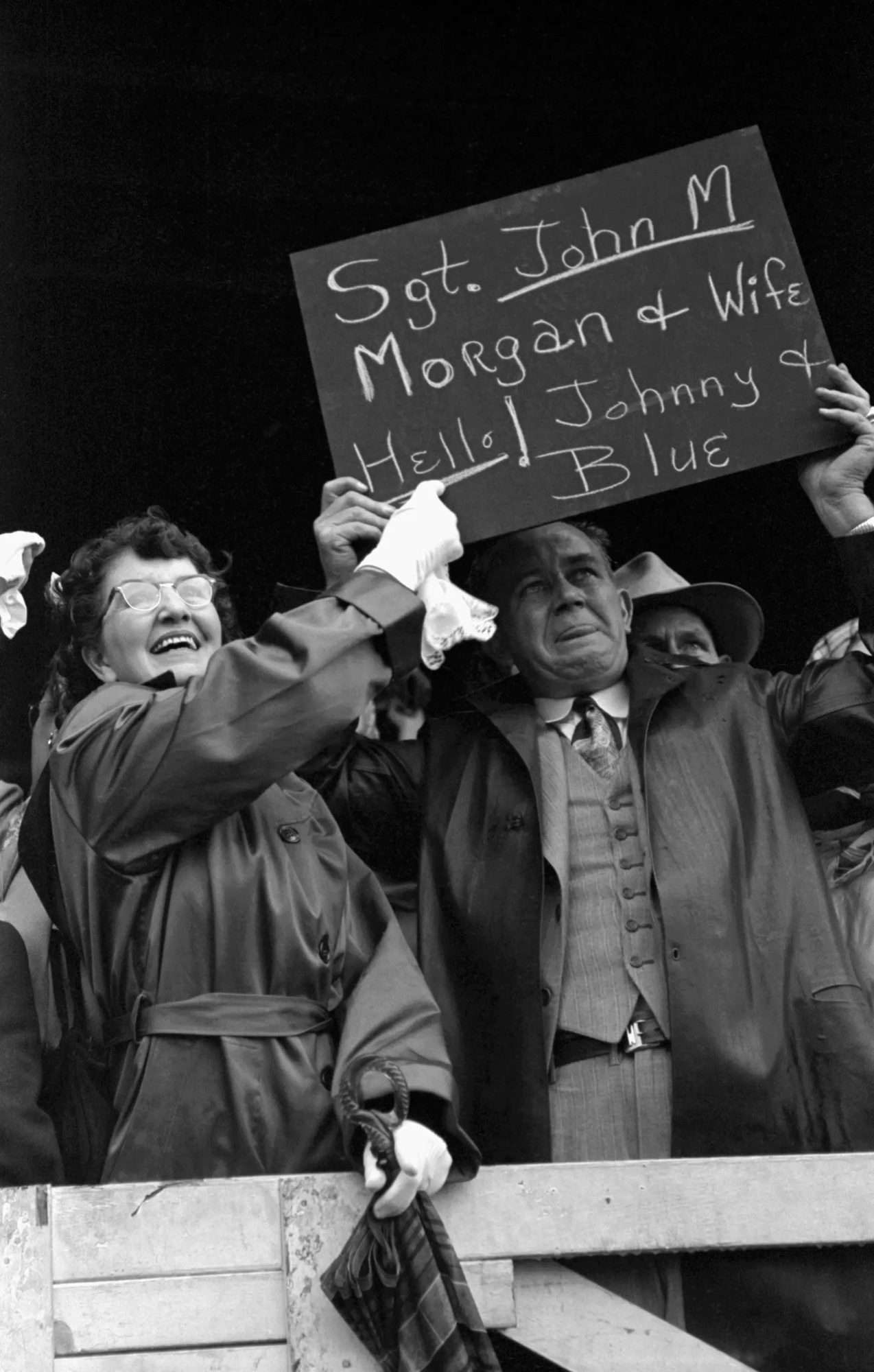
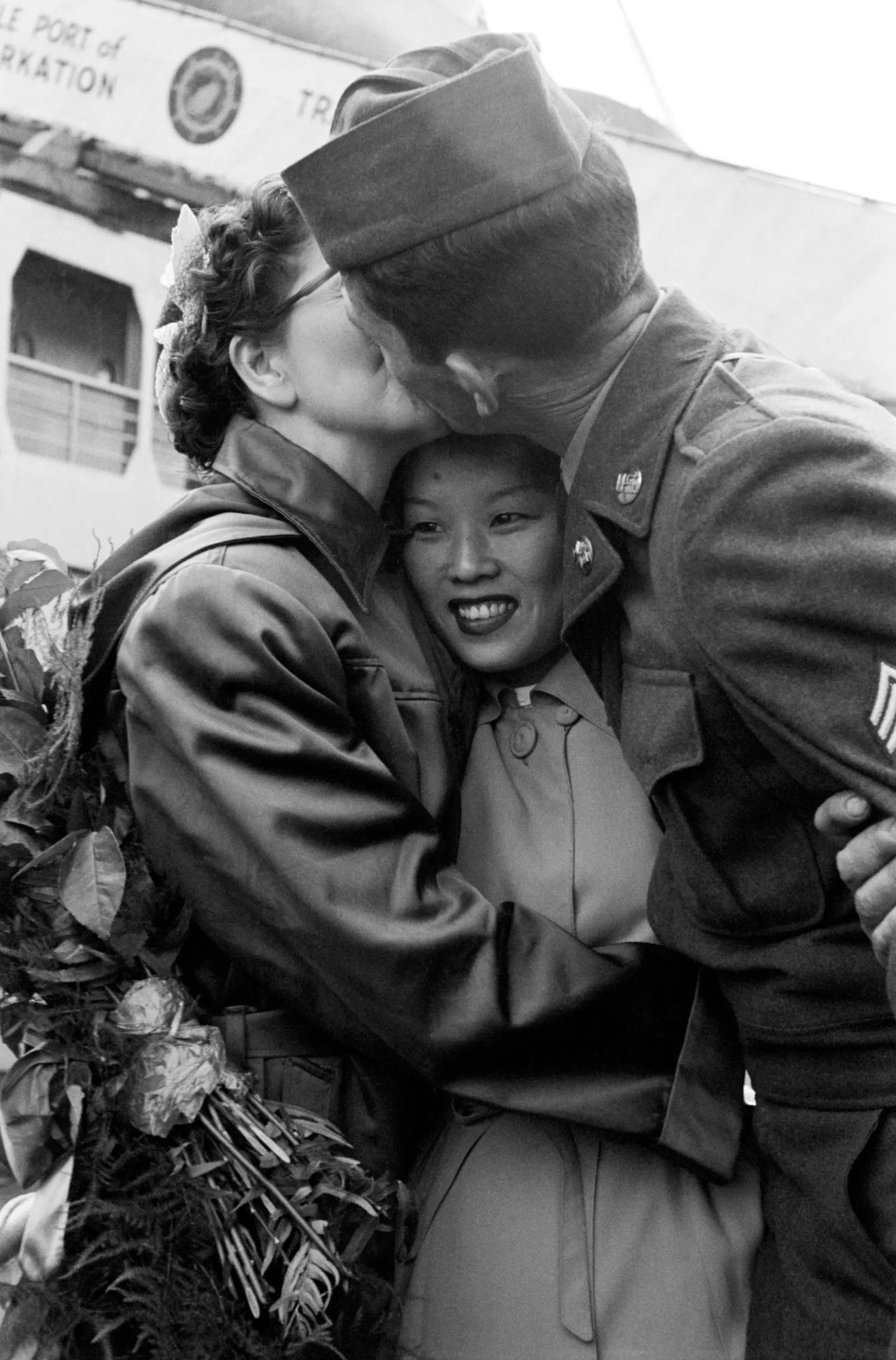
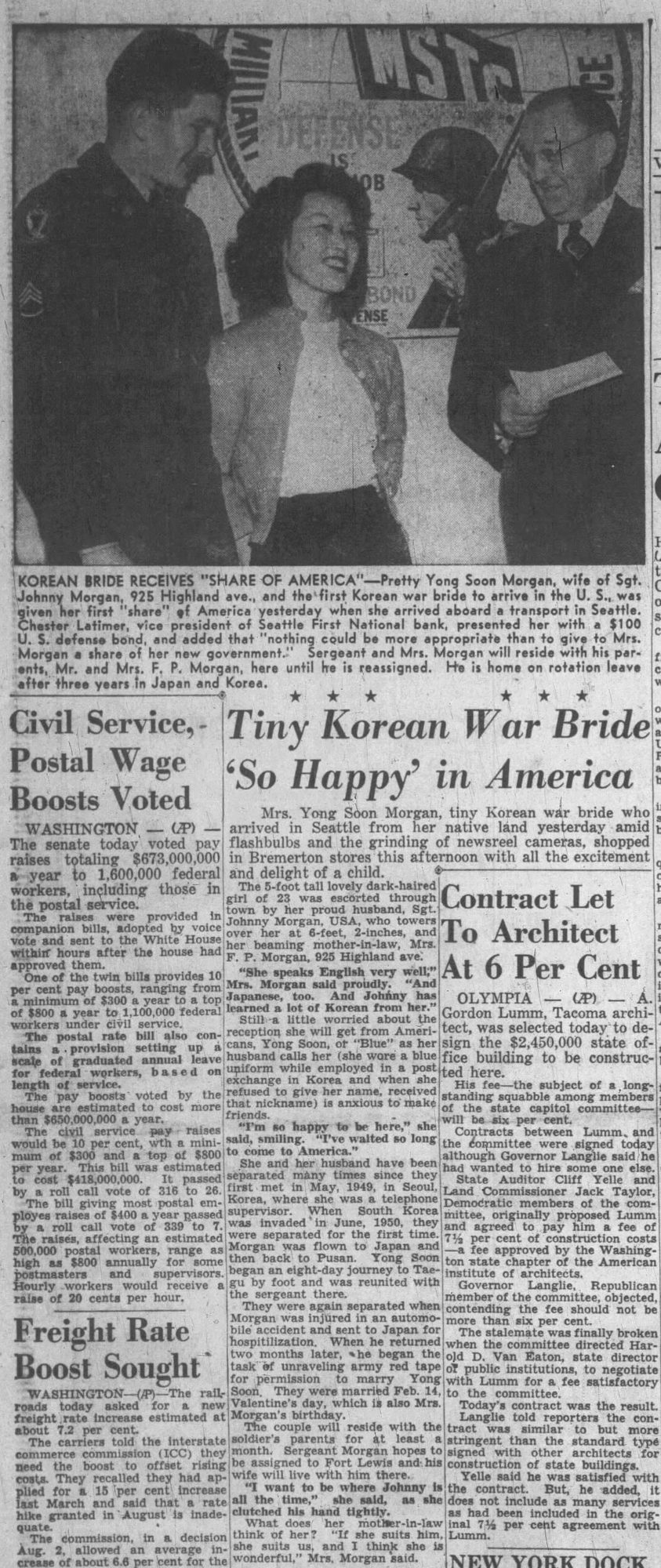
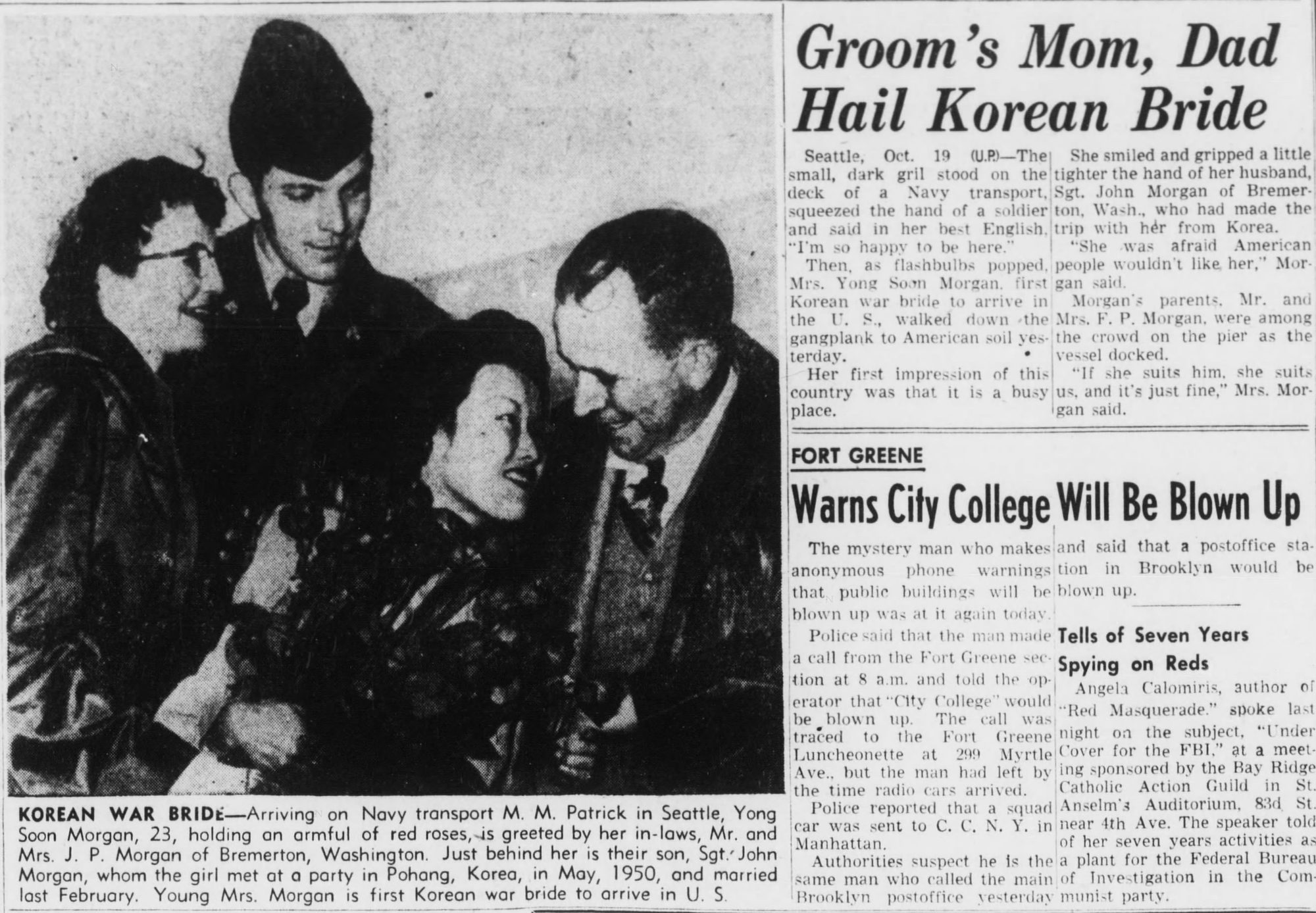
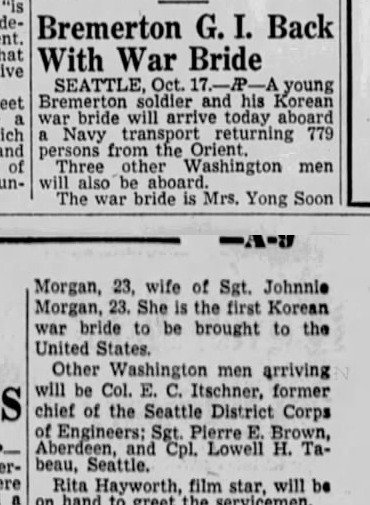
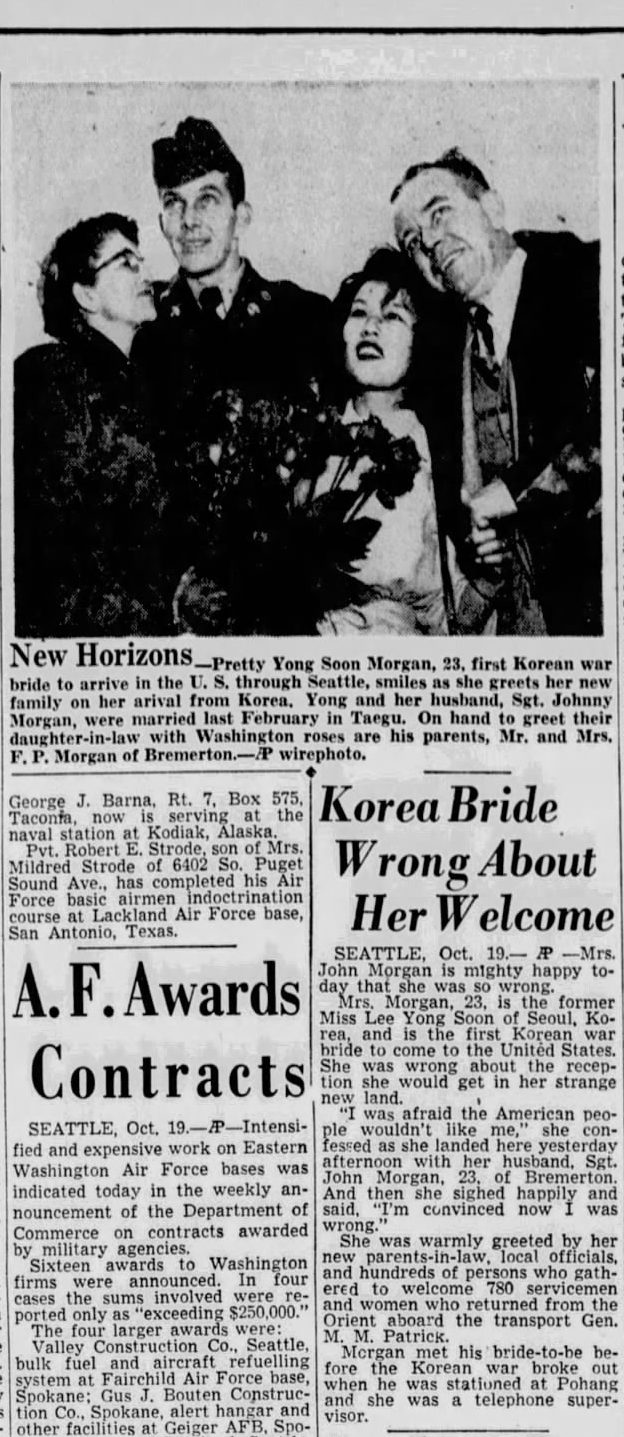
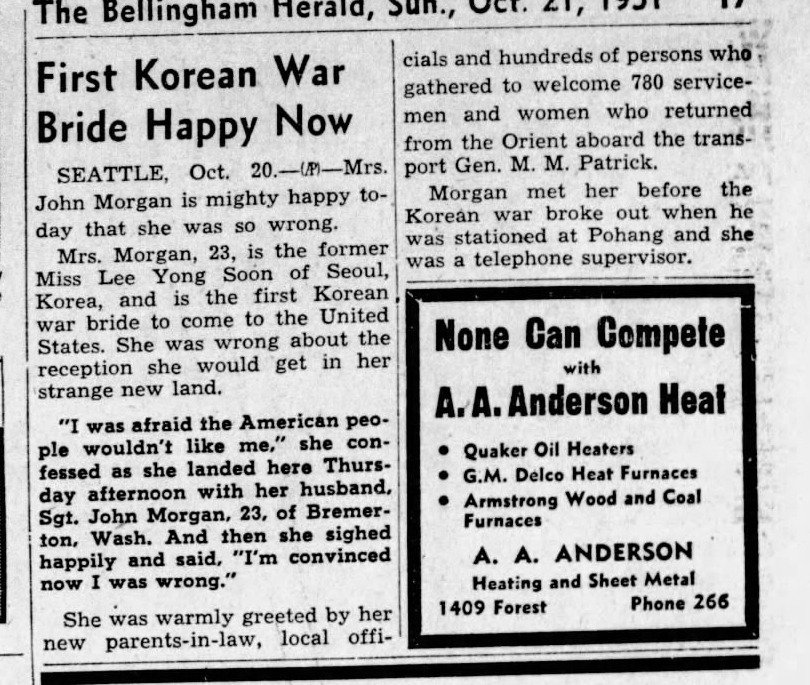
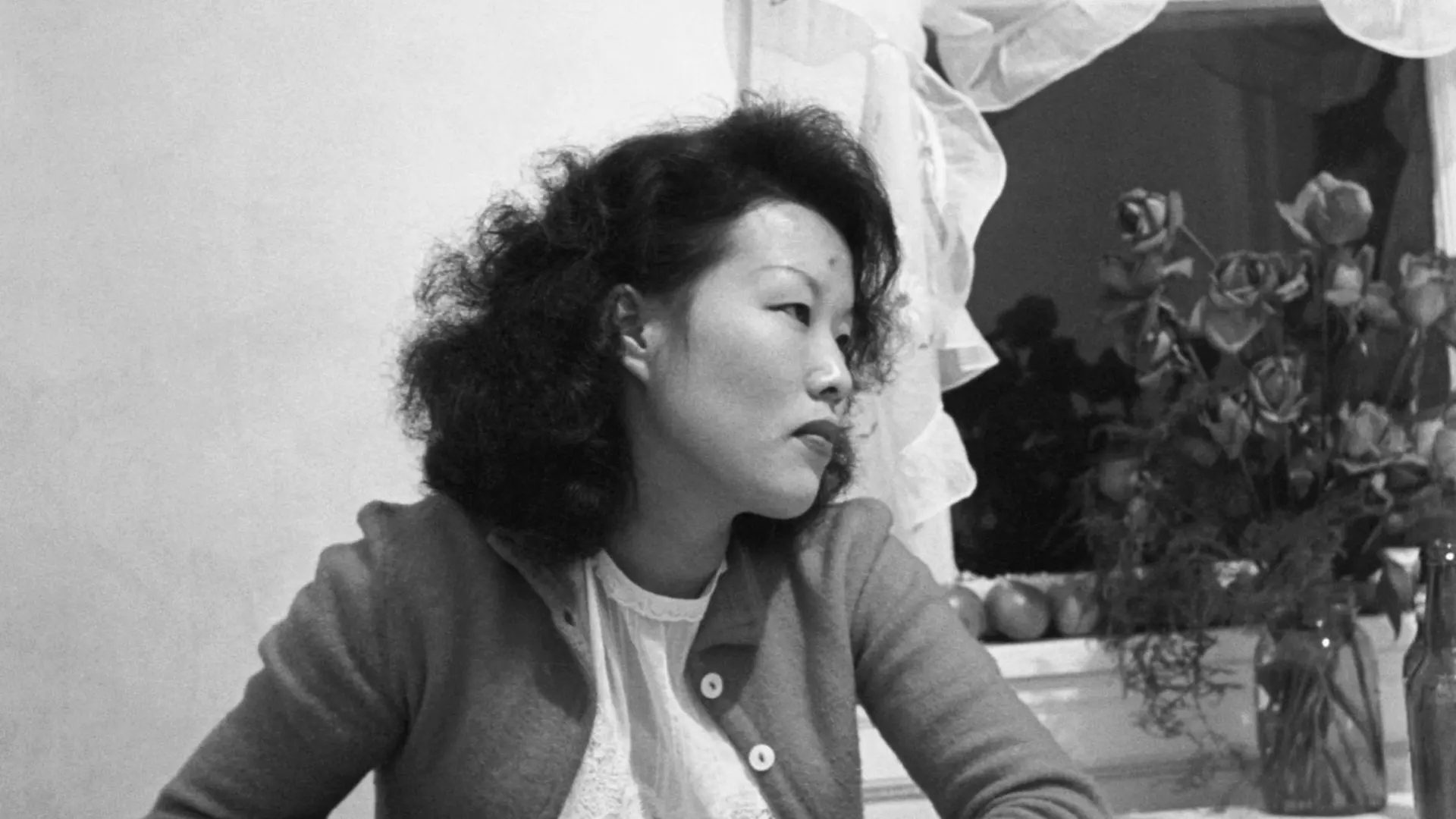
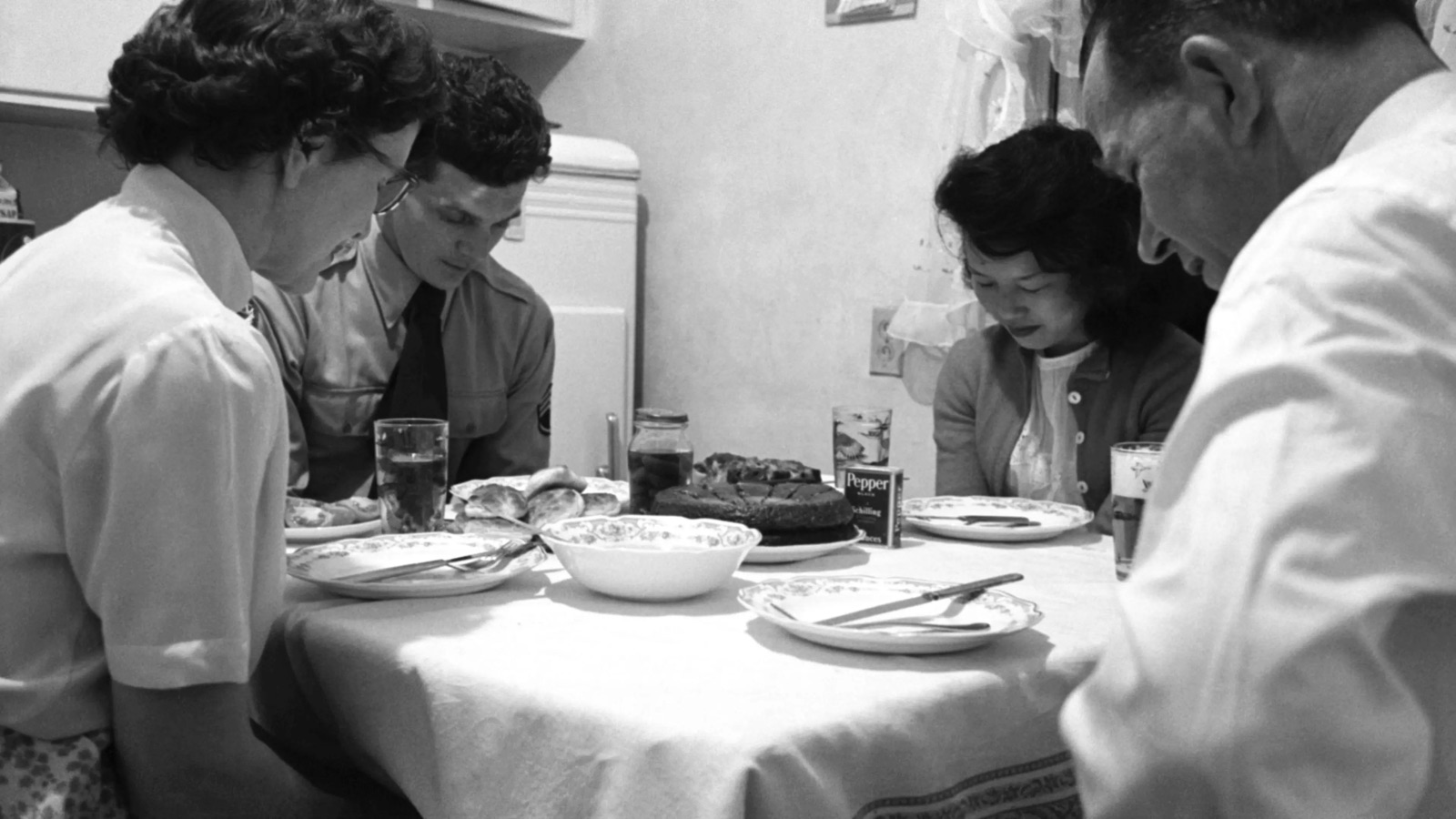
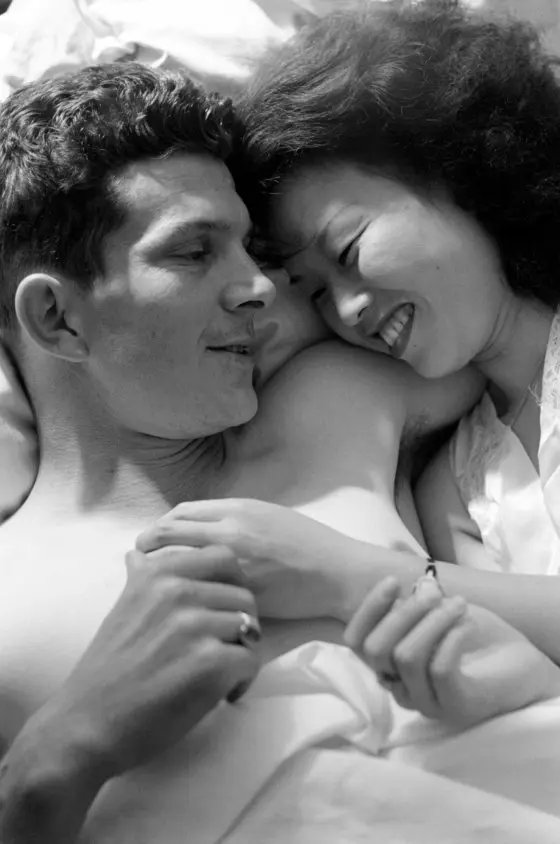
A war bride on her wedding day.TIAAPI HistoryThe USNS General LeRoy Eltinge reaches Seattle, May 5, 1951.U.S. Army. Harry S. Truman Library & MuseumDocking in Seattle, May 5, 1951.Richard L. Woodcock, U.S. Army. Harry S. Truman Library & Museum“Heroic Soldier’s ‘Prize’ Is Bride,” Spokesman-Review (Spokane), August 19, 1951.North American Newspaper Alliance. Newspapers.com“First Korean War Bride Due Thursday,” Bellingham Herald, October 17, 1951.Associated Press. Newspapers.com“Bremerton Soldier To Bring Back First Korean War Bride,” Daily Herald (Everett), October 17, 1951.United Press. Newspapers.comBlue and Johnie Morgan arrive in Seattle, October 18, 1951.Wayne Miller, LIFE. Via TIMEJohnie’s parents on the pier.Wayne Miller, LIFE. Via TIMEThe welcome.Wayne Miller, LIFE. Via TIME“Tiny Korean War Bride ‘So Happy’ in America,” Bremerton Sun, October 19, 1951.Newspapers.com“Groom’s Mom, Dad Hail Korean Bride,” Brooklyn Eagle, October 19, 1951.United Press. Newspapers.com“Bremerton G. I. Back With War Bride,” Tacoma News Tribune, October 19, 1951.Associated Press. Newspapers.com“New Horizons,” Tacoma News Tribune, October 20, 1951.Associated Press. Newspapers.com“First Korean War Bride Happy Now,” Bellingham Herald, October 21, 1951.Associated Press. Newspapers.comBlue Morgan in Seattle, 1951.Wayne Miller, LIFE. Via TIMEBlue Morgan at dinner with her husband’s family, 1951.Attributed to Wayne Miller, LIFE. Via TIMEBlue and Johnie Morgan, Seattle, 1951.Wayne Miller, LIFE. Via TIMEBlue and Johnie Morgan by the water, Seattle, 1951.Wayne Miller, LIFE. Via TIME
After the welcome
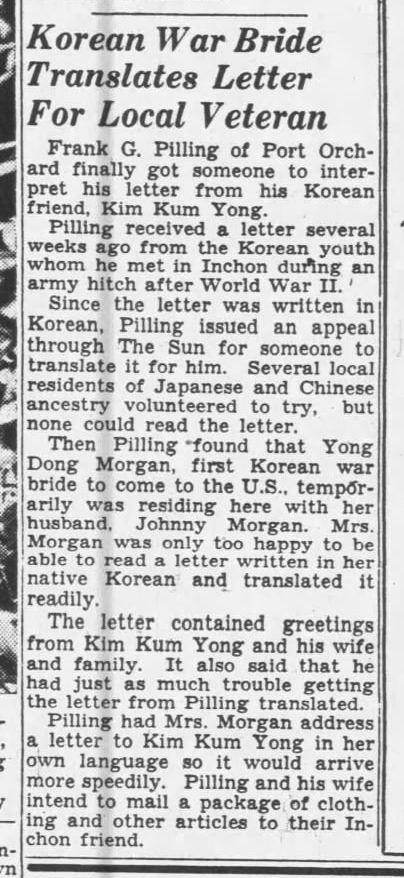
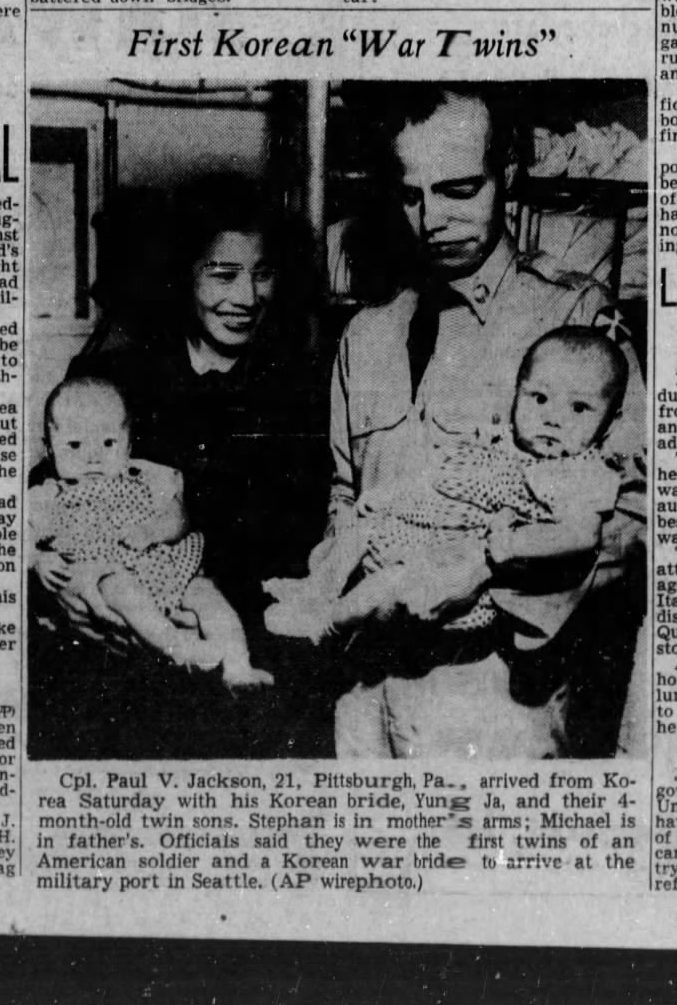
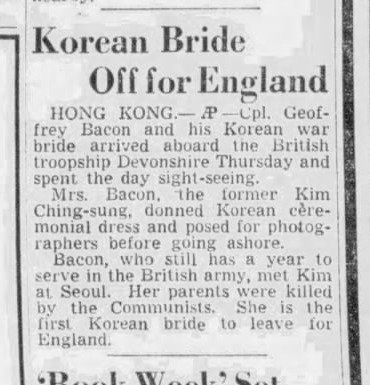
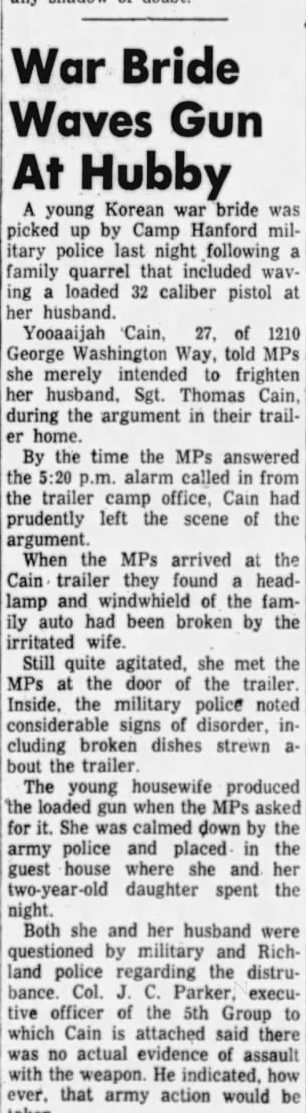
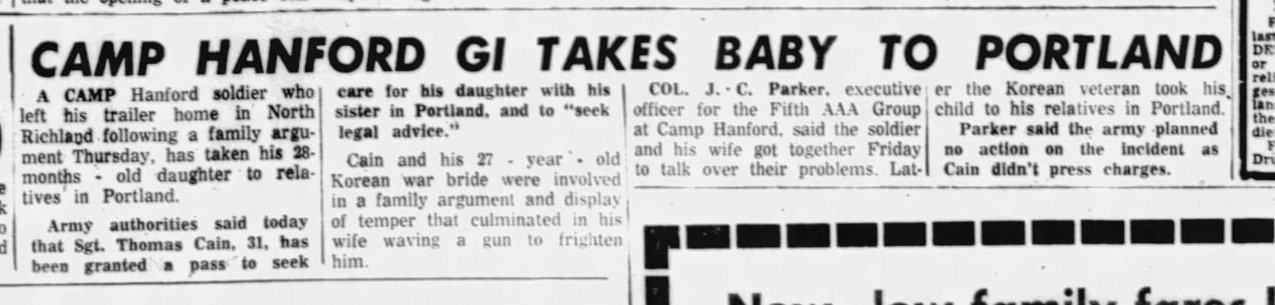
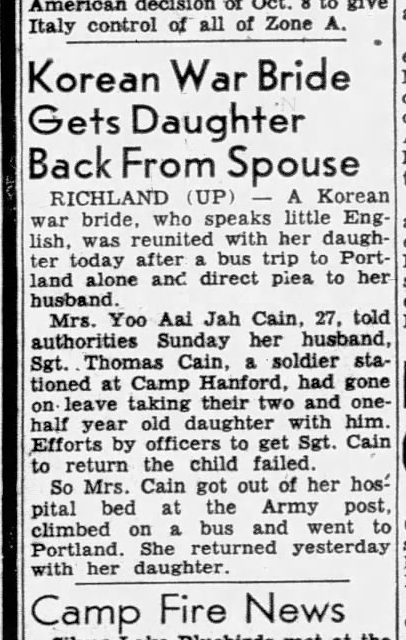
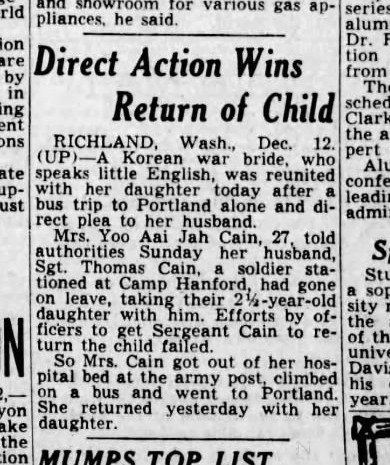
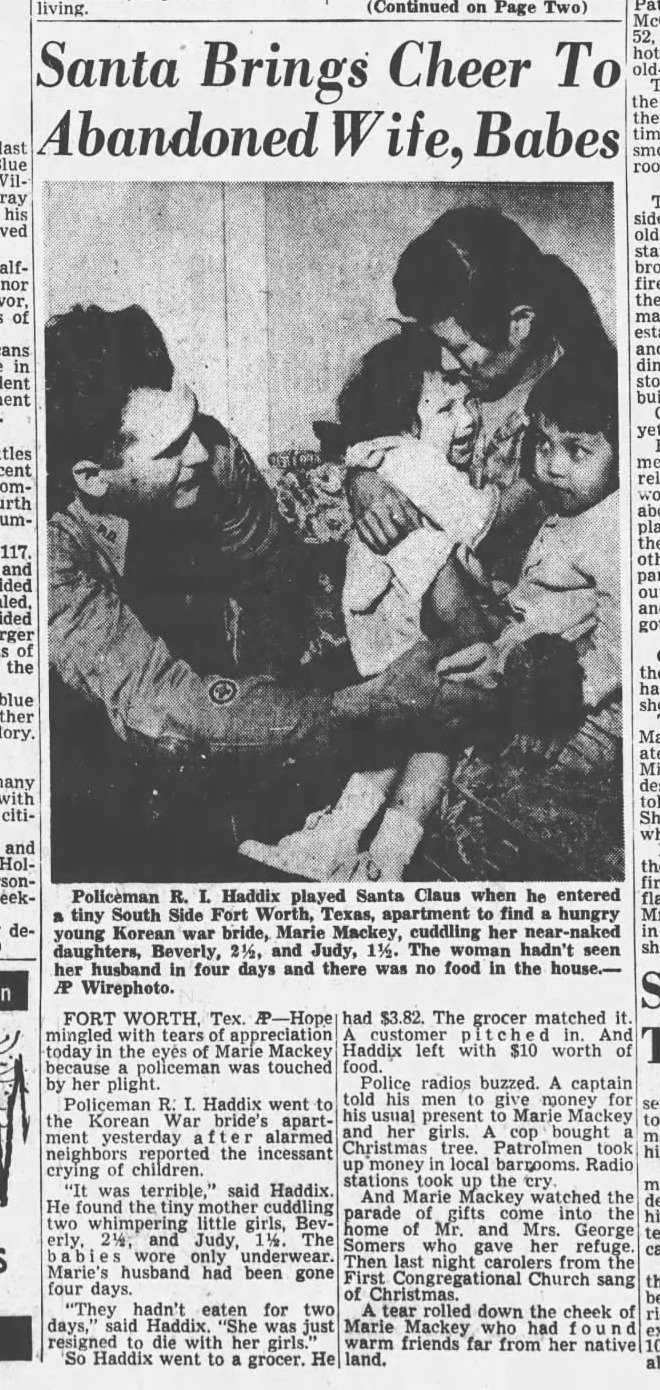
Within a few years the coverage changed. Korean war brides still made the papers, but
more often when something had gone wrong at home: a quarrel that ended with a gun, a
fight over a child, a mother left alone with her daughters.
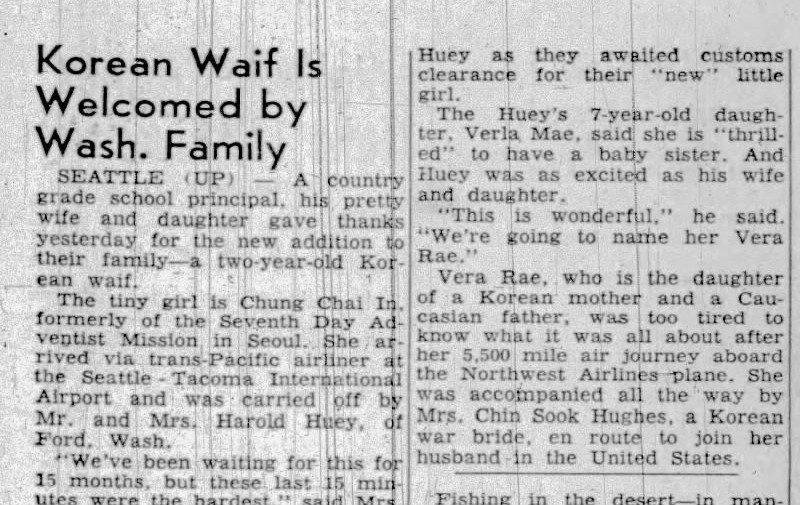
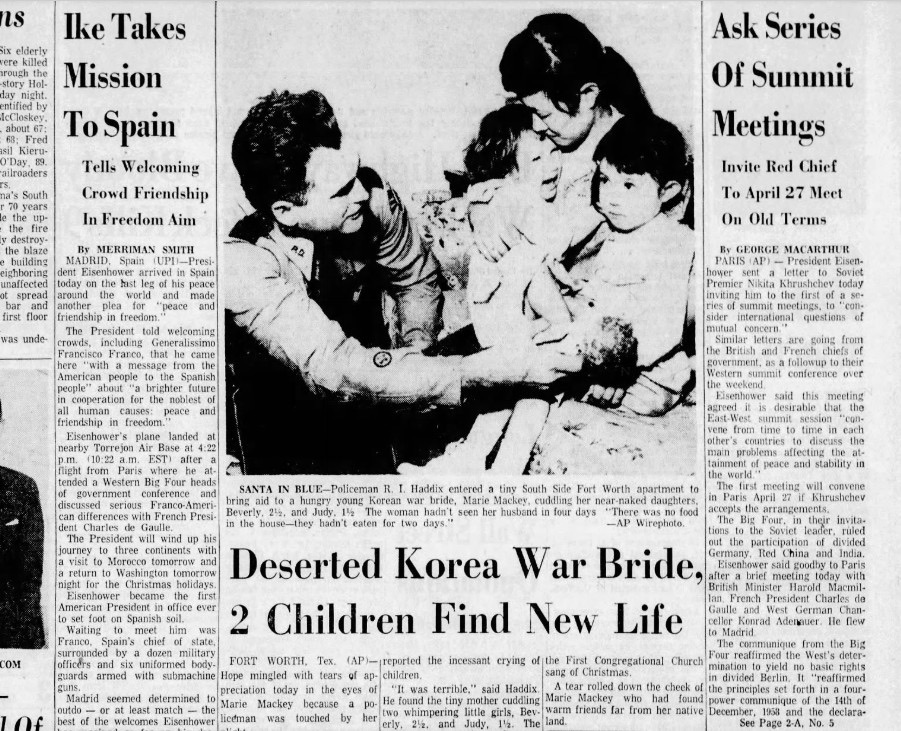
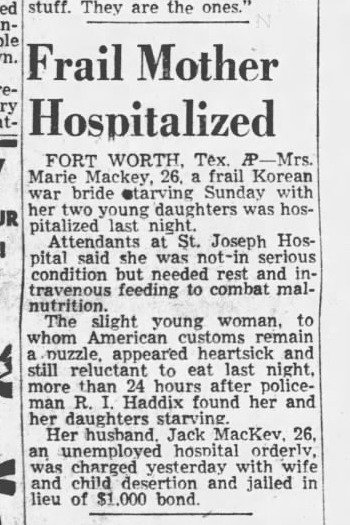
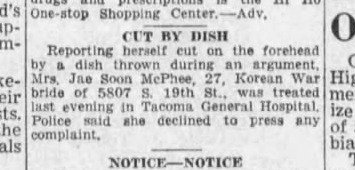
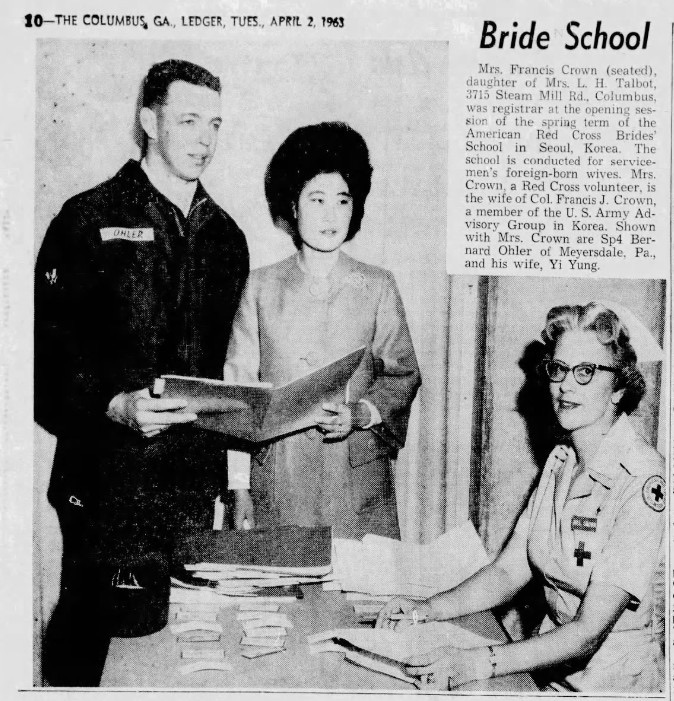
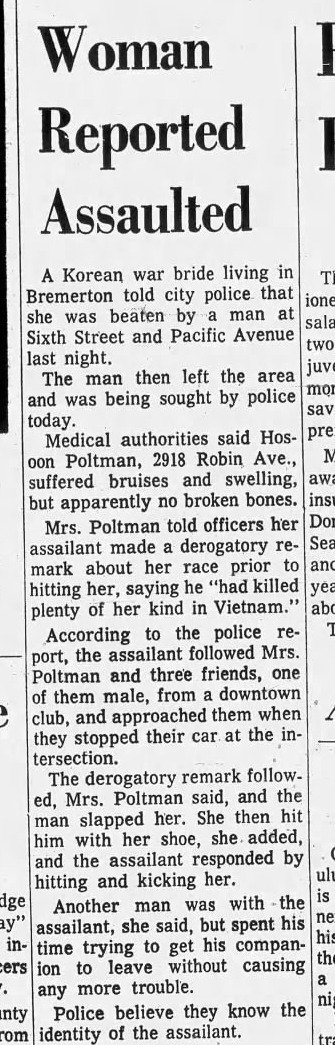
“Korean War Bride Translates Letter for Local Veteran,” Bremerton Sun, May 19, 1952.Newspapers.com“First Korean ‘War Twins,’” Spokesman-Review, August 18, 1952.AP Wirephoto. Newspapers.com“Korean Bride Off for England,” Tacoma News Tribune, November 14, 1952.Associated Press. Newspapers.com“War Bride Waves Gun at Hubby,” Tri-City Herald, December 4, 1953.Newspapers.com“Camp Hanford GI Takes Baby to Portland,” Tri-City Herald, December 7, 1953.Newspapers.com“Korean War Bride Gets Daughter Back From Spouse,” Daily Herald (Everett), December 12, 1953.United Press. Newspapers.com“Direct Action Wins Return of Child,” Spokane Daily Chronicle, December 12, 1953.United Press. Newspapers.com“Korean Waif Is Welcomed by Wash. Family,” Daily Herald (Everett), November 26, 1954.United Press. Newspapers.com“Deserted Korea War Bride, 2 Children Find New Life,” December 1959.Associated Press“Santa Brings Cheer To Abandoned Wife, Babes,” Tacoma News Tribune, December 21, 1959.Associated Press. Newspapers.com“Frail Mother Hospitalized,” Tacoma News Tribune, December 22, 1959.Associated Press. Newspapers.com“Cut by Dish,” Tacoma News Tribune, February 12, 1963.Newspapers.com“Bride School,” Columbus Ledger (Georgia), April 2, 1963.Newspapers.com“Woman Reported Assaulted,” Bremerton Sun, May 16, 1968.Newspapers.com
The Korean Women’s Association
The Korean Women’s Association (KWA) began in 1972, when Hongja White started
gathering Korean military wives near Fort Lewis in her Tacoma home and feeding them.
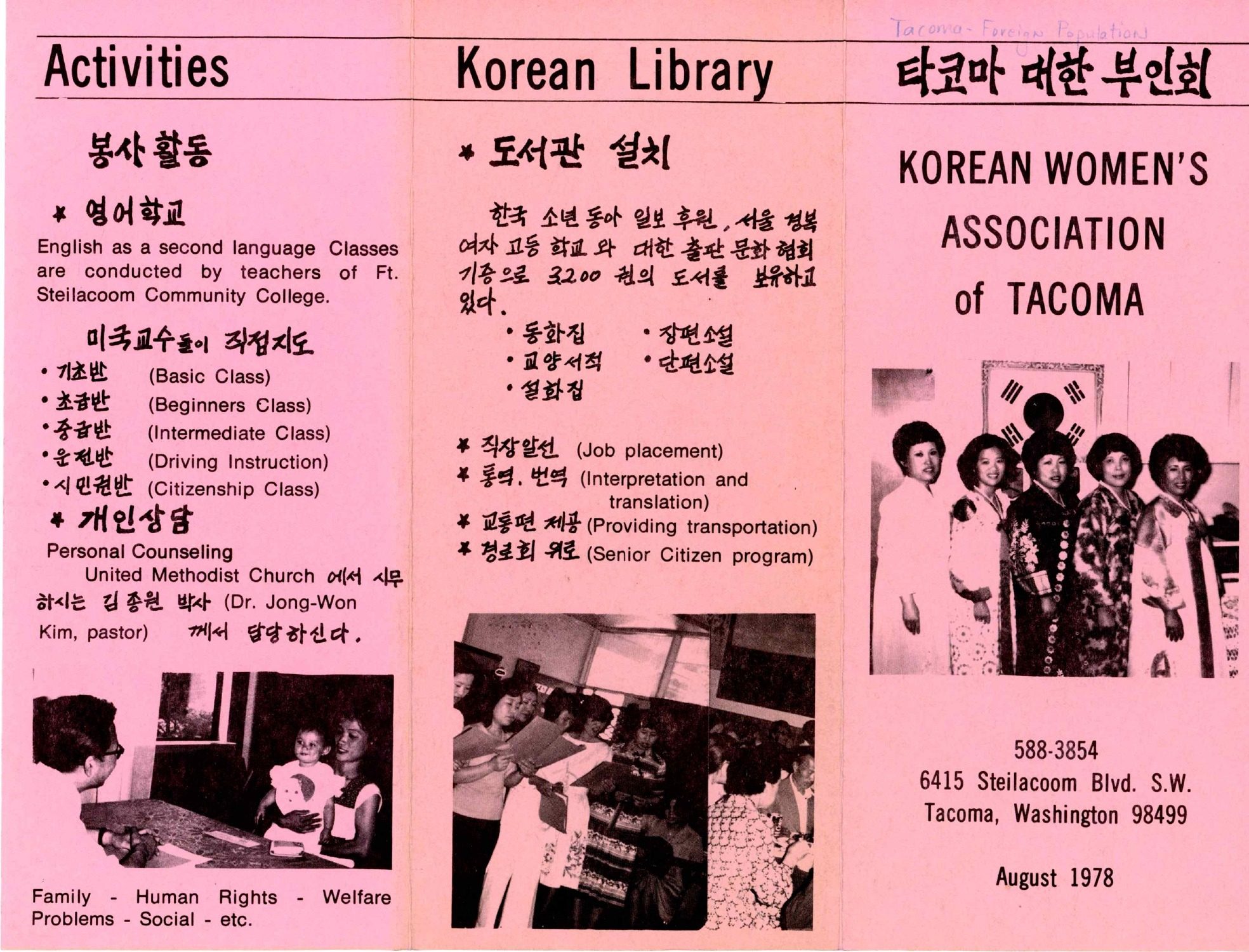
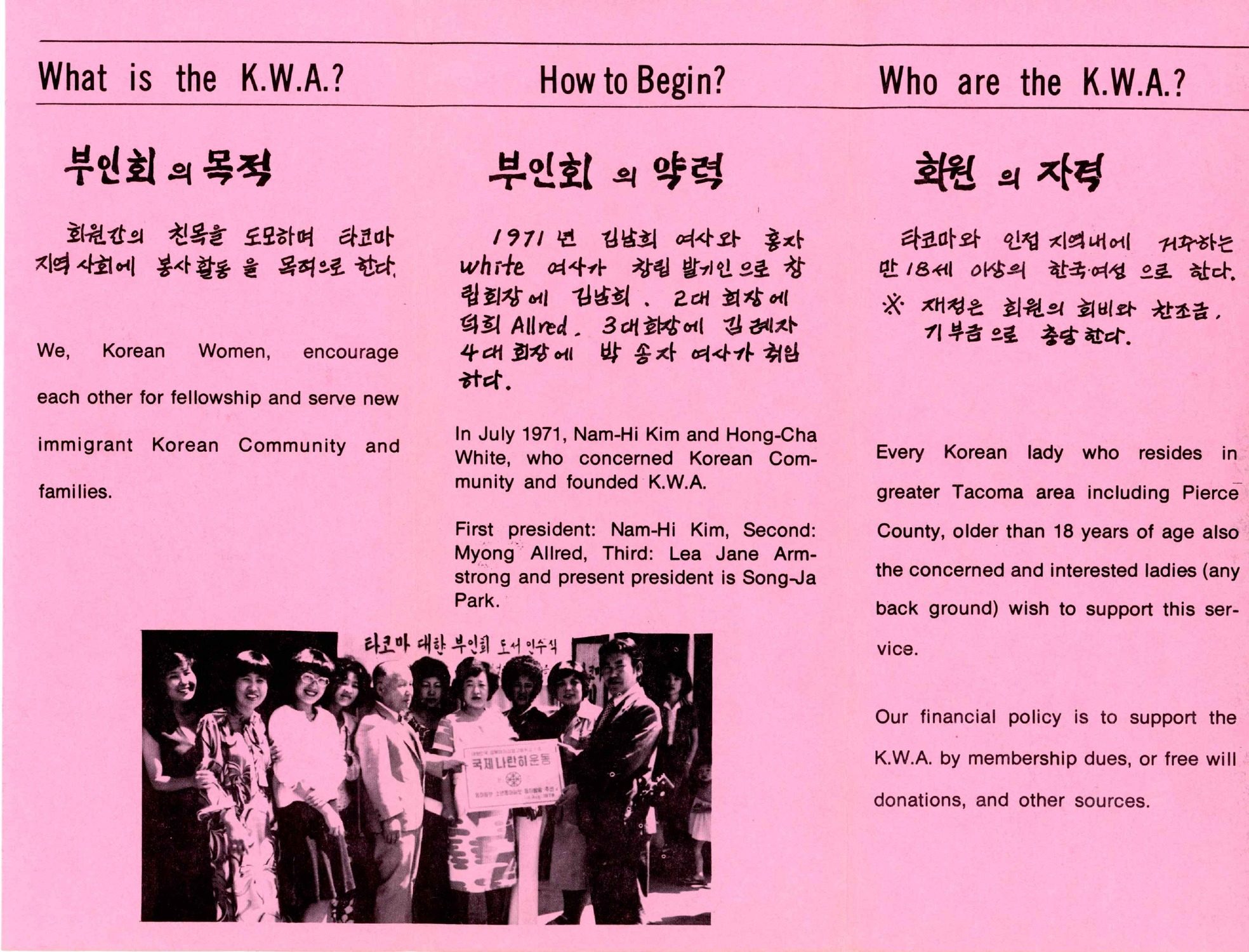
Many were struggling with culture shock, language barriers, and abuse. By 1978 the
association was running English and citizenship classes, counseling, job placement,
and interpretation. It became a nonprofit in 1979 and today runs social services
across Western Washington. Park Myung Rae, chair of its board, tells the
association’s story in her oral history.
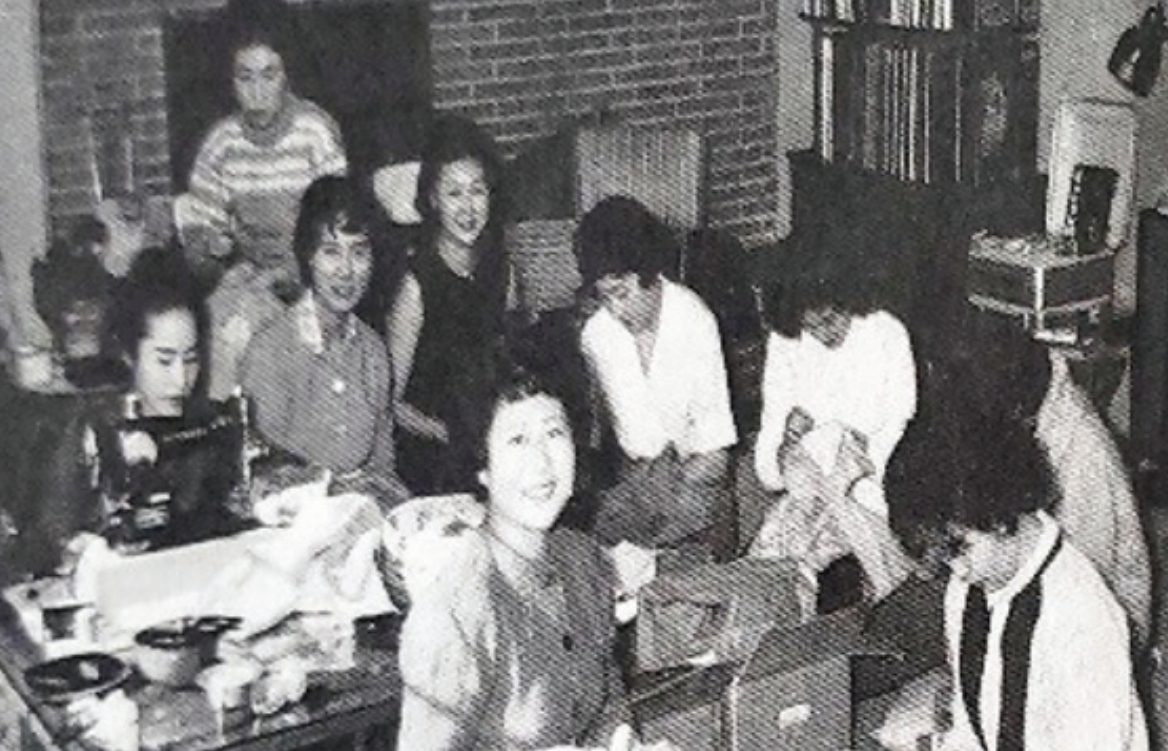
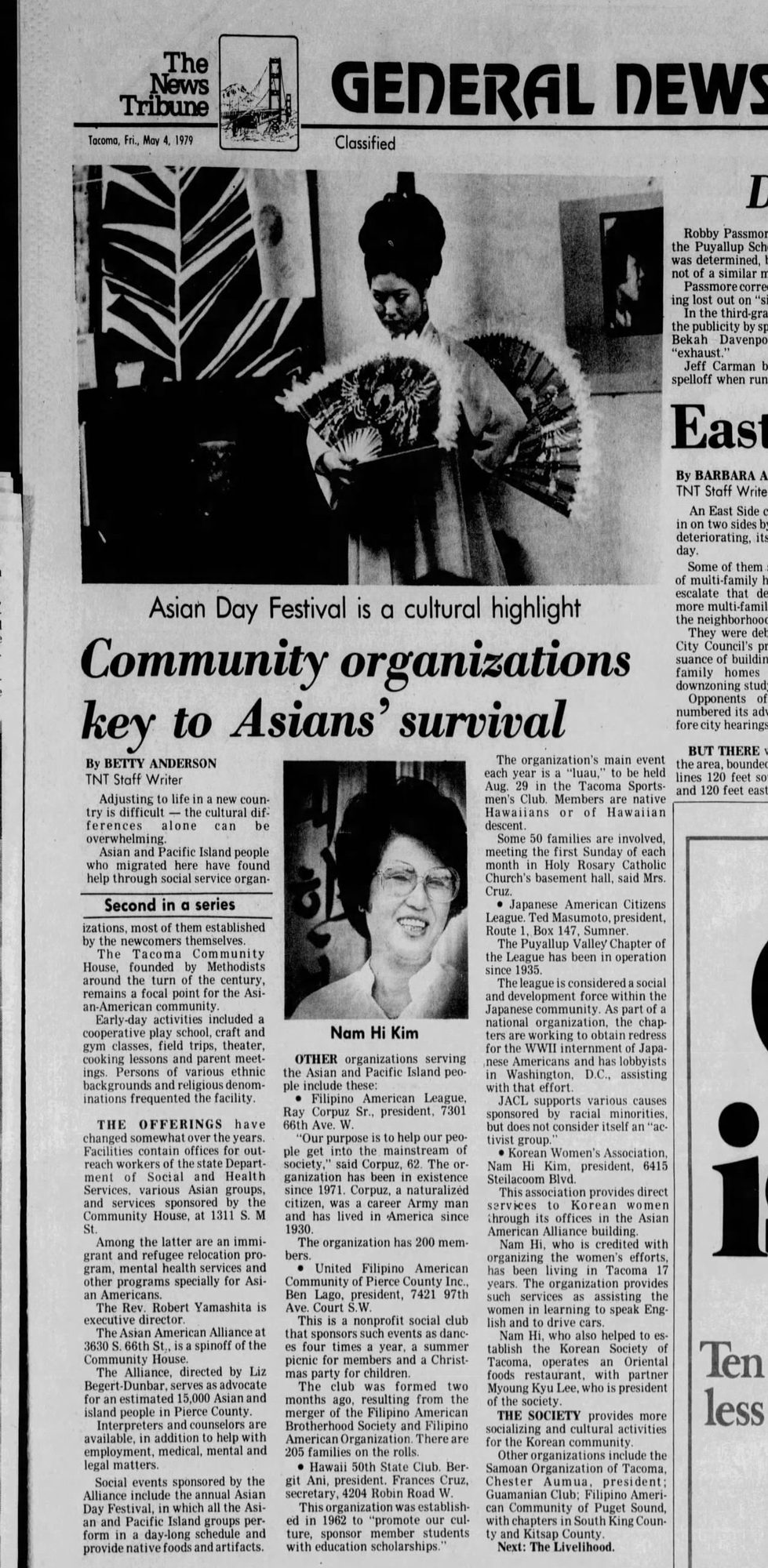
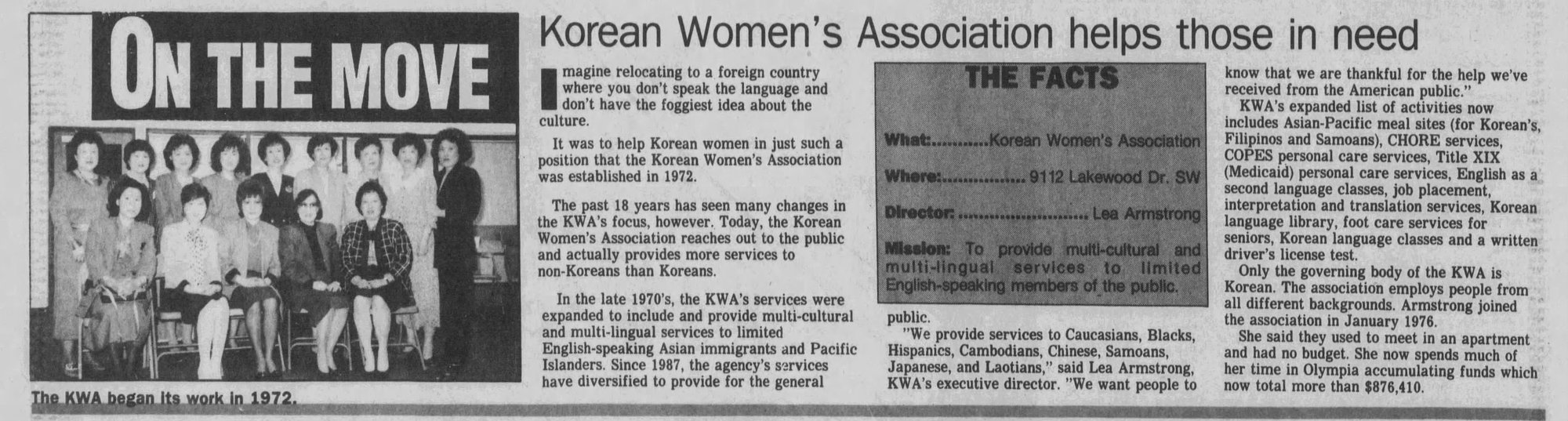
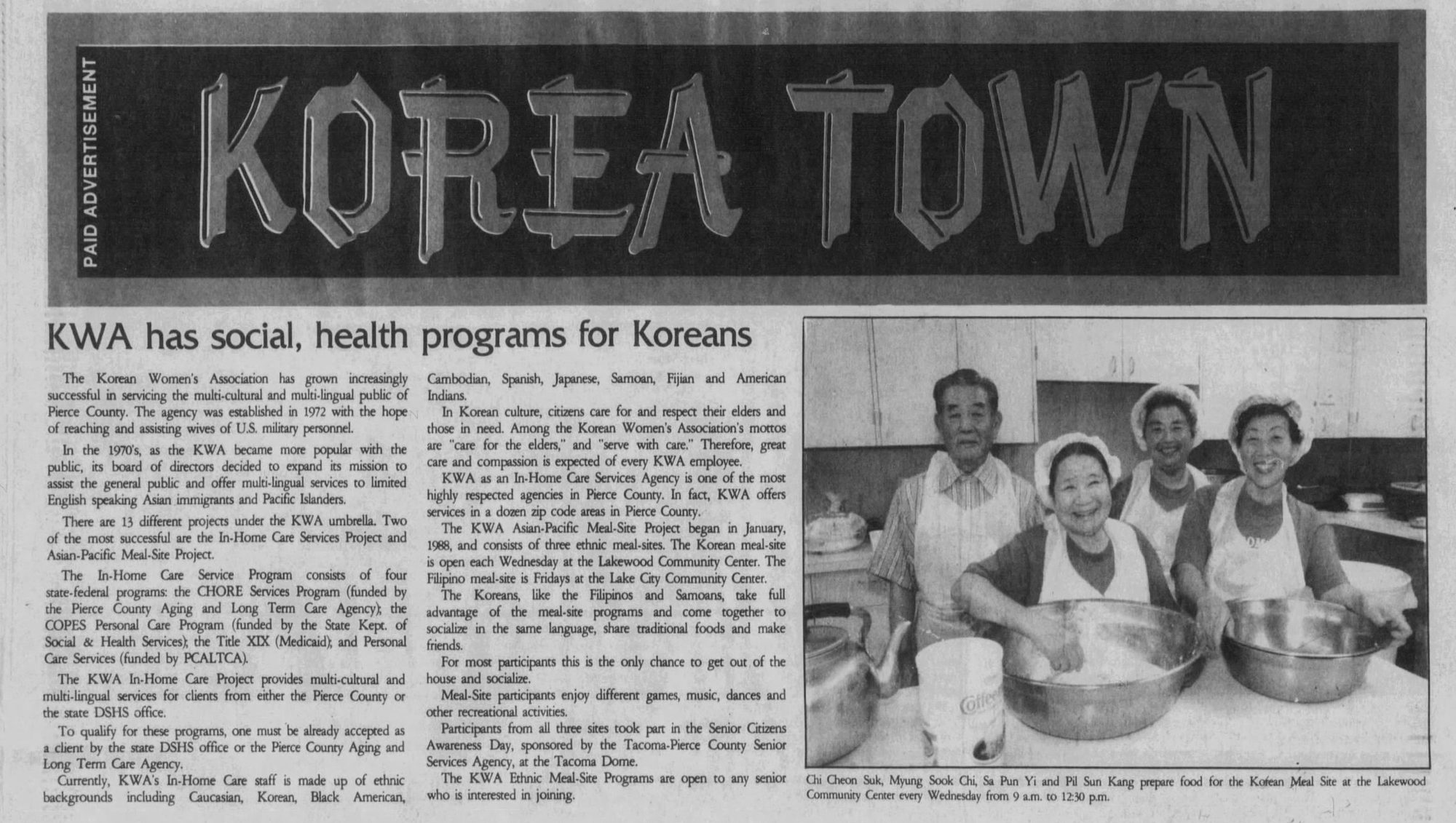
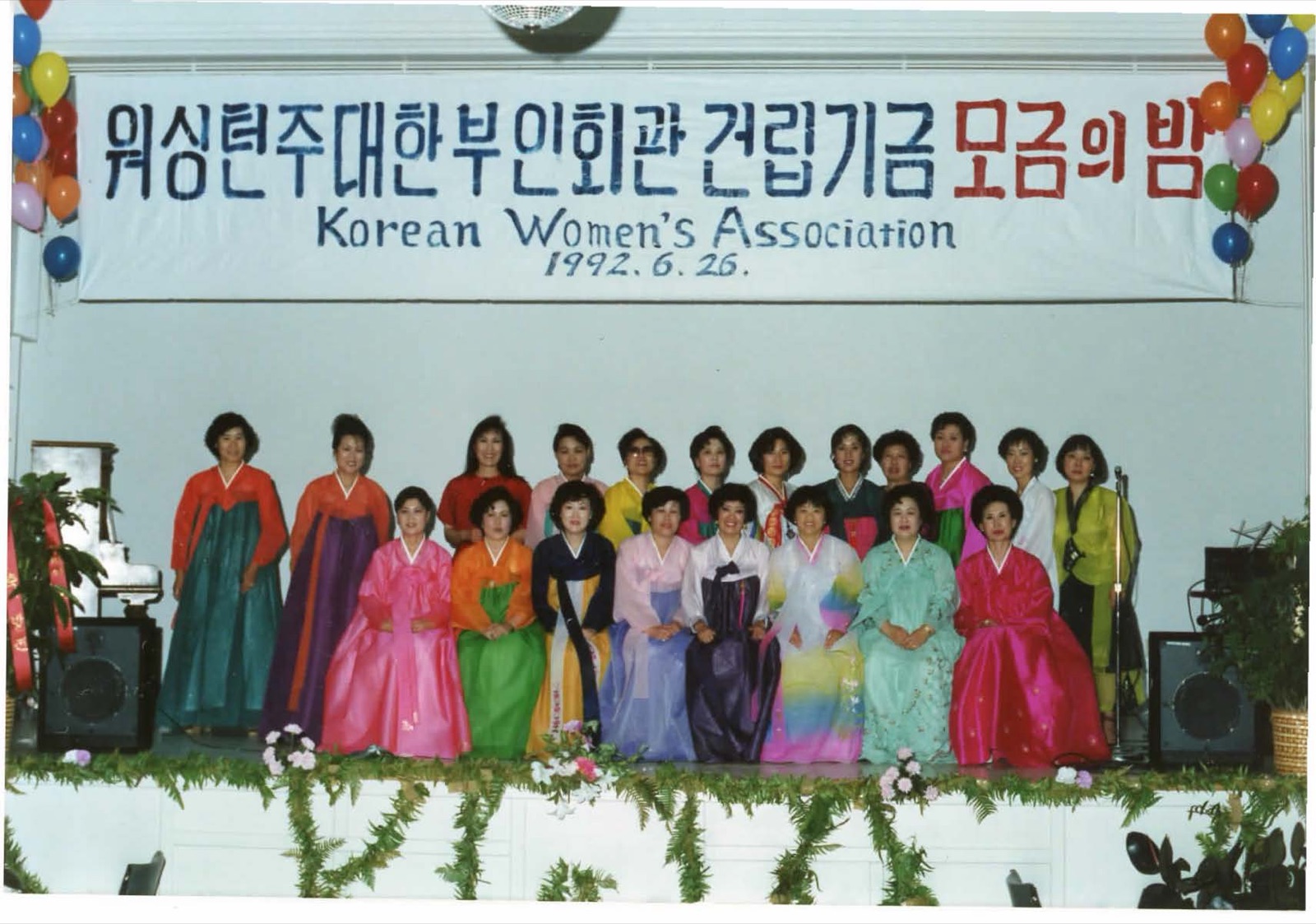
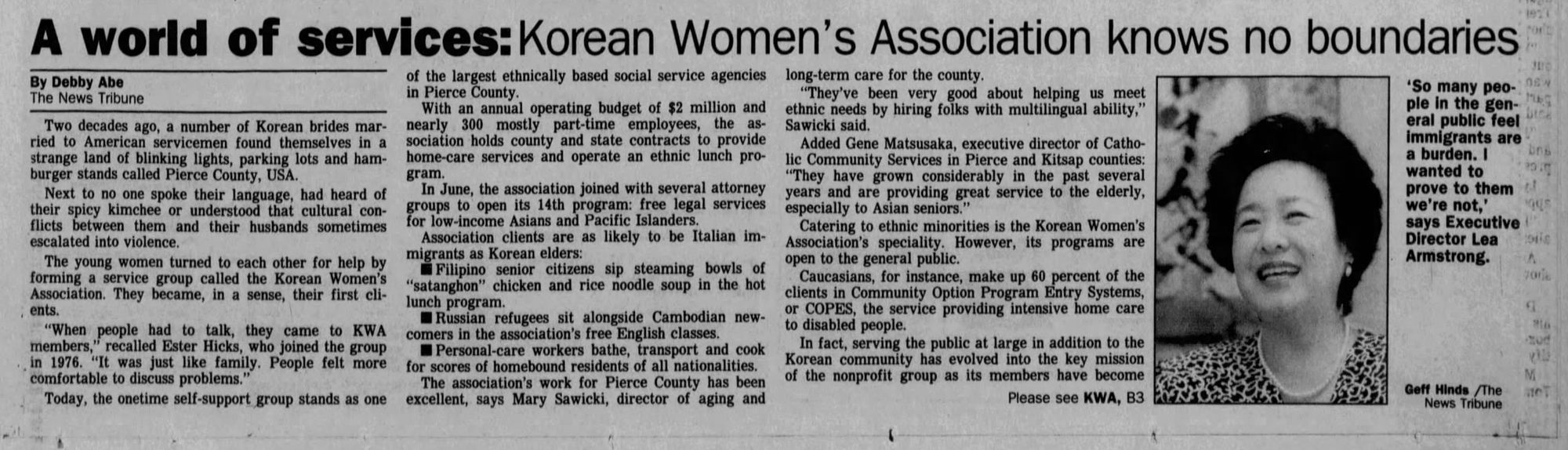
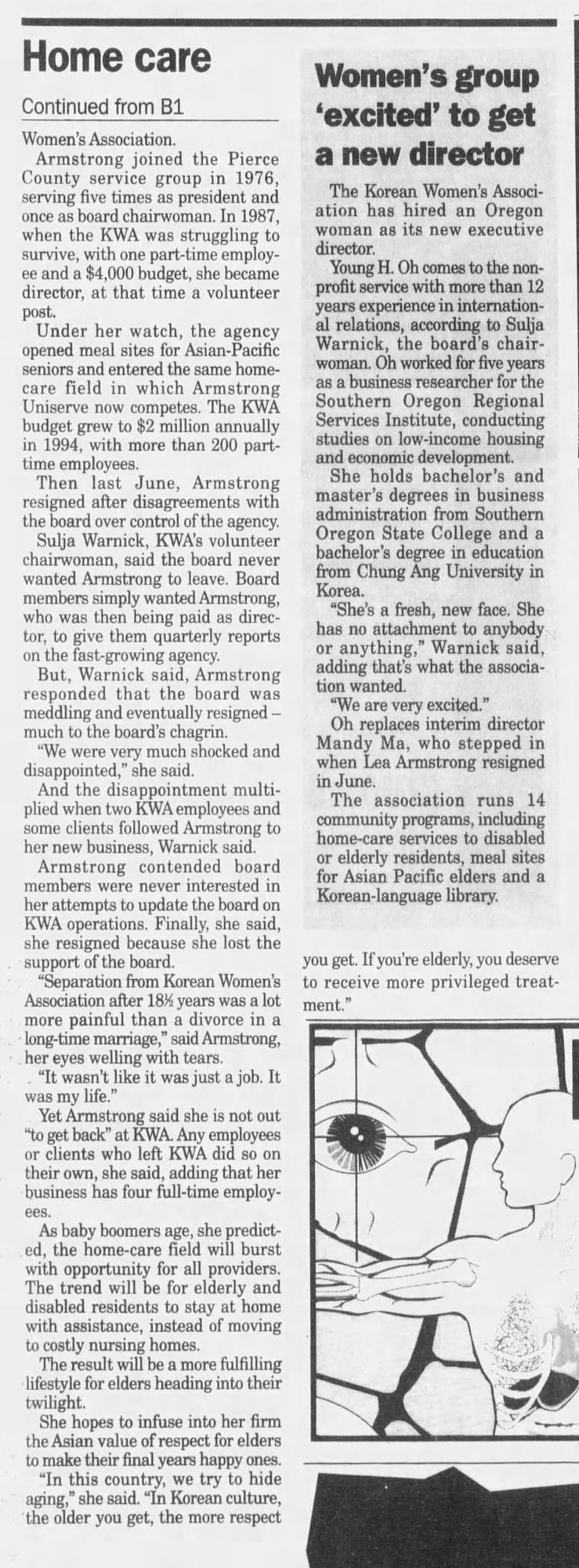
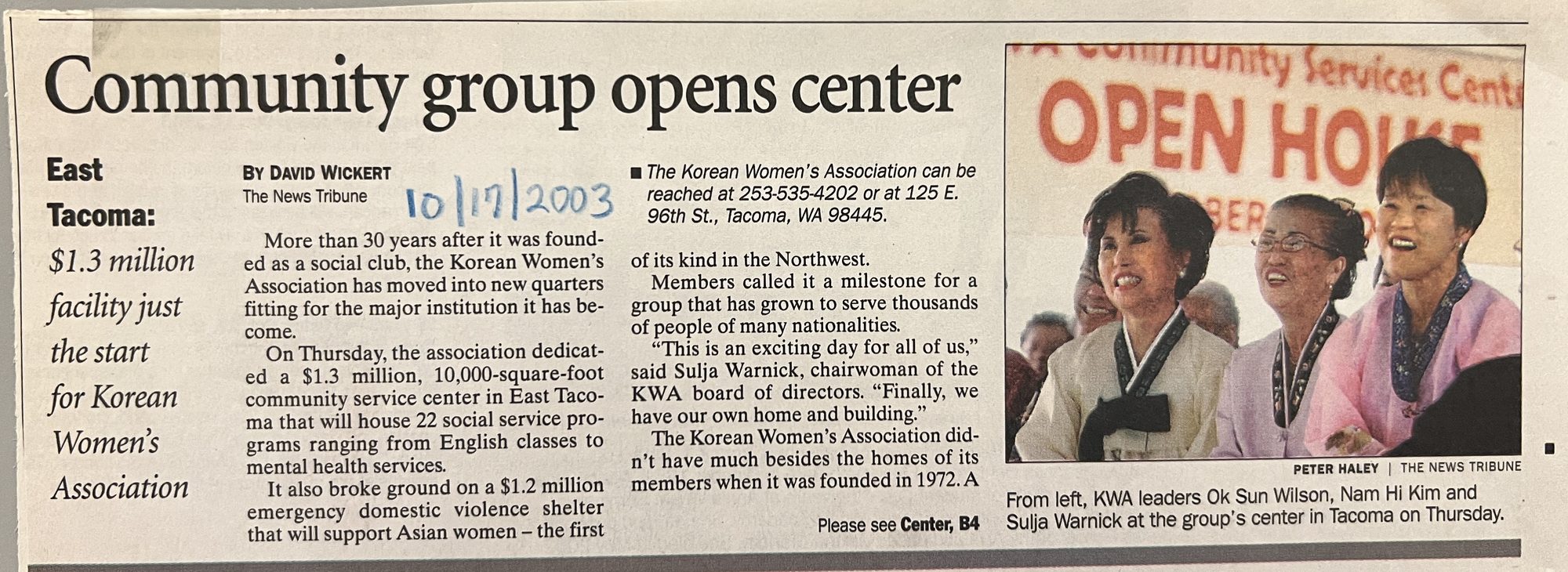
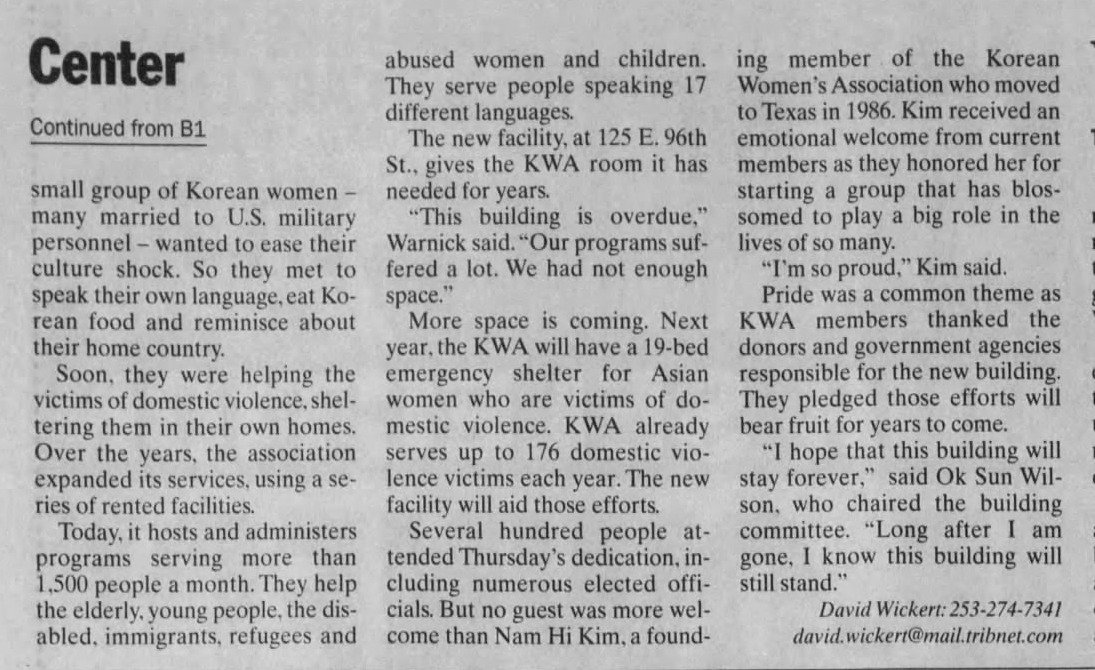
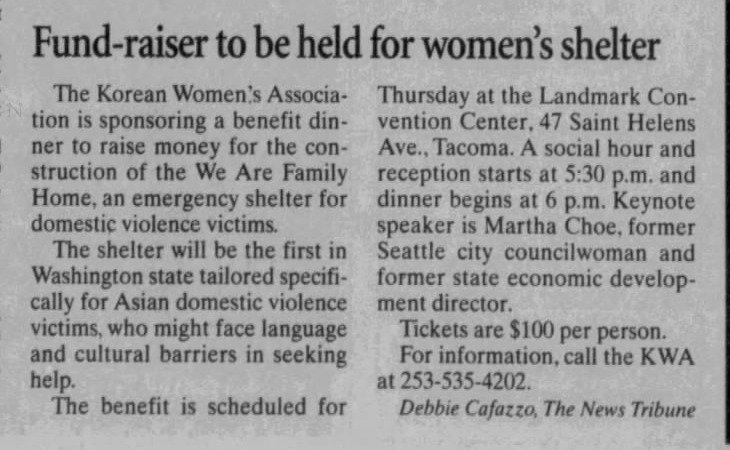
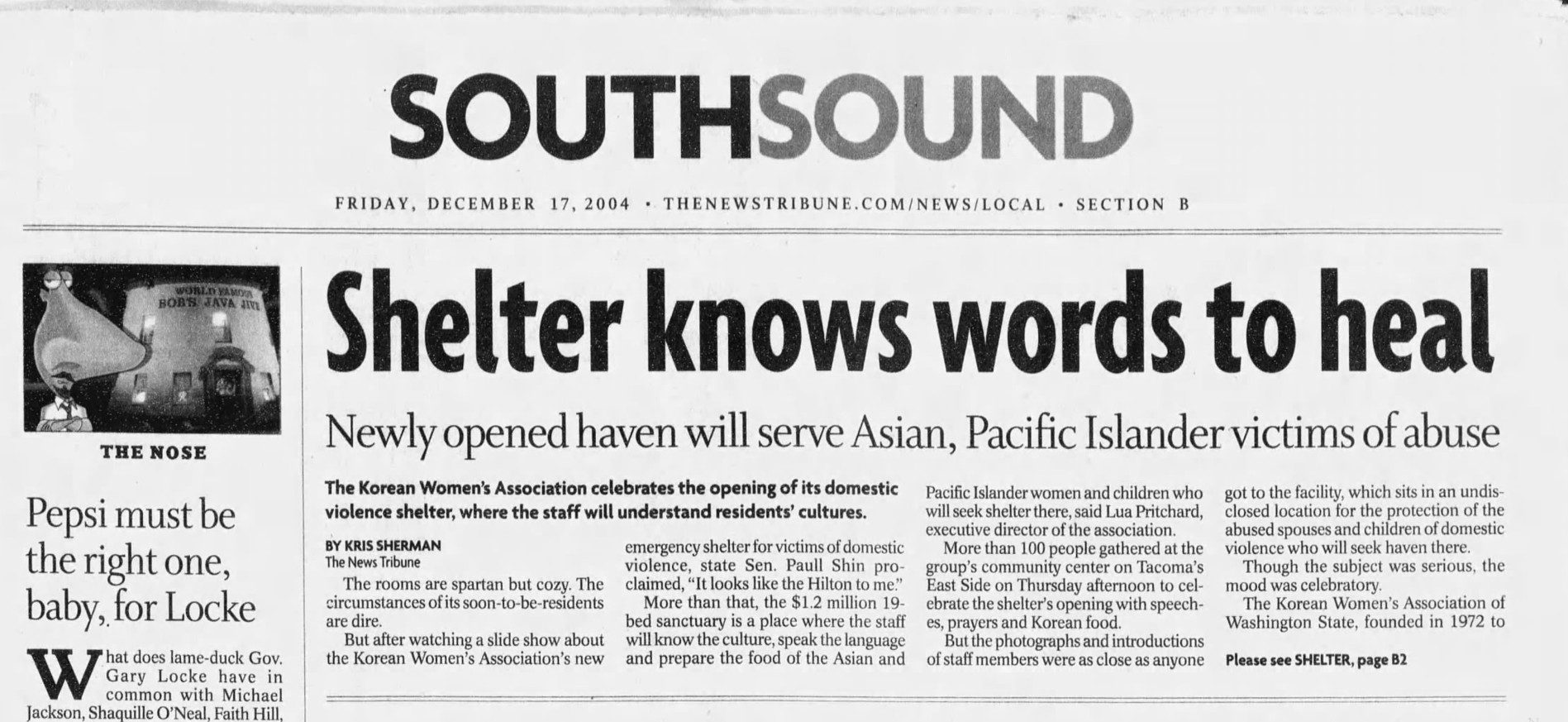
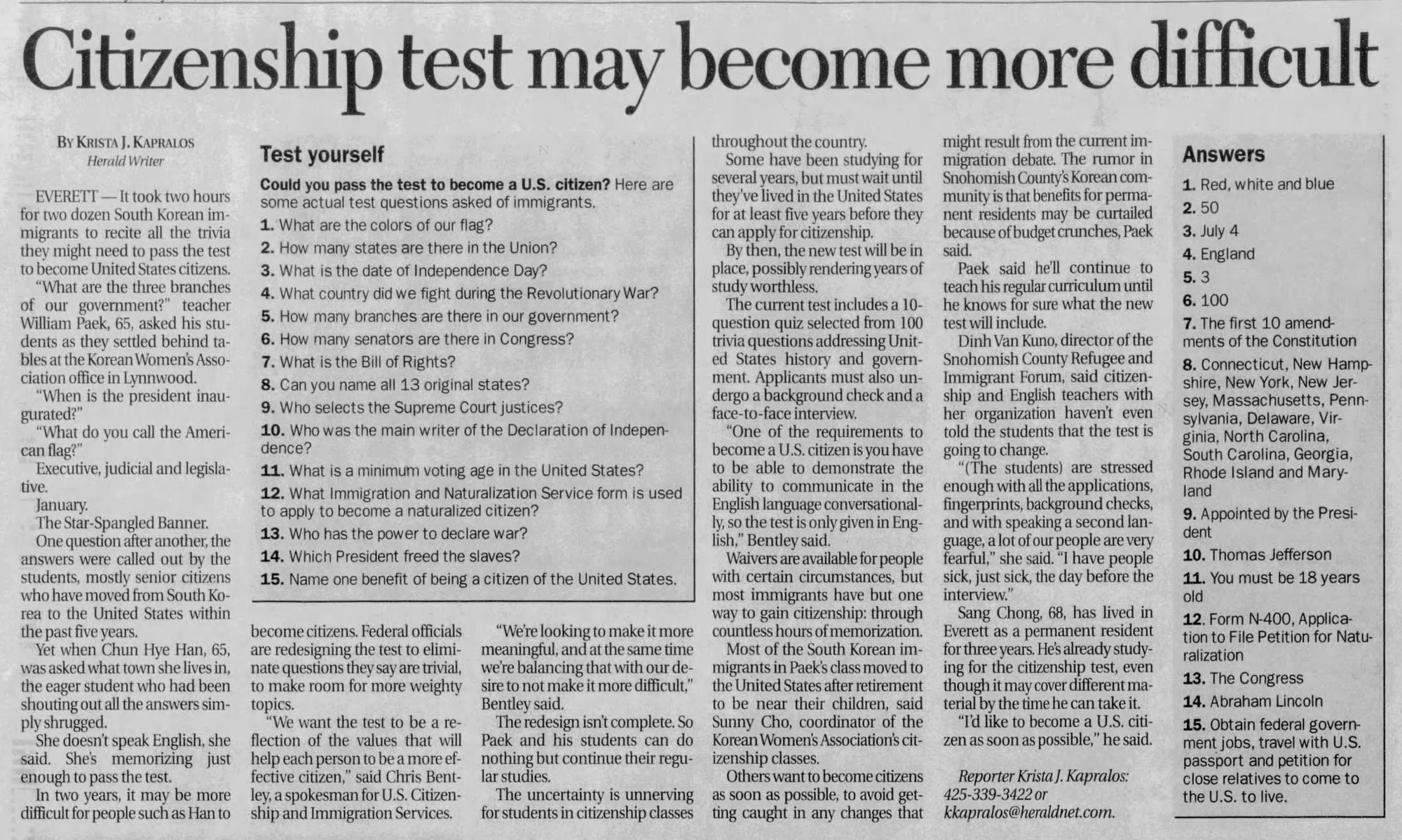
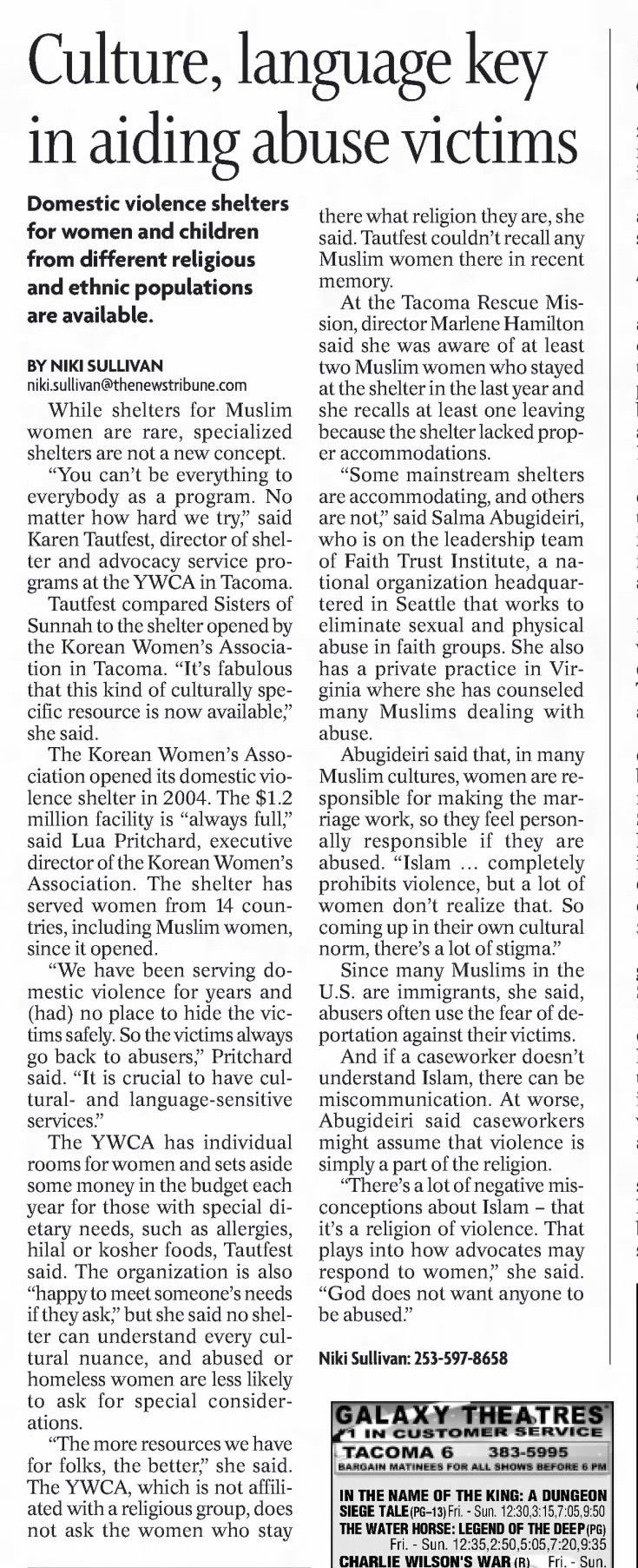
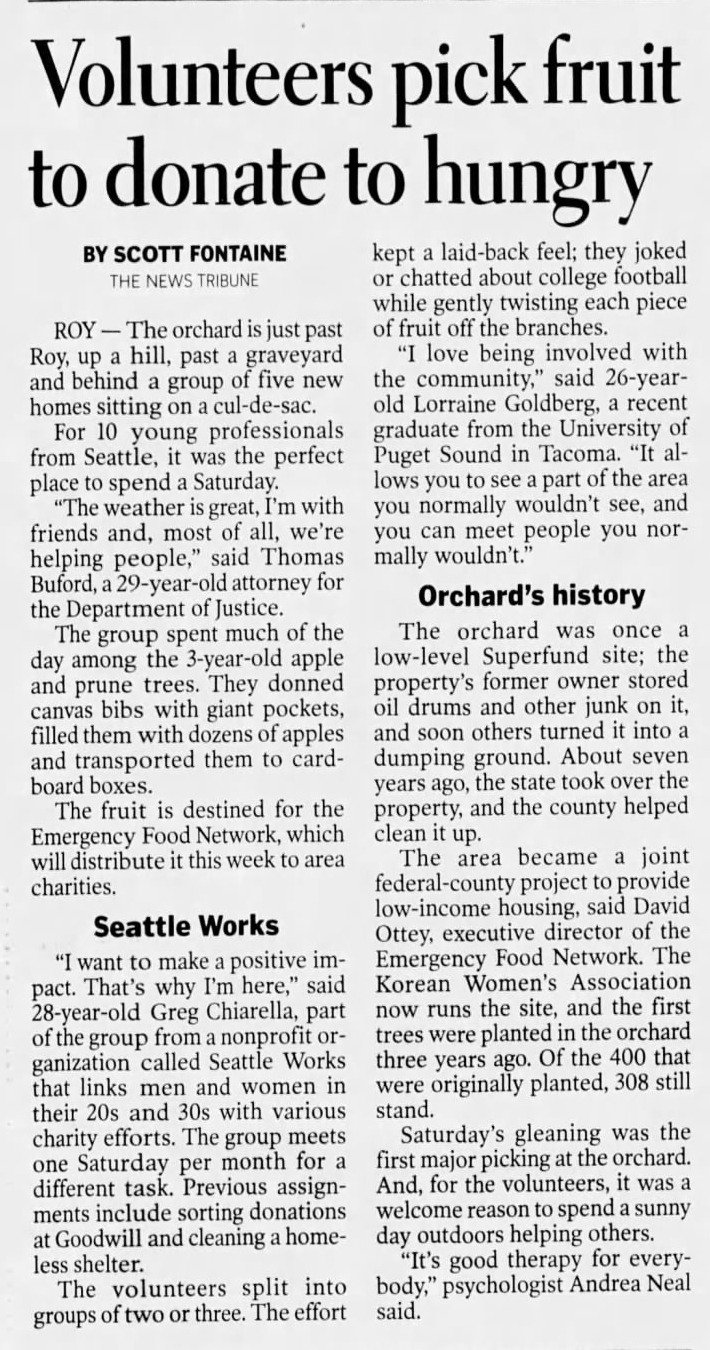
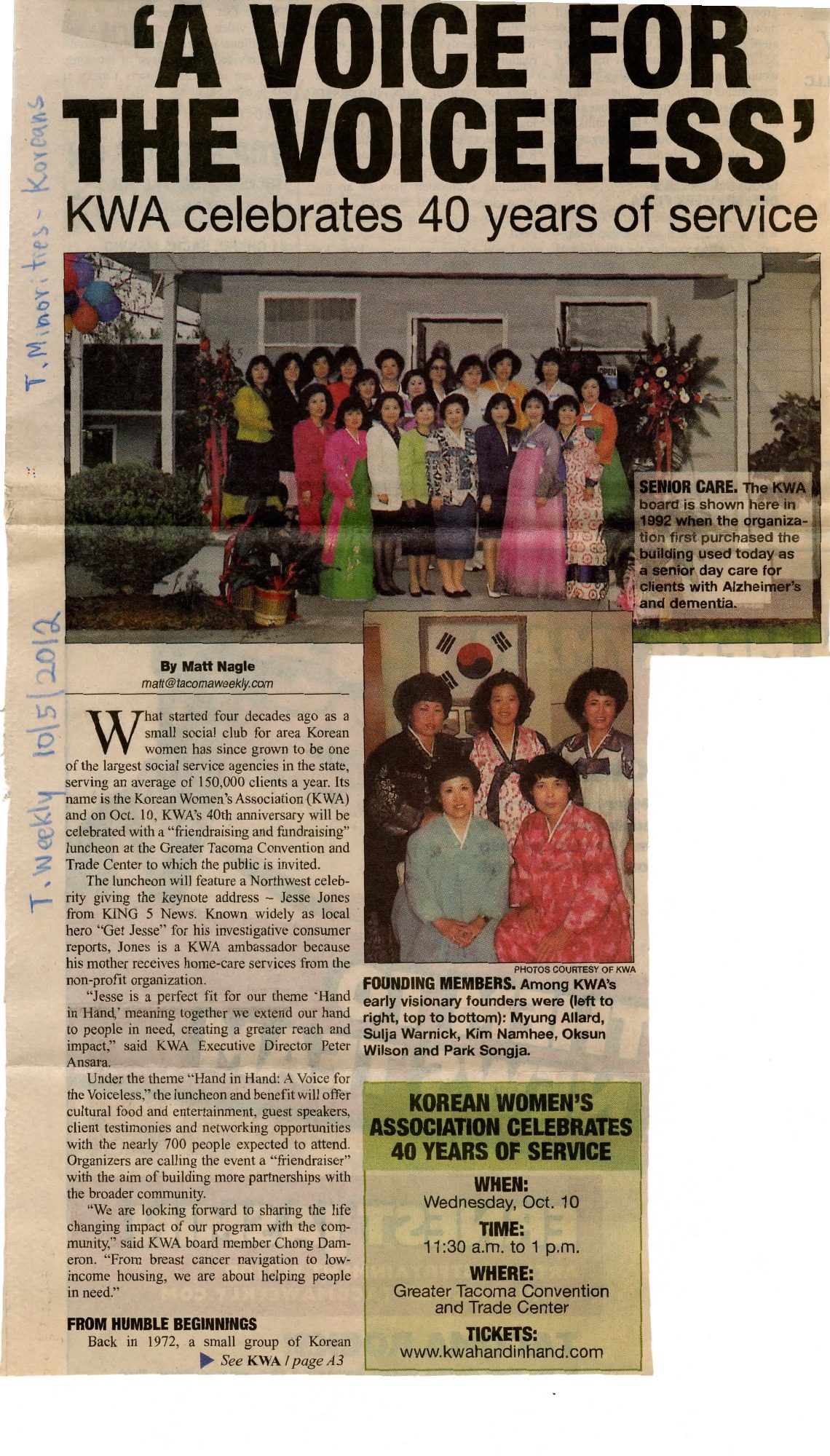
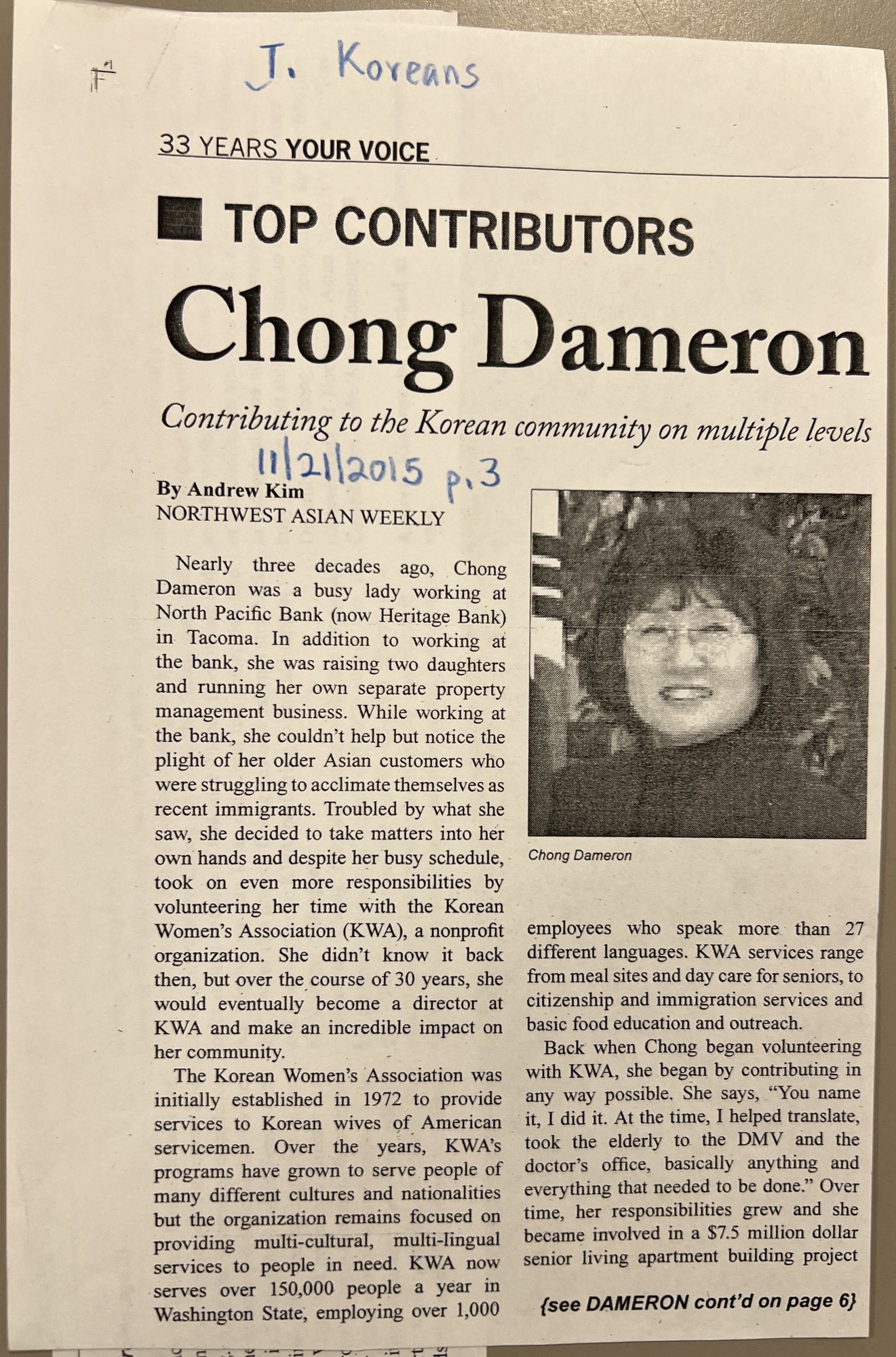
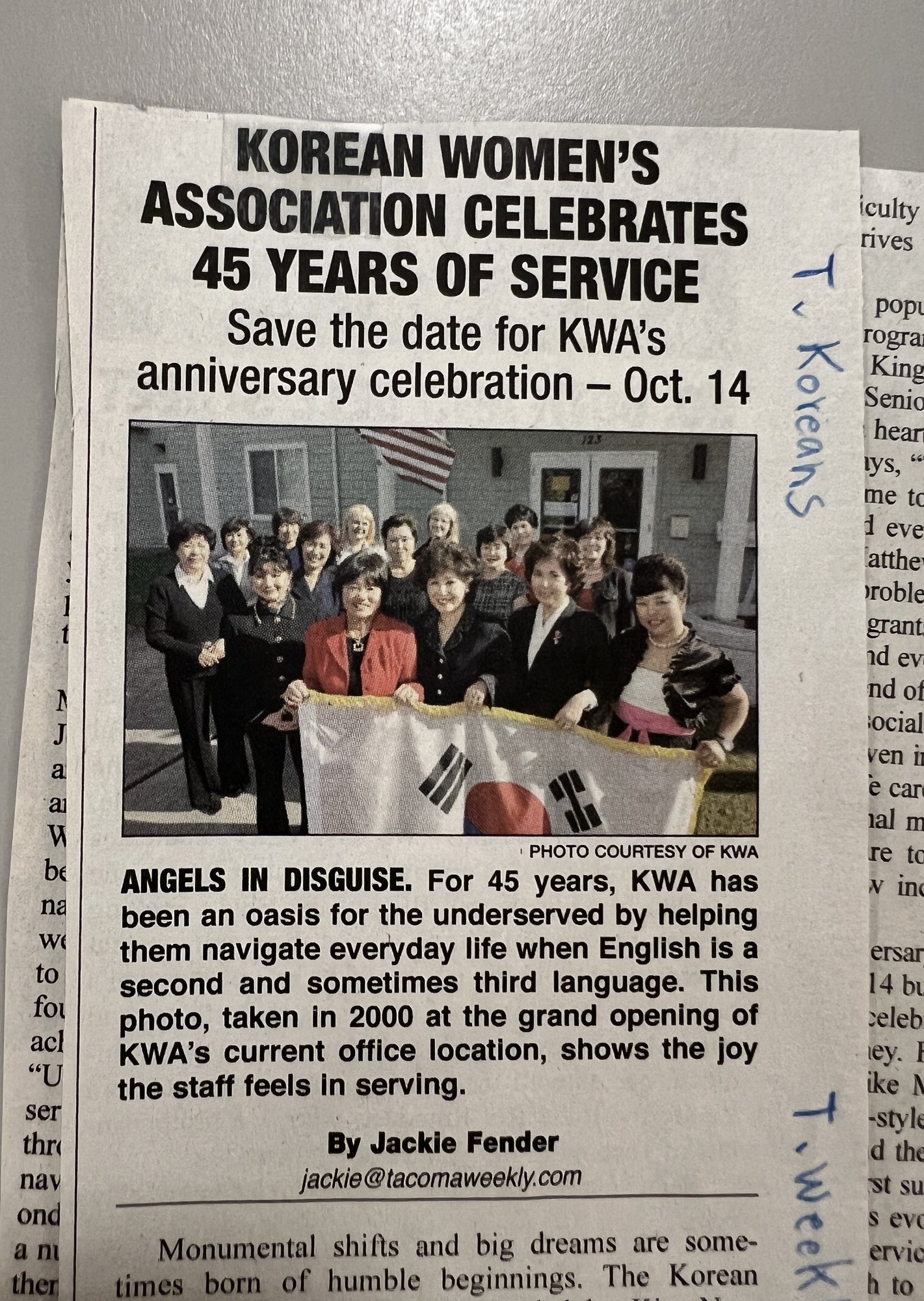
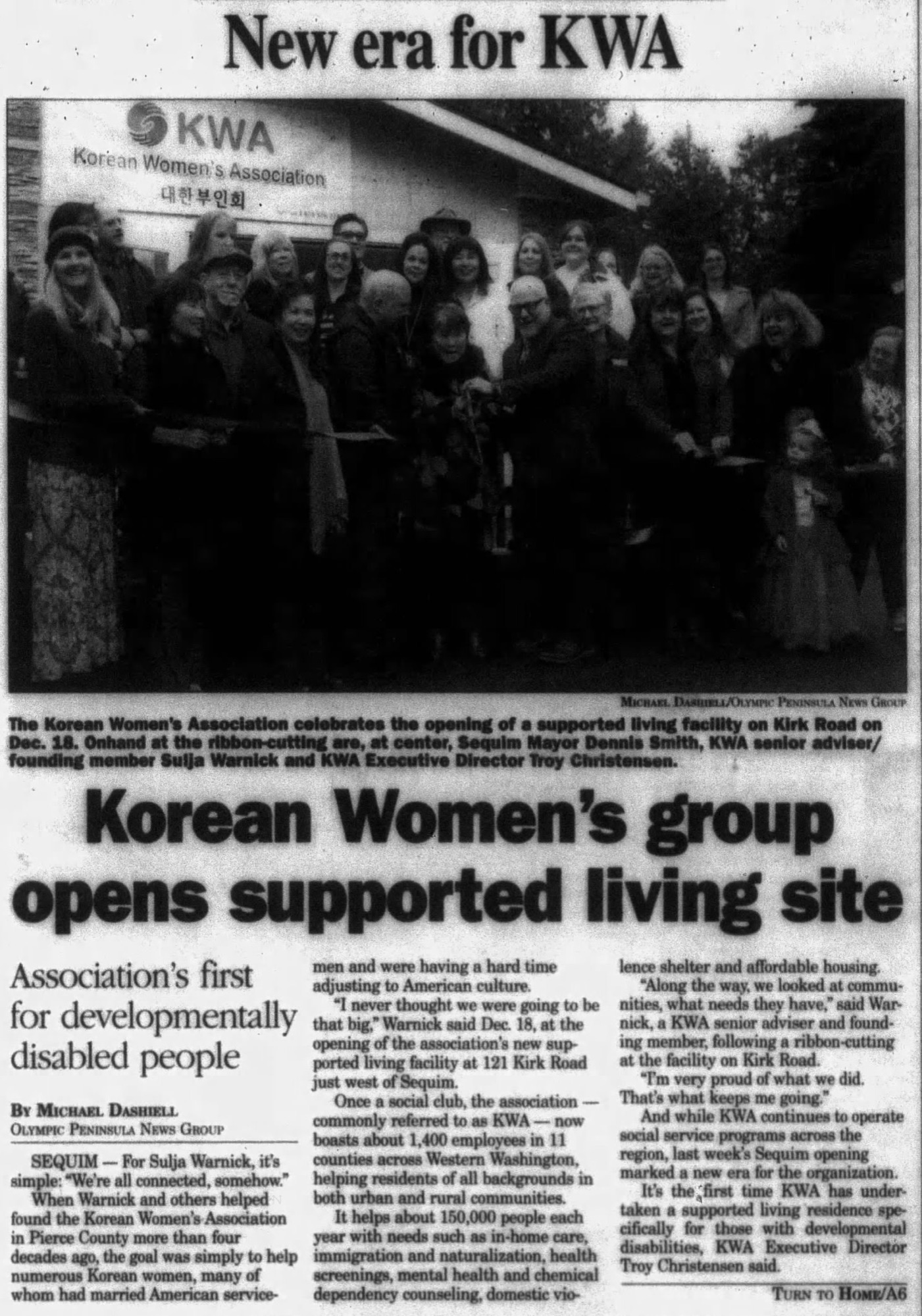
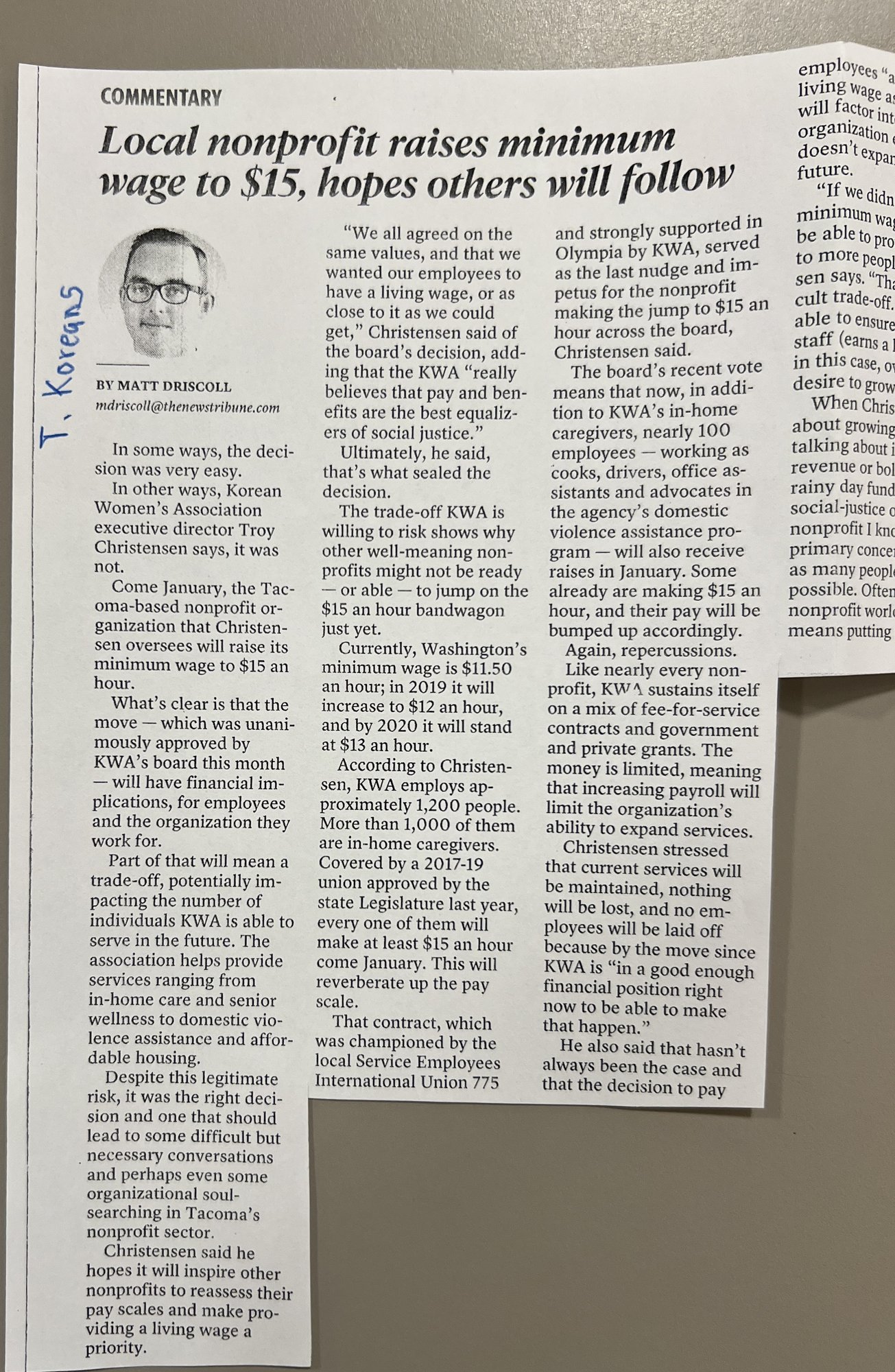
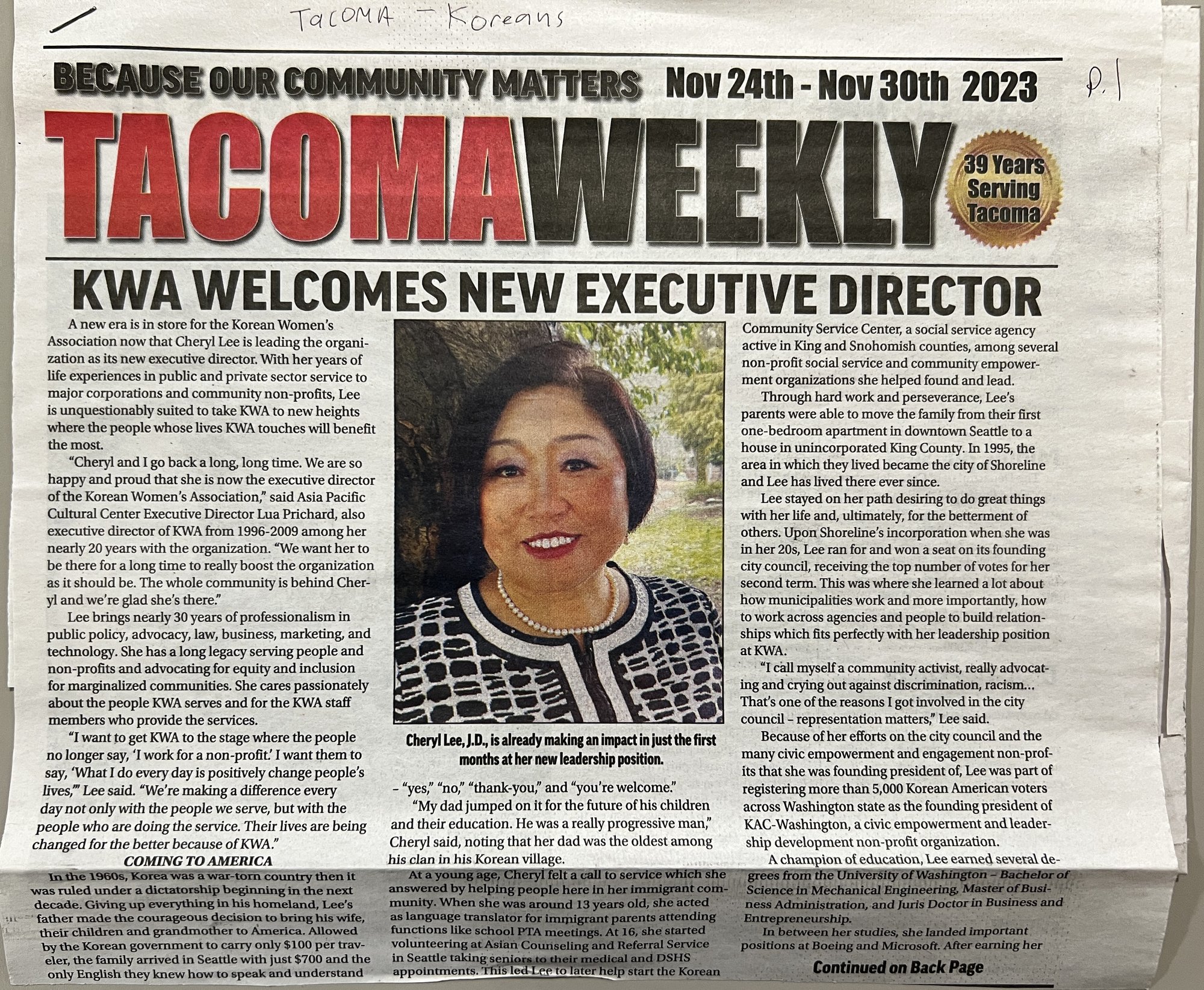
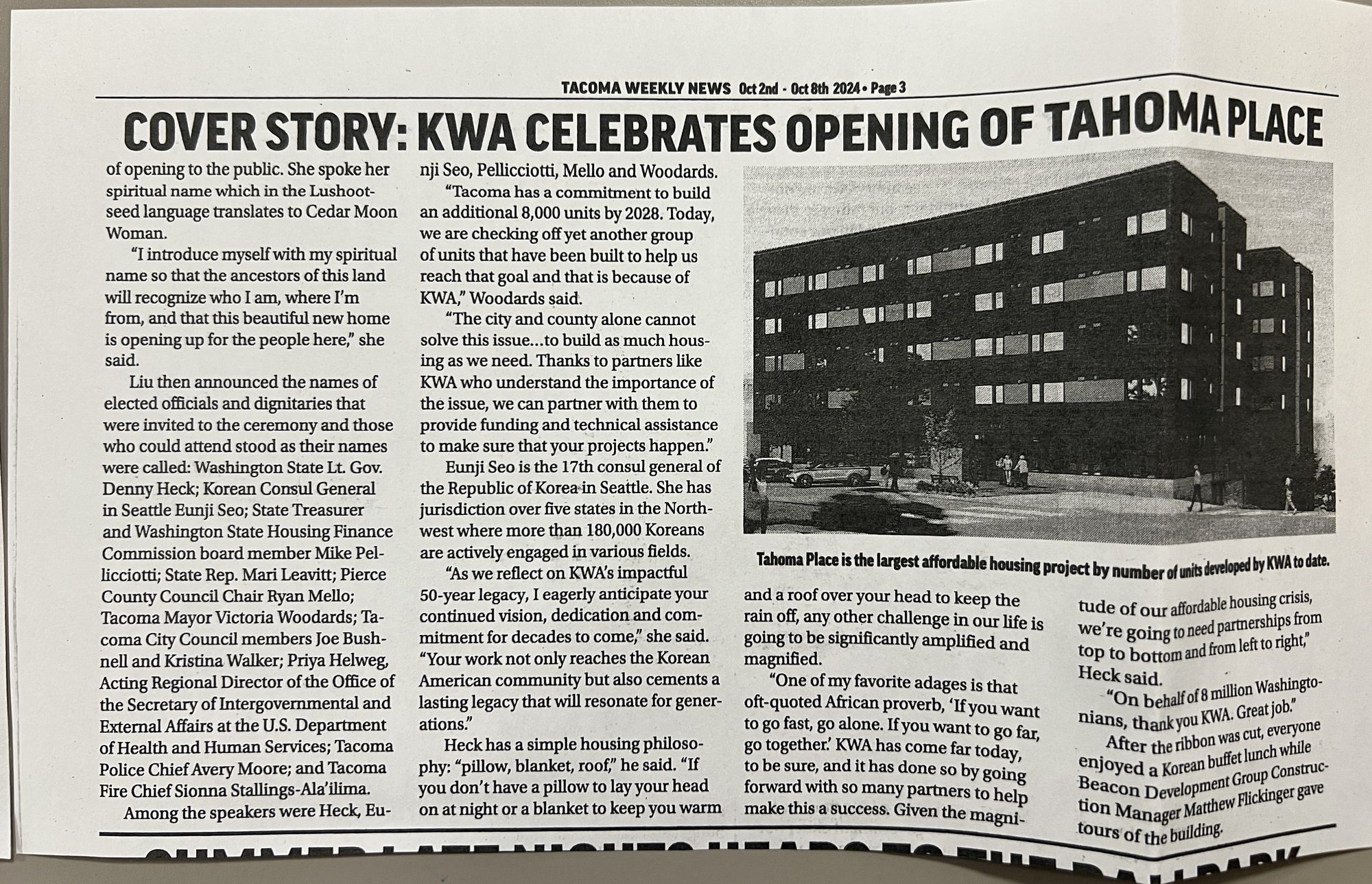
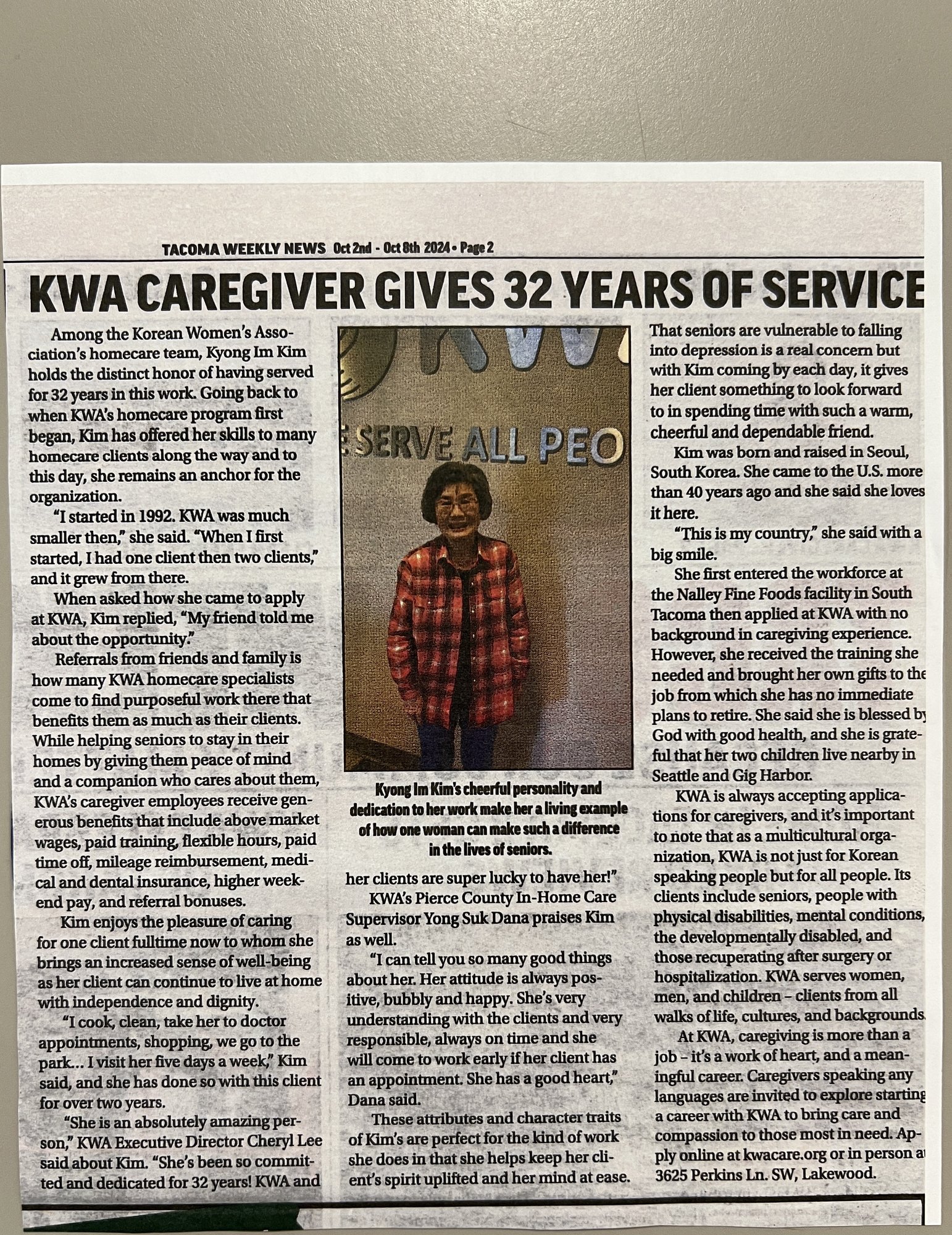
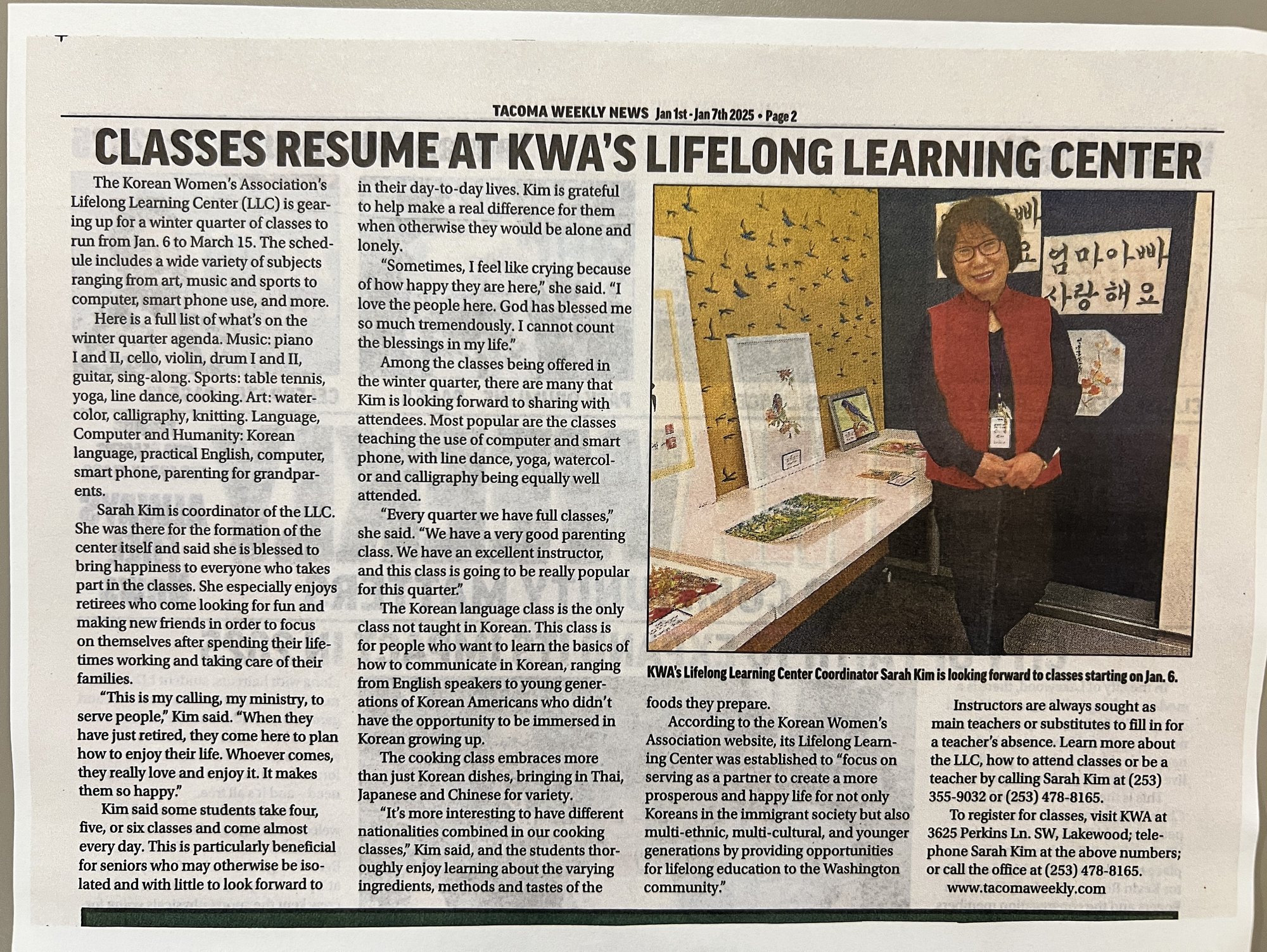
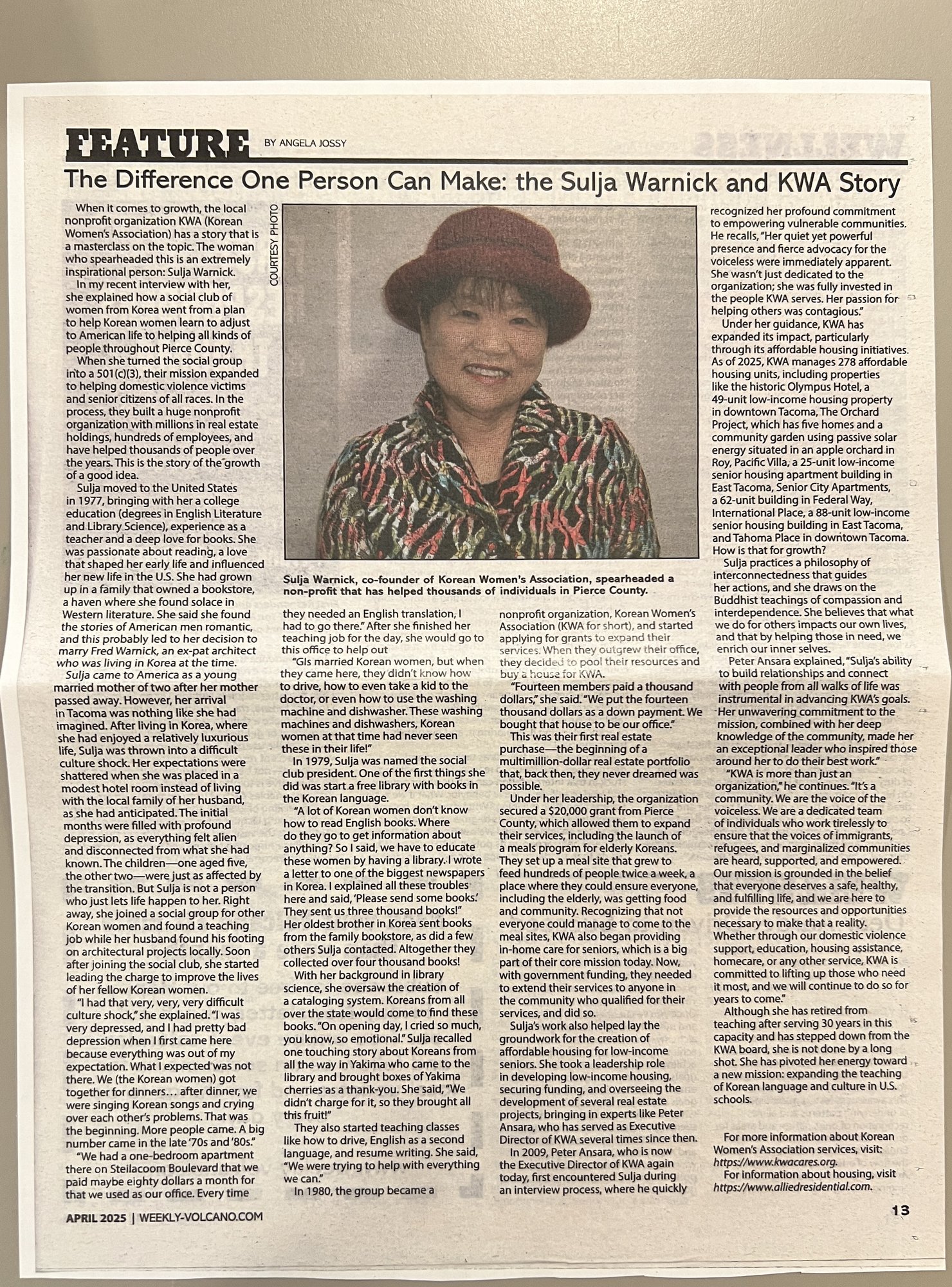
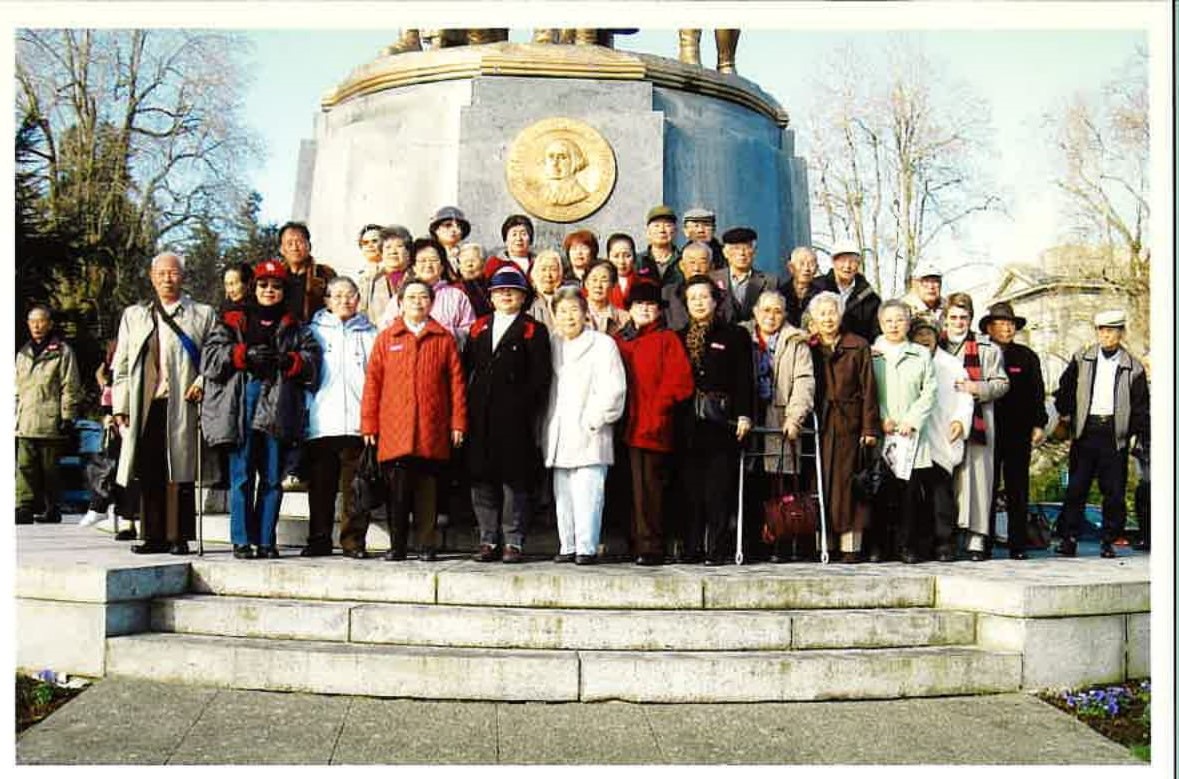
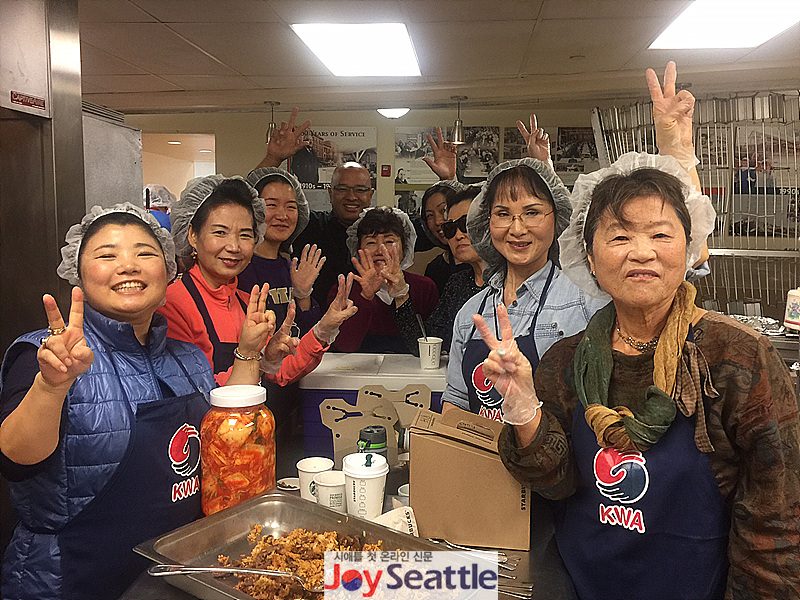
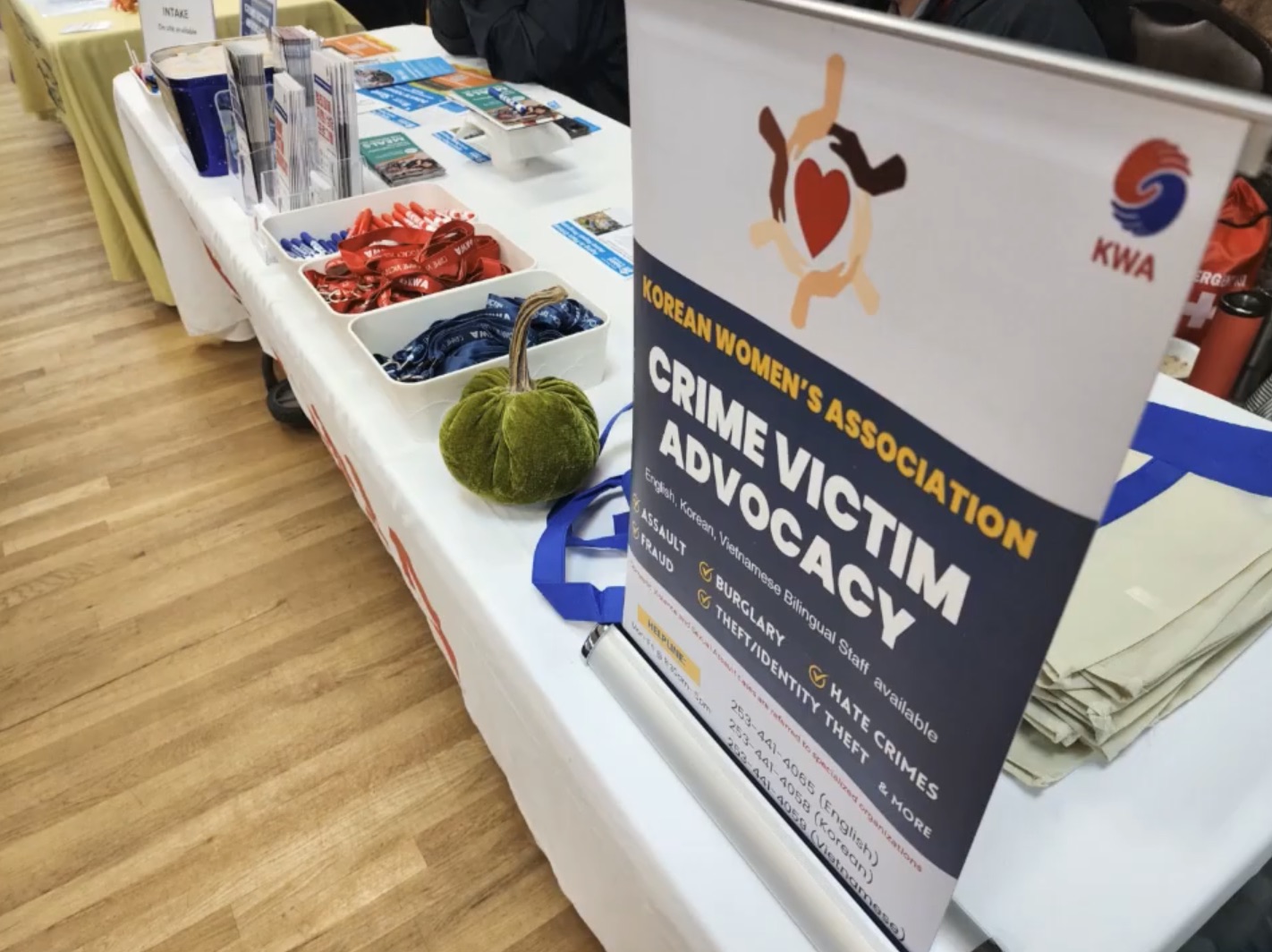
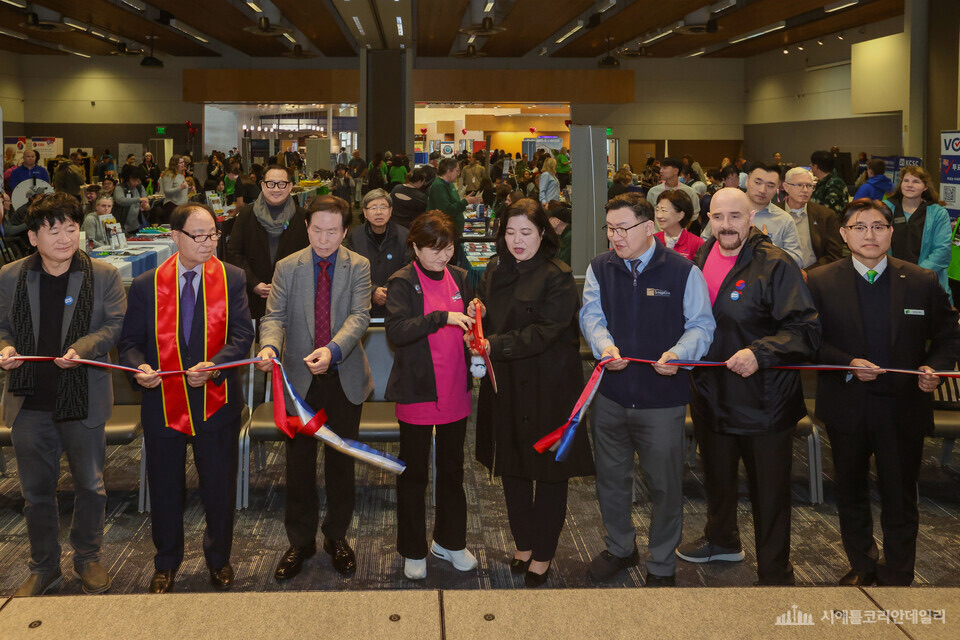
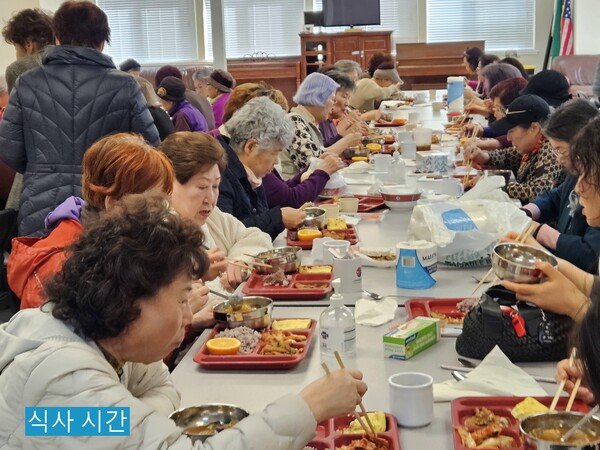
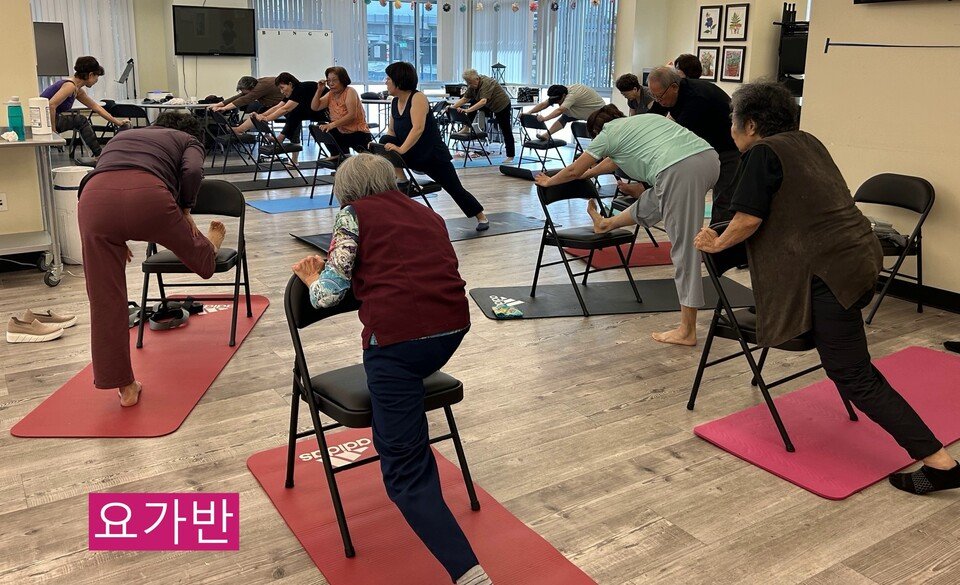
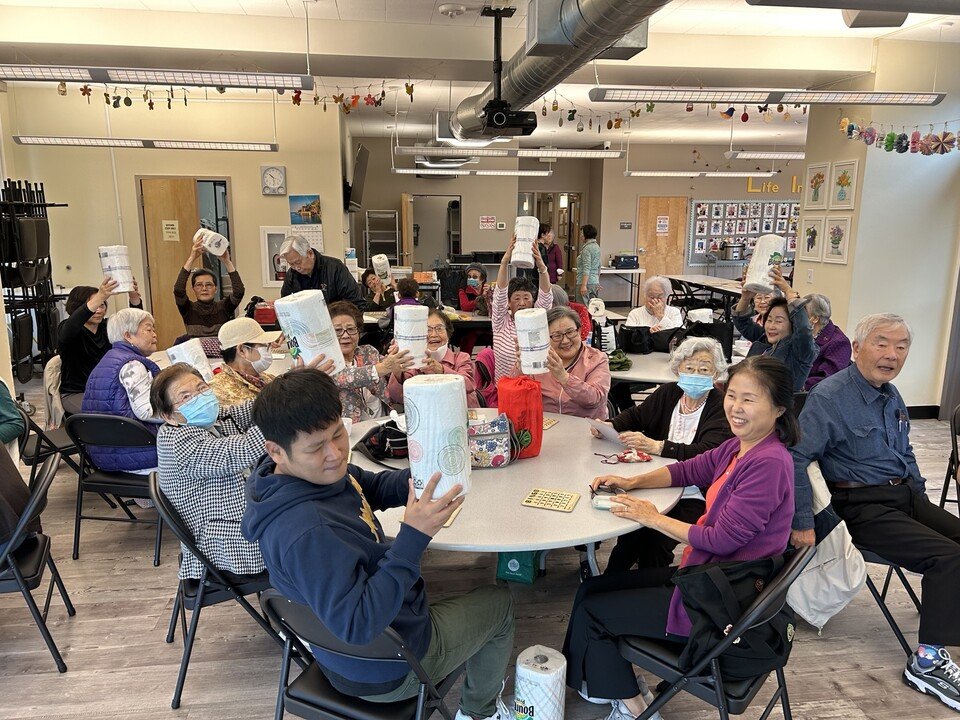
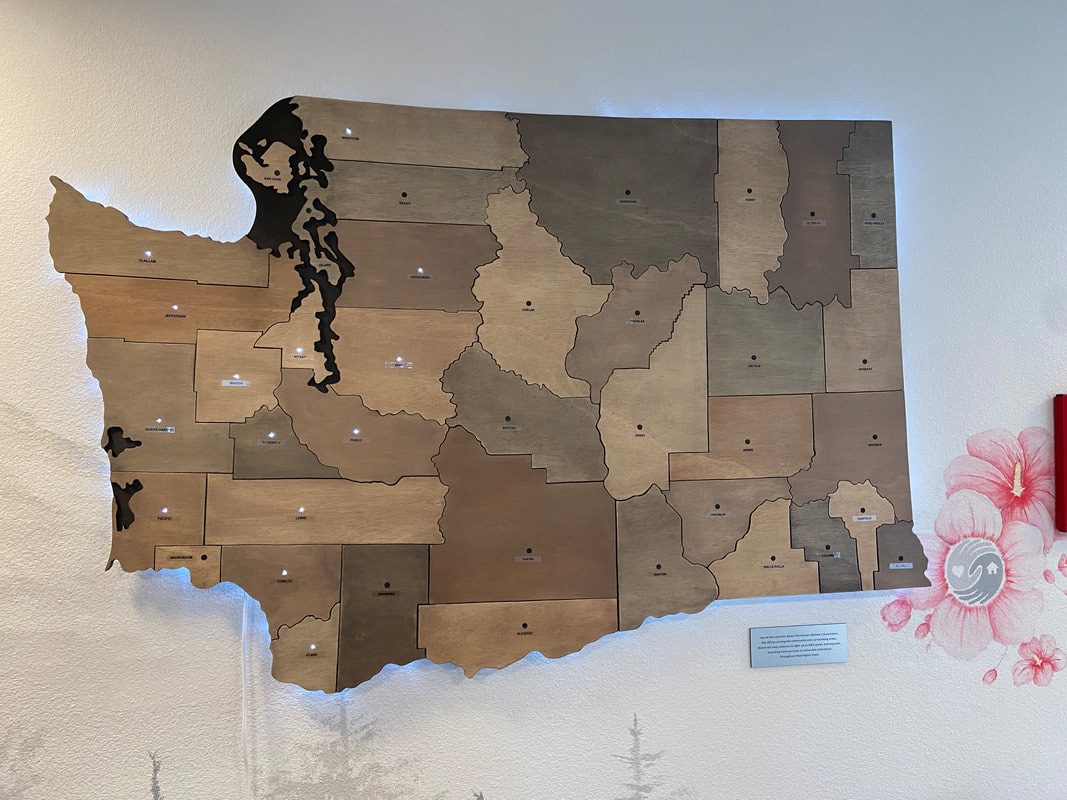
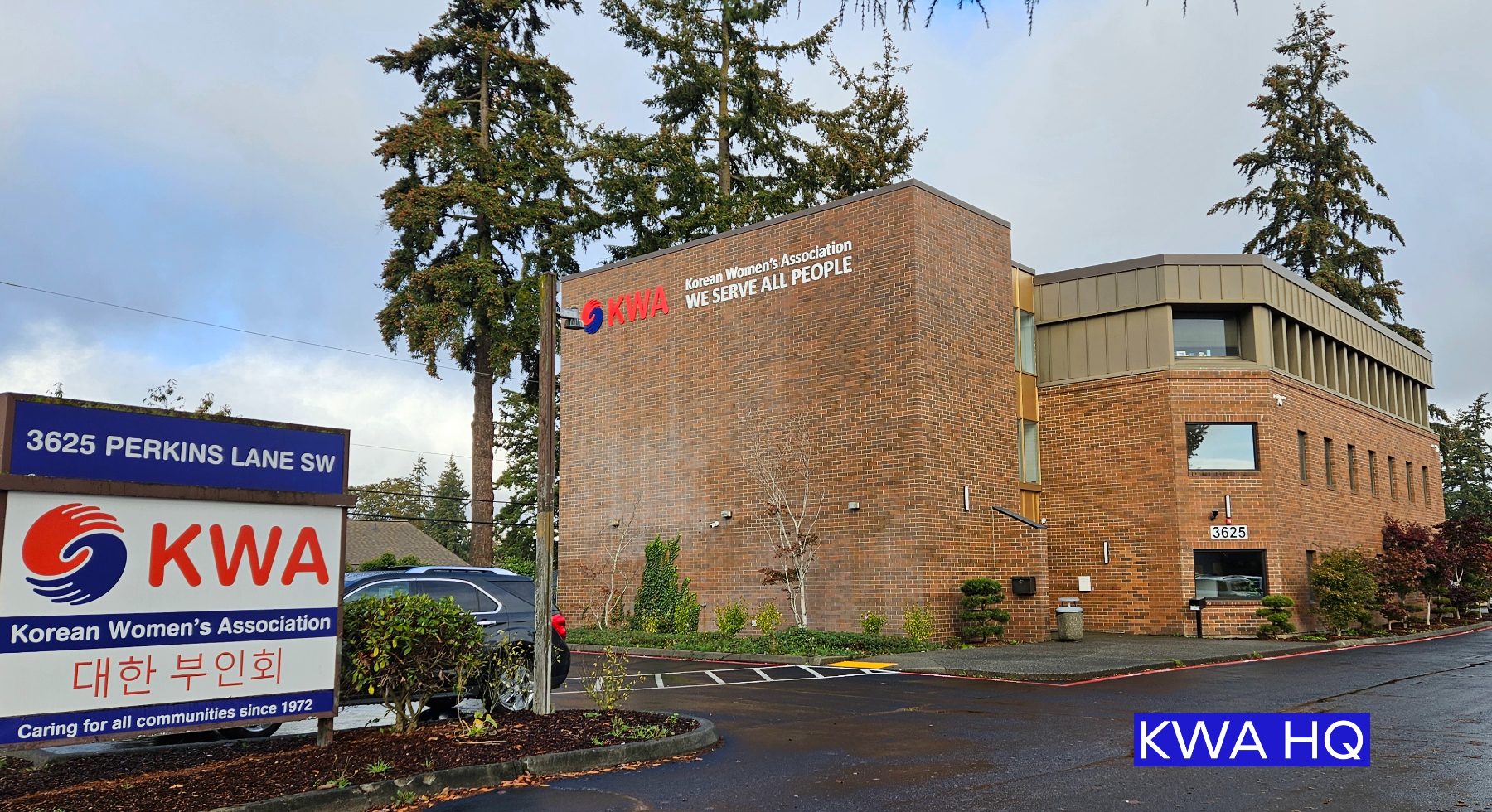
Early association members, undated.Via World Korean News, September 15, 2023KWA brochure, August 1978 (outside).Korean Women’s Association of TacomaKWA brochure, August 1978 (inside).Korean Women’s Association of Tacoma“Community organizations key to Asians’ survival,” The News Tribune, May 4, 1979.Betty Anderson. Newspapers.com“Korean Women’s Association helps those in need,” The Morning News Tribune, October 3, 1990.Paid advertisement. Newspapers.com“KWA has social, health programs for Koreans,” The News Tribune, October 31, 1990.Paid advertisement. Newspapers.comBuilding-fund night, June 26, 1992.Korean Women’s Association“A world of services: Korean Women’s Association knows no boundaries,” The News Tribune, July 19, 1993.Debby Abe; photograph by Geff Hinds. Newspapers.com“Home care” and “Women’s group ‘excited’ to get a new director,” The News Tribune, February 27, 1995.Newspapers.com“Community group opens center,” The News Tribune, October 17, 2003.David Wickert; photograph by Peter Haley. Clipping, Tacoma Public Library“Community group opens center” (continued), The News Tribune, October 17, 2003.David Wickert. Newspapers.com“Fund-raiser to be held for women’s shelter,” The News Tribune, May 22, 2004.Debbie Cafazzo. Newspapers.com“Shelter knows words to heal,” The News Tribune, December 17, 2004.Kris Sherman. Newspapers.com“Citizenship test may become more difficult,” The Herald (Everett), May 31, 2006.Krista J. Kapralos. Newspapers.com“Culture, language key in aiding abuse victims,” The News Tribune, January 13, 2008.Niki Sullivan. Newspapers.com“Volunteers pick fruit to donate to hungry,” The Olympian, October 12, 2008.Scott Fontaine. Newspapers.com“A Voice for the Voiceless: KWA celebrates 40 years of service,” Tacoma Weekly, October 5, 2012.Matt Nagle. Northwest Room, Tacoma Public Library“Top Contributors: Chong Dameron,” Northwest Asian Weekly, November 21, 2015.Andrew Kim. Clipping, Tacoma Public Library“Korean Women’s Association Celebrates 45 Years of Service,” Tacoma Weekly, June 2, 2017.Jackie Fender; photograph courtesy of KWA. Clipping, Tacoma Public Library“New Era for KWA: Korean Women’s Group Opens Supported Living Site,” Peninsula Daily News, December 29, 2017.Jesse Major and Michael Dashiell; photograph by Michael Dashiell. Olympic Peninsula News Group“Local nonprofit raises minimum wage to $15, hopes others will follow,” The News Tribune, December 30, 2018.Matt Driscoll. Clipping, Tacoma Public Library“KWA Welcomes New Executive Director,” Tacoma Weekly, November 24, 2023.Clipping, Tacoma Public Library“KWA Celebrates Opening of Tahoma Place,” Tacoma Weekly News, October 2, 2024.Clipping, Tacoma Public Library“KWA Caregiver Gives 32 Years of Service,” Tacoma Weekly News, October 2, 2024.Clipping, Tacoma Public Library“Classes Resume at KWA’s Lifelong Learning Center,” Tacoma Weekly News, January 1, 2025.Clipping, Tacoma Public Library“The Difference One Person Can Make: The Sulja Warnick and KWA Story,” Weekly Volcano, April 2025.Angela Jossy. Clipping, Tacoma Public LibraryA KWA group outing.Korean Women’s AssociationKWA volunteers making kimchi.Via Joy Seattle (조이시애틀뉴스)Crime victim advocacy outreach, 2020s.Korean Women’s AssociationRibbon cutting at a KWA community event.Seattle Korean Daily (시애틀코리안데일리)Lunch at a KWA senior meal site, July 2024.Seattle Korean Daily (시애틀코리안데일리)Yoga class at KWA’s Federal Way Senior Center, October 2024.Seattle Korean Daily (시애틀코리안데일리)Opening of the 2025 classes at KWA’s Federal Way Senior Center, January 2025.Seattle Korean Daily (시애틀코리안데일리)Service-area map at KWA’s Tacoma headquarters, 2026.Korean Women History ProjectKWA headquarters, Tacoma, 2026.Korean Women History ProjectKWA’s “We Serve All People” sign, Tacoma headquarters, 2026.Korean Women History Project
Korean Tacoma
As Korean wives sponsored their families after 1965, a Korean business district grew
up along South Tacoma Way in Tacoma and Lakewood. These clippings come from the Tacoma
Public Library’s files on the city’s Korean community.
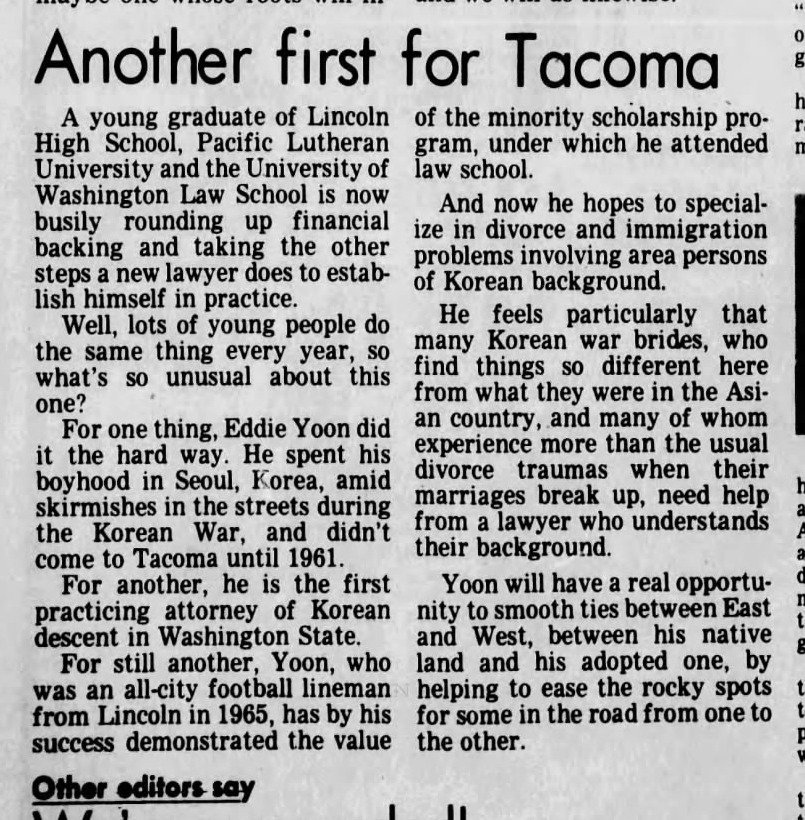
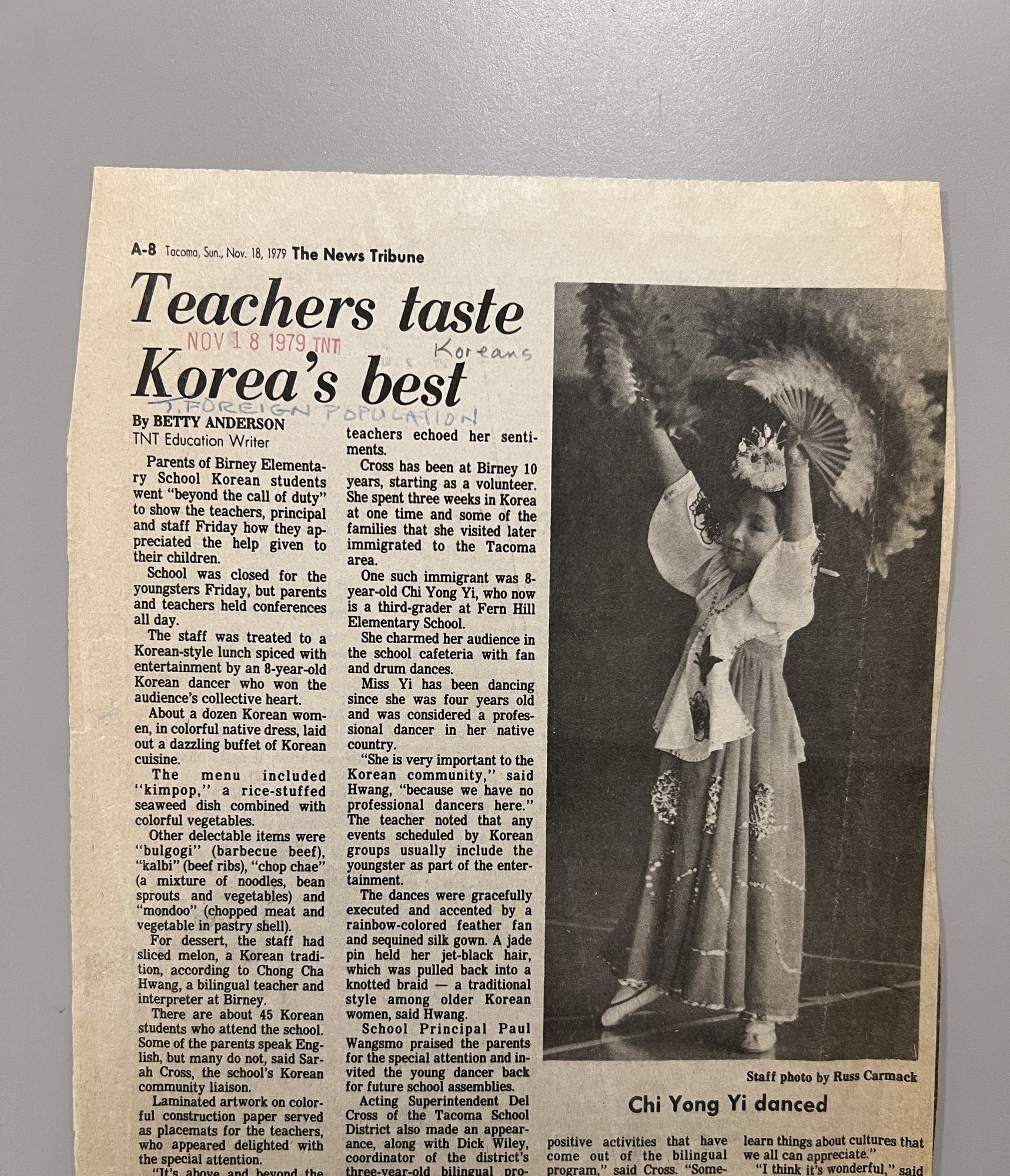
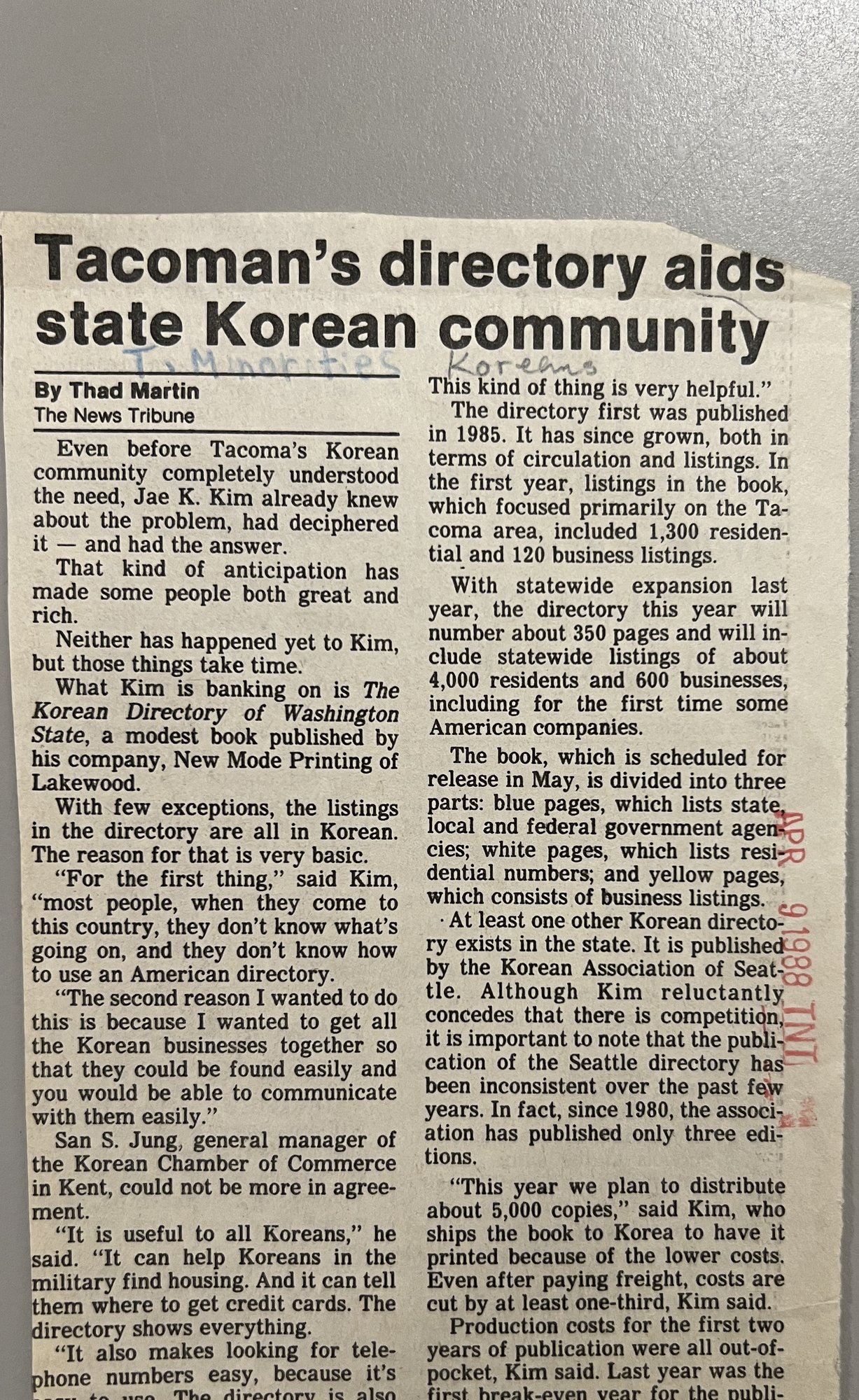
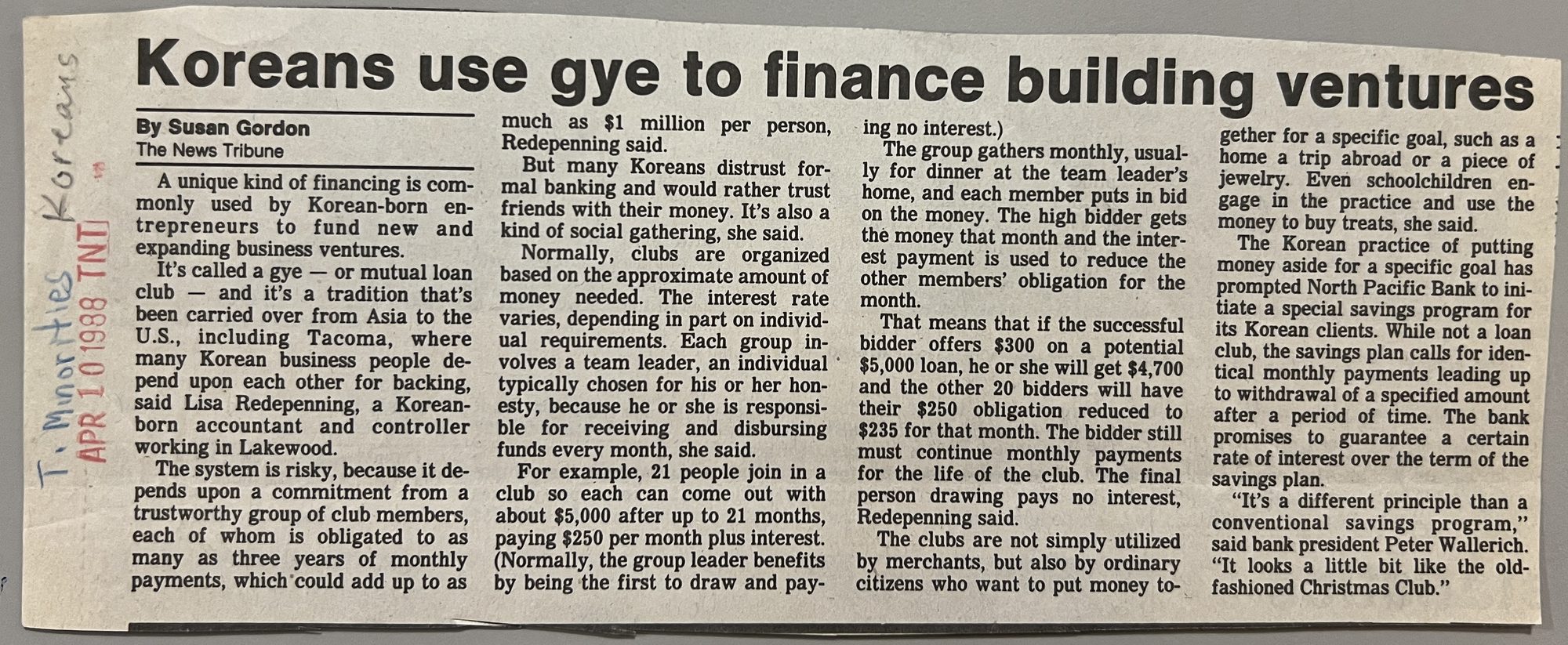
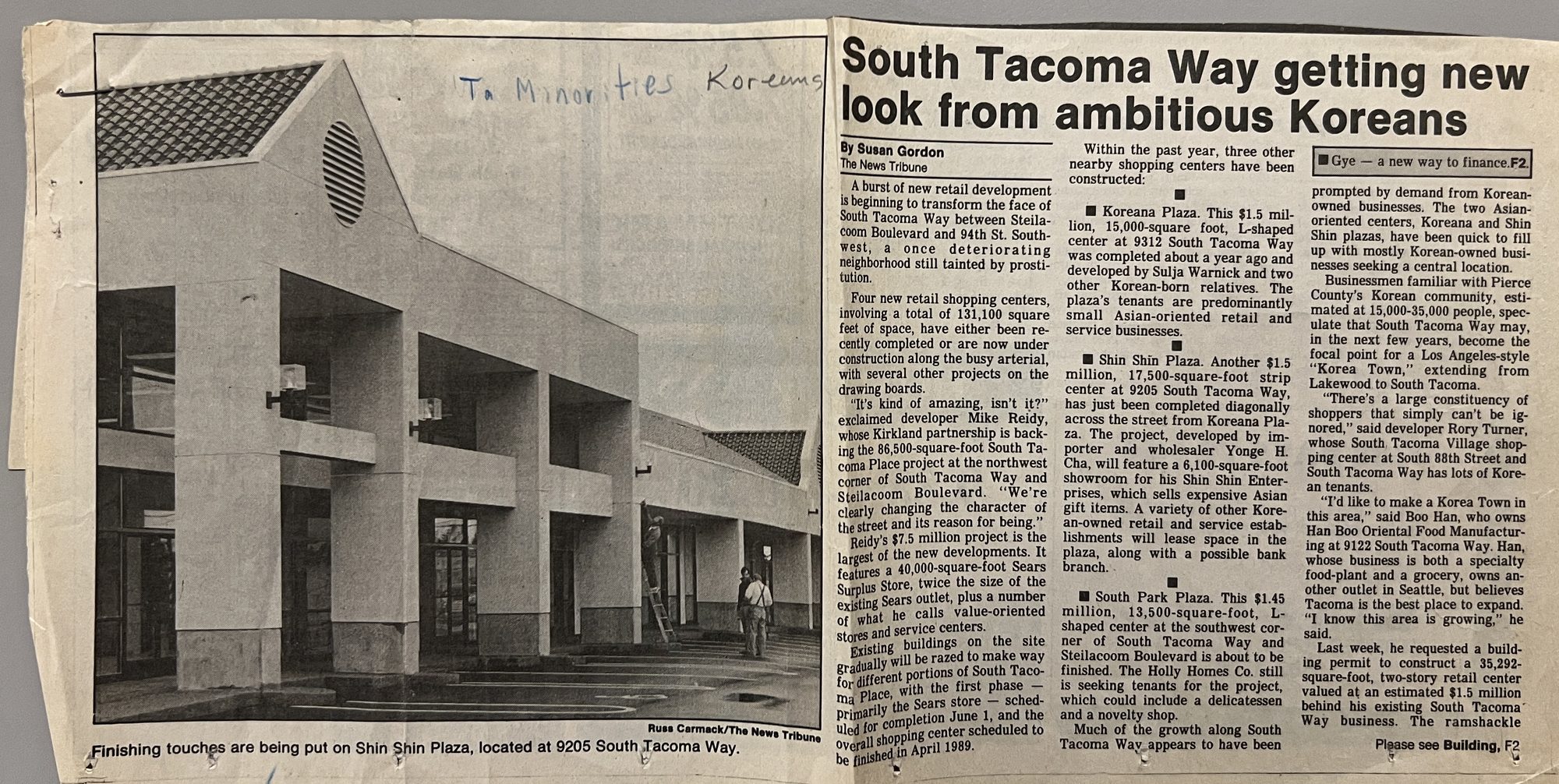
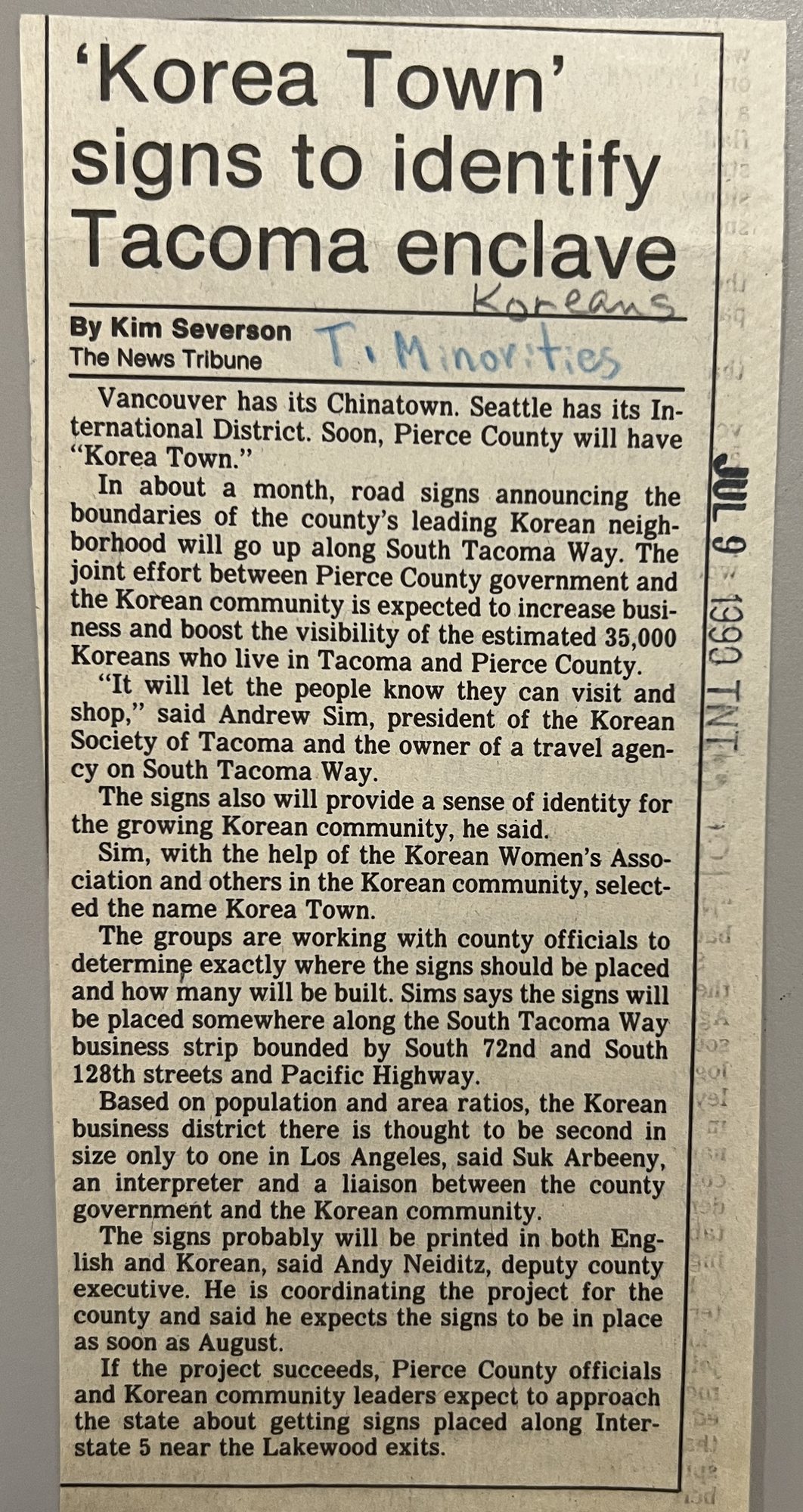
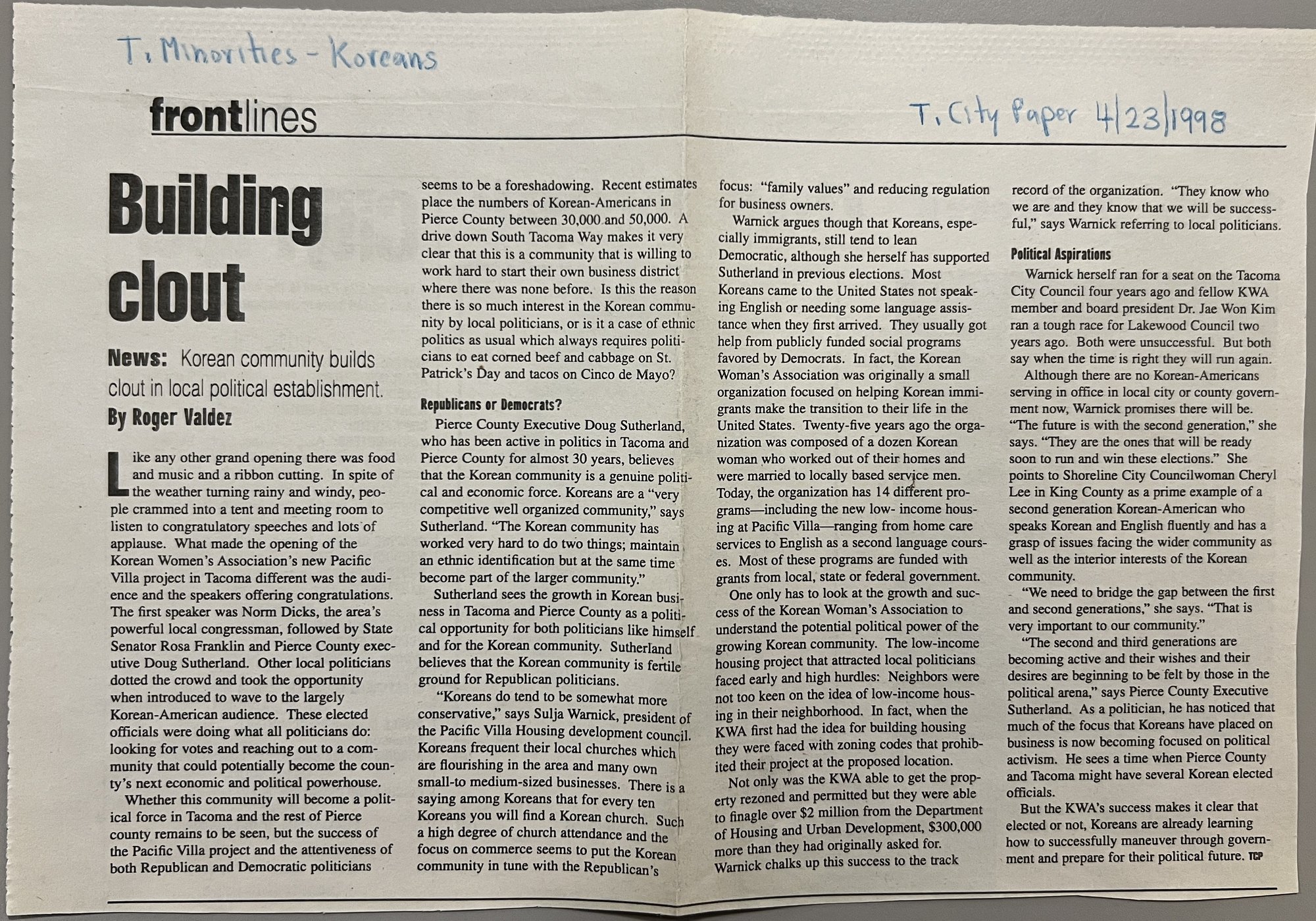
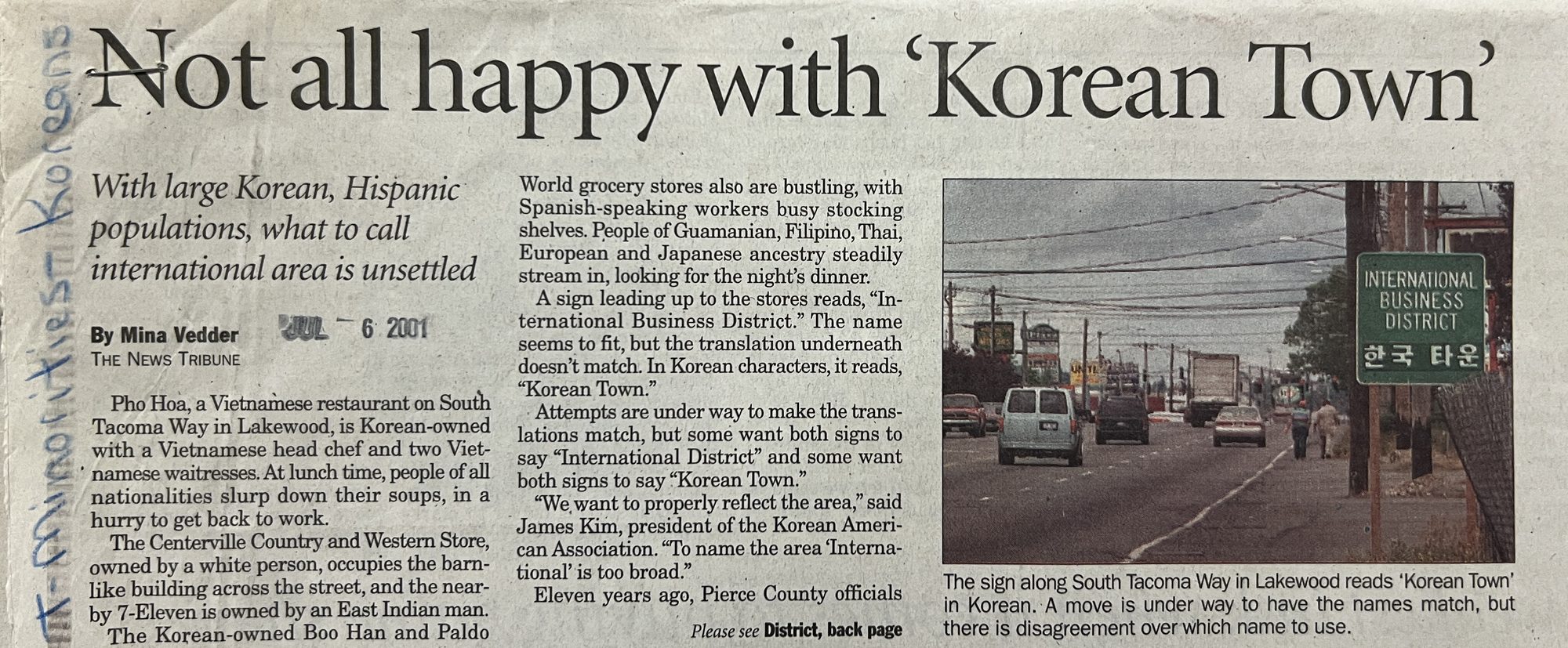
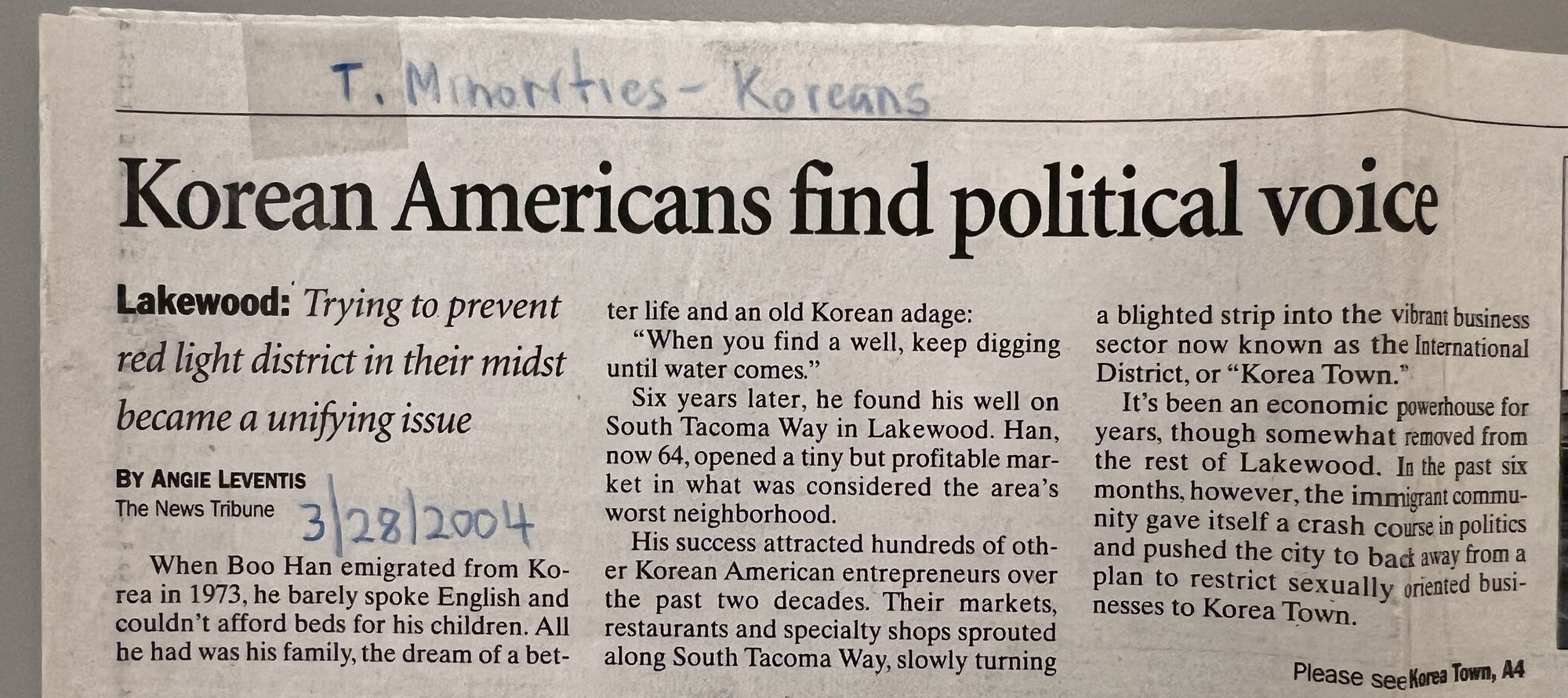
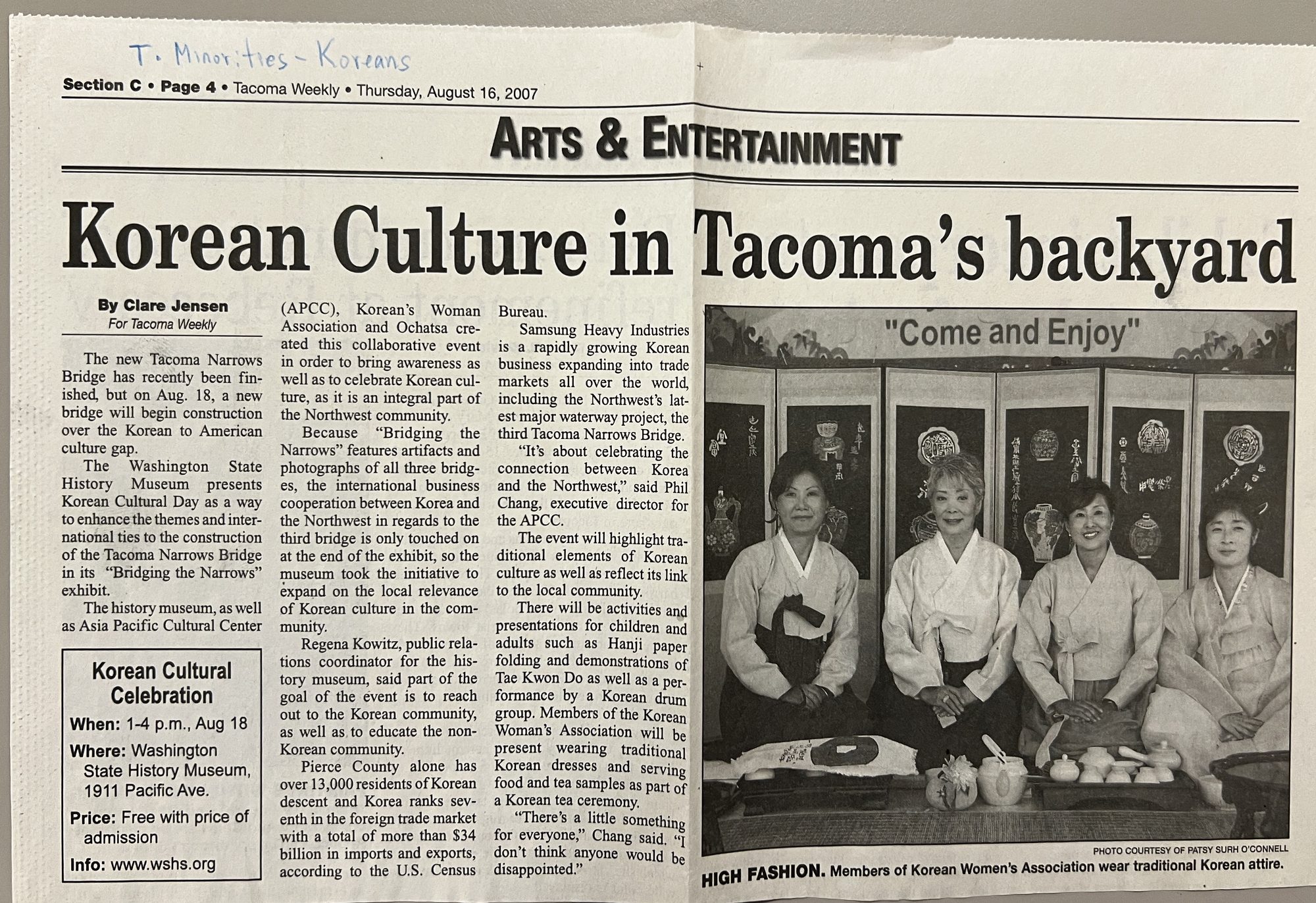
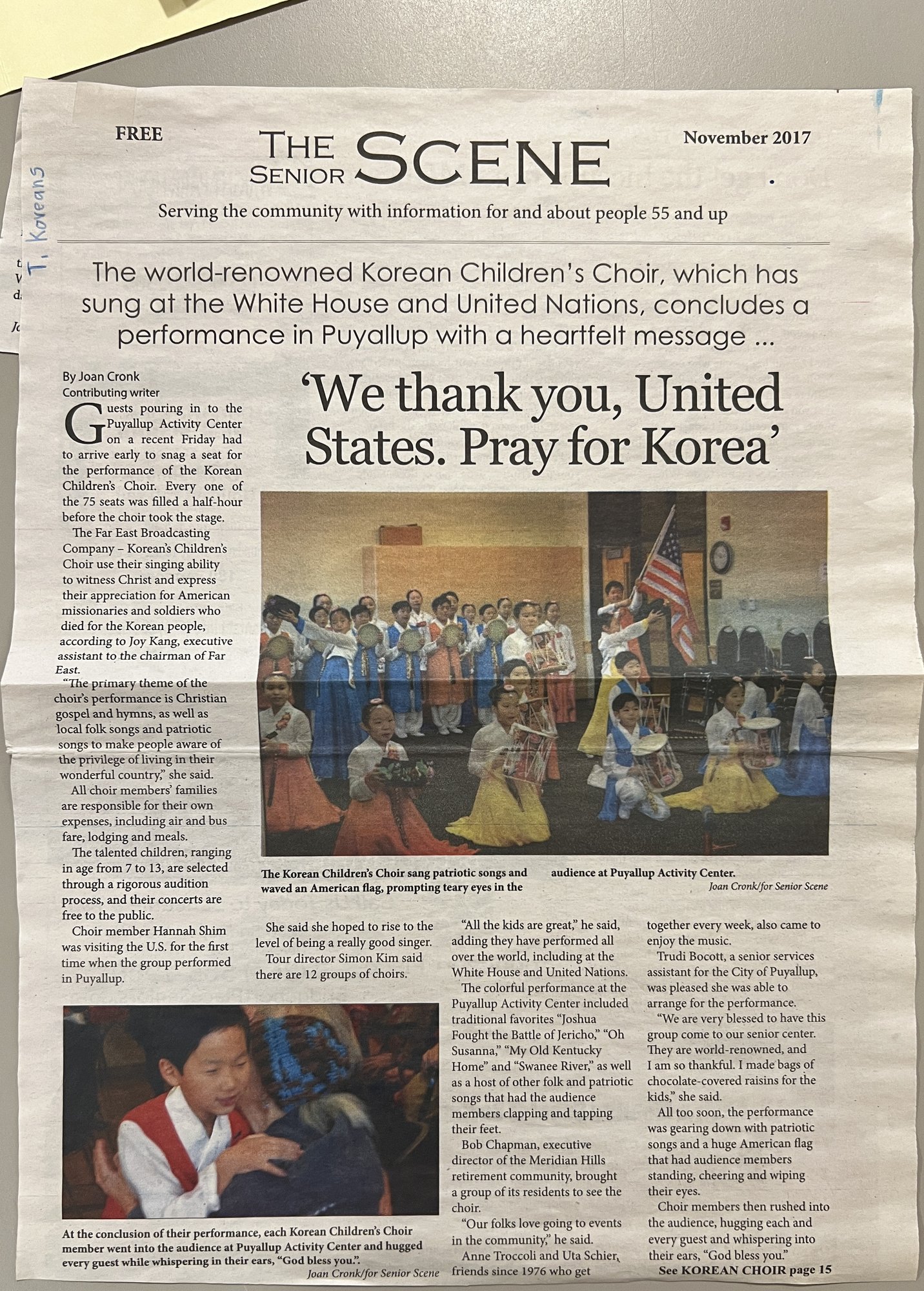
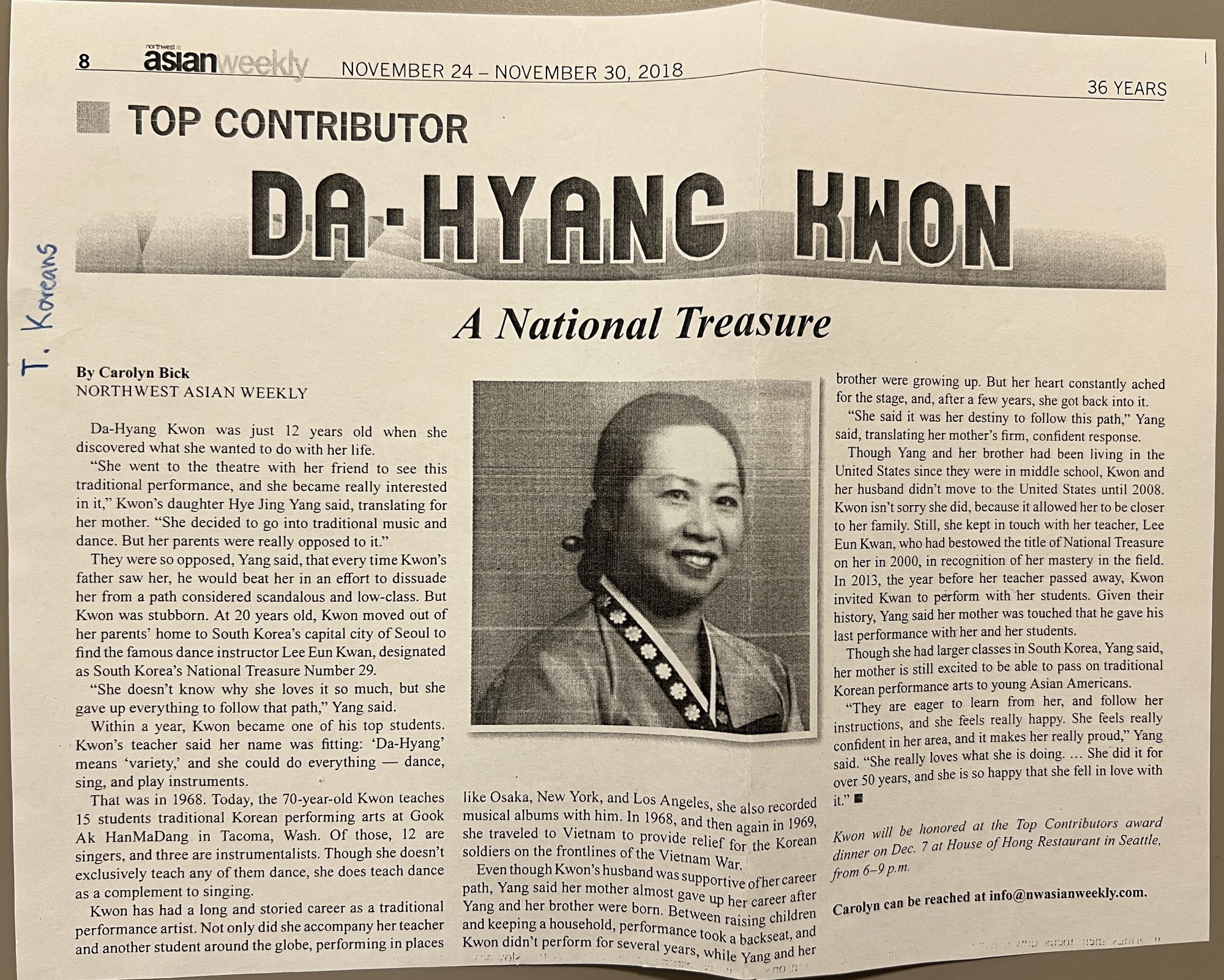
“Another first for Tacoma,” Tacoma News Tribune, May 16, 1976.Editorial. Newspapers.com“Teachers taste Korea’s best,” The News Tribune, November 18, 1979.Betty Anderson. Clipping, Tacoma Public Library“Tacoman’s directory aids state Korean community,” The News Tribune, April 9, 1988.Thad Martin. Clipping, Tacoma Public Library“Koreans use gye to finance building ventures,” The News Tribune, April 10, 1988.Susan Gordon. Clipping, Tacoma Public Library“South Tacoma Way getting new look from ambitious Koreans,” The News Tribune, April 10, 1988.Susan Gordon; photograph by Russ Carmack. Clipping, Tacoma Public Library“‘Korea Town’ signs to identify Tacoma enclave,” The News Tribune, July 9, 1990.Kim Severson. Clipping, Tacoma Public Library“Building clout,” Tacoma City Paper, April 23, 1998.Roger Valdez. Clipping, Tacoma Public Library“Not all happy with ‘Korean Town,’” The News Tribune, July 6, 2001.Mina Vedder. Clipping, Tacoma Public Library“Korean Americans find political voice,” The News Tribune, March 28, 2004.Angie Leventis. Clipping, Tacoma Public Library“Korean Culture in Tacoma’s backyard,” Tacoma Weekly, August 16, 2007.Clare Jensen; photograph courtesy of Patsy Surh O’Connell. Clipping, Tacoma Public Library“‘We thank you, United States. Pray for Korea,’” The Senior Scene, November 2017.Clipping, Tacoma Public Library“Top Contributor: Da-Hyang Kwon, A National Treasure,” Northwest Asian Weekly, November 24, 2018.Carolyn Bick. Clipping, Tacoma Public Library
Documentary
Documentary by William Yoon.William Yoon
Secondary footage
What was the impact of the Chinese Exclusion Act?American Experience, PBS, 2018
Review of the Year 1950, Record B.British Pathé, film ID 1510.03
Korean War Bride Ock Soon Lee Saved from Slavery.Real Life, Cornerstone Television Network, May 18, 2014Oral history: Ock Soon Lee
KBS documentary on the Korean Women’s Association, 2007.KBS. Posted by KWA TV with us
KWA Community Expo, 2025.KBS WATV / Seattle, November 2025
The homecoming of KWA founder Hong Ja White, 2026.KBS WATV / Seattle, August 2026. Posted by KWA TV with us
“New Horizons: Pretty Yong Soon Morgan, 23, First Korean War Bride to Arrive in the U.S. Through Seattle”Progress-Bulletin, October 19, 1951. Newspapers.com
“Creating a Legacy of Kindness”Kathleen Merryman, The News Tribune (Tacoma). Newspapers.com
Government records here are in the public domain. Other photographs and clippings are
reproduced for education, credited to the photographers, publications, and archives
that hold them. If you hold the rights to an item and would like it credited
differently or removed, or would like to request use of an item, please
contact the project.